
Last updated September 20, 2026
Full 25-point door and opener safety check with every visit - springs, cables, rollers, tracks, and your LiftMaster or Chamberlain opener included
You get a price before we start. It does not change when the truck arrives.
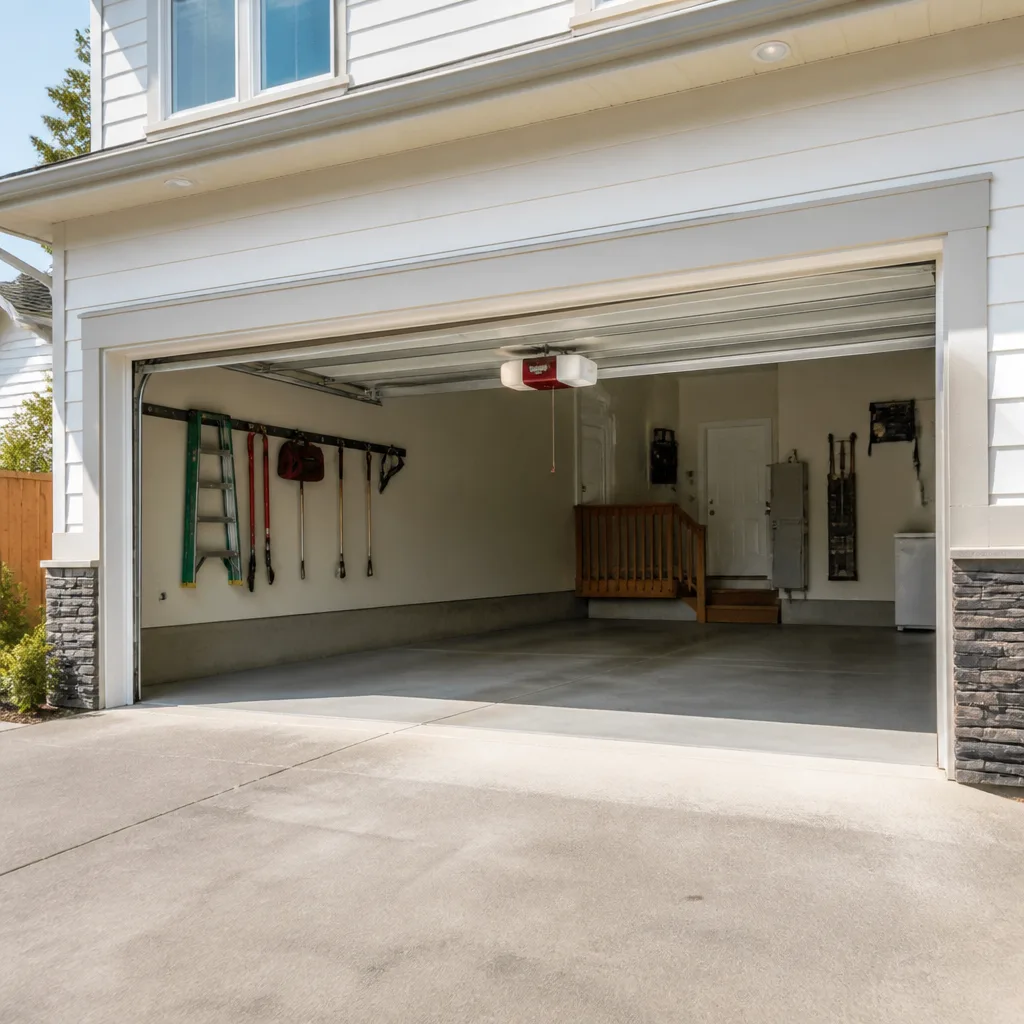
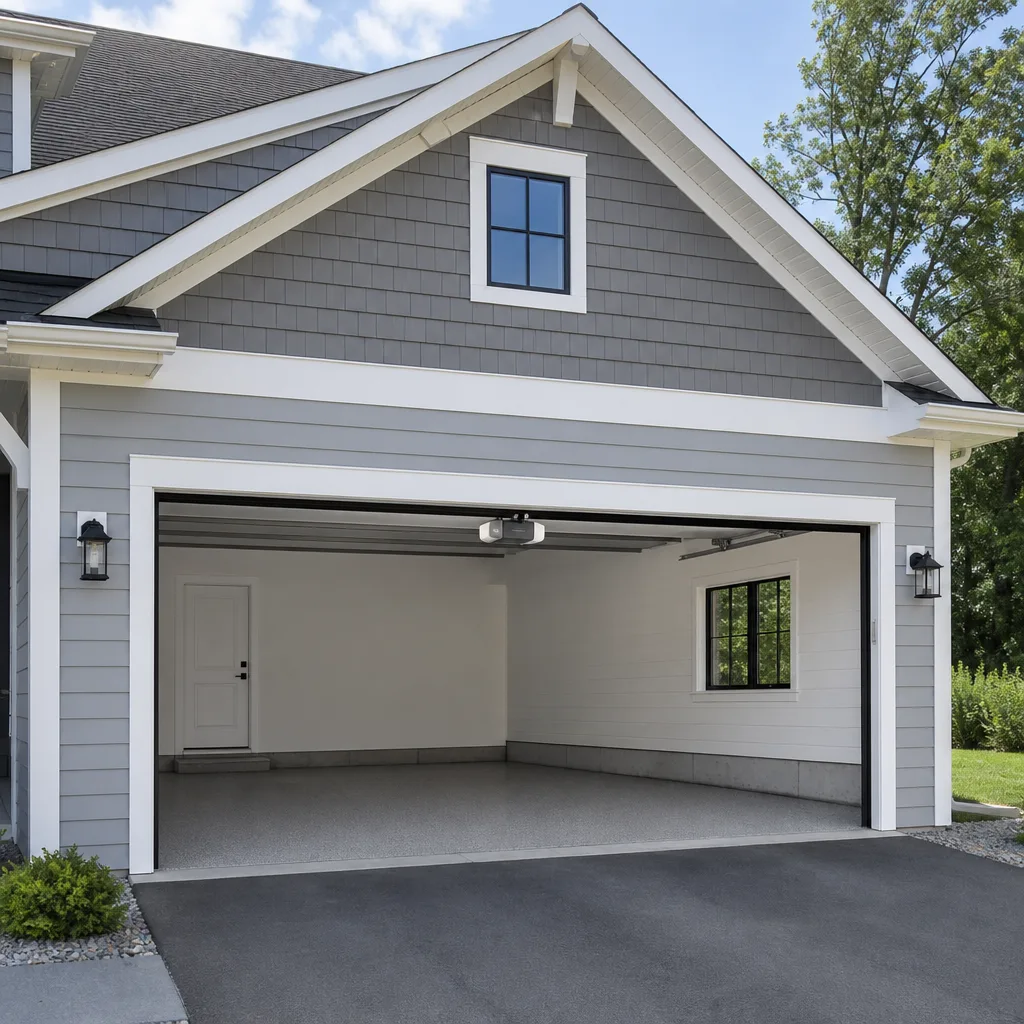
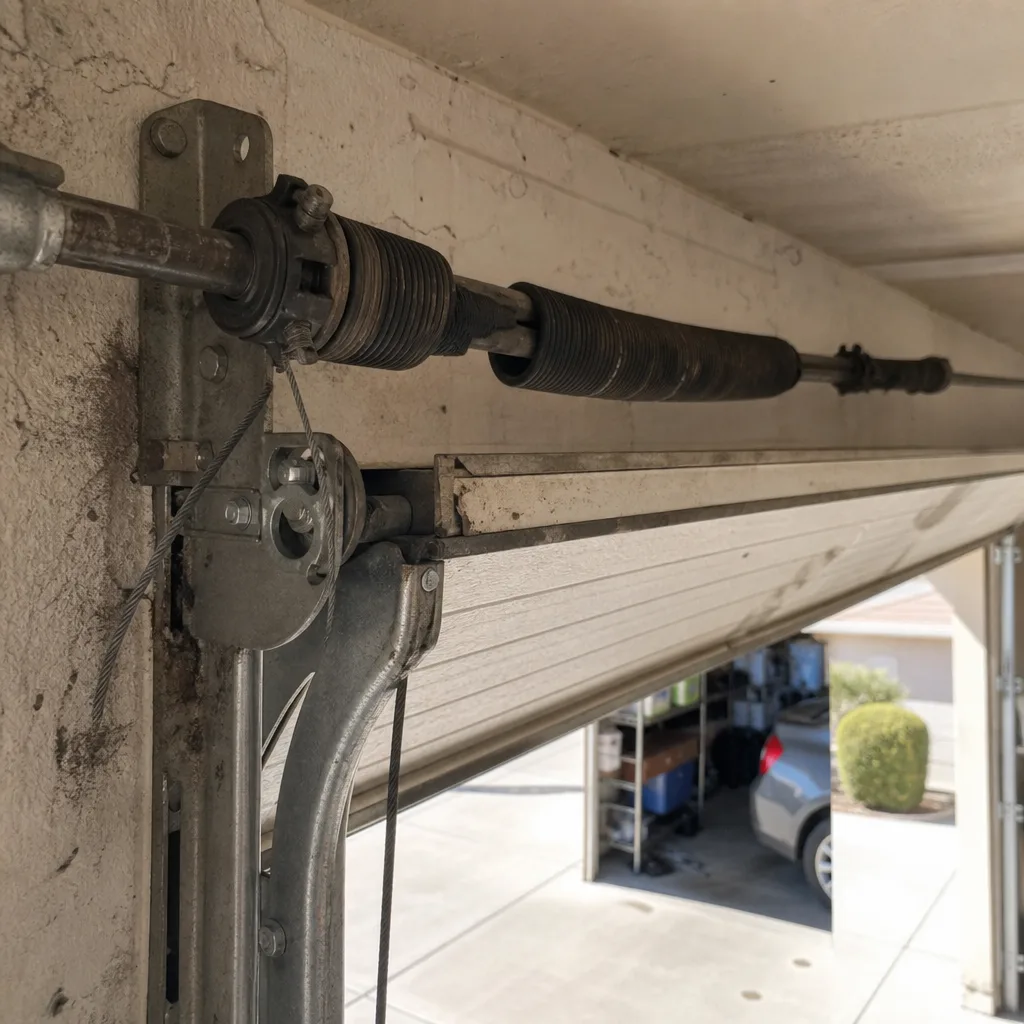 Before
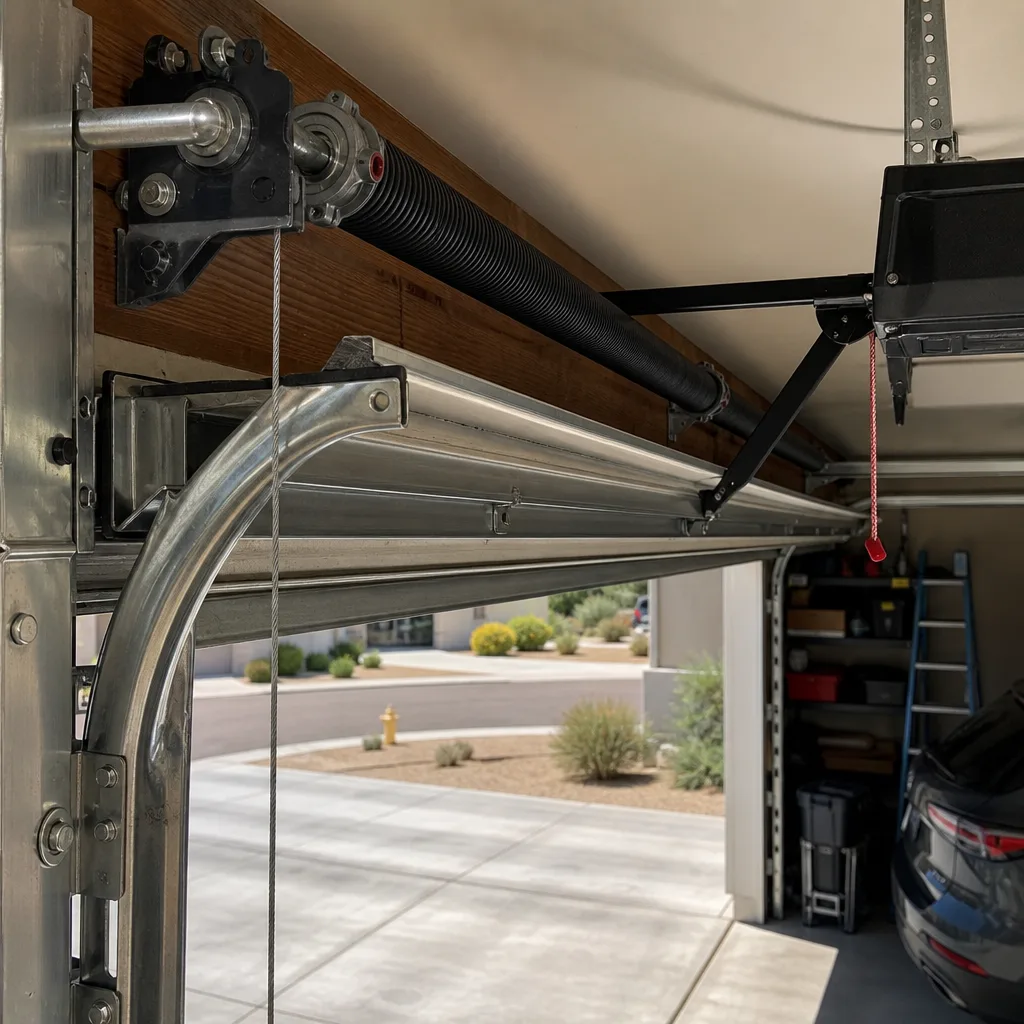 After
After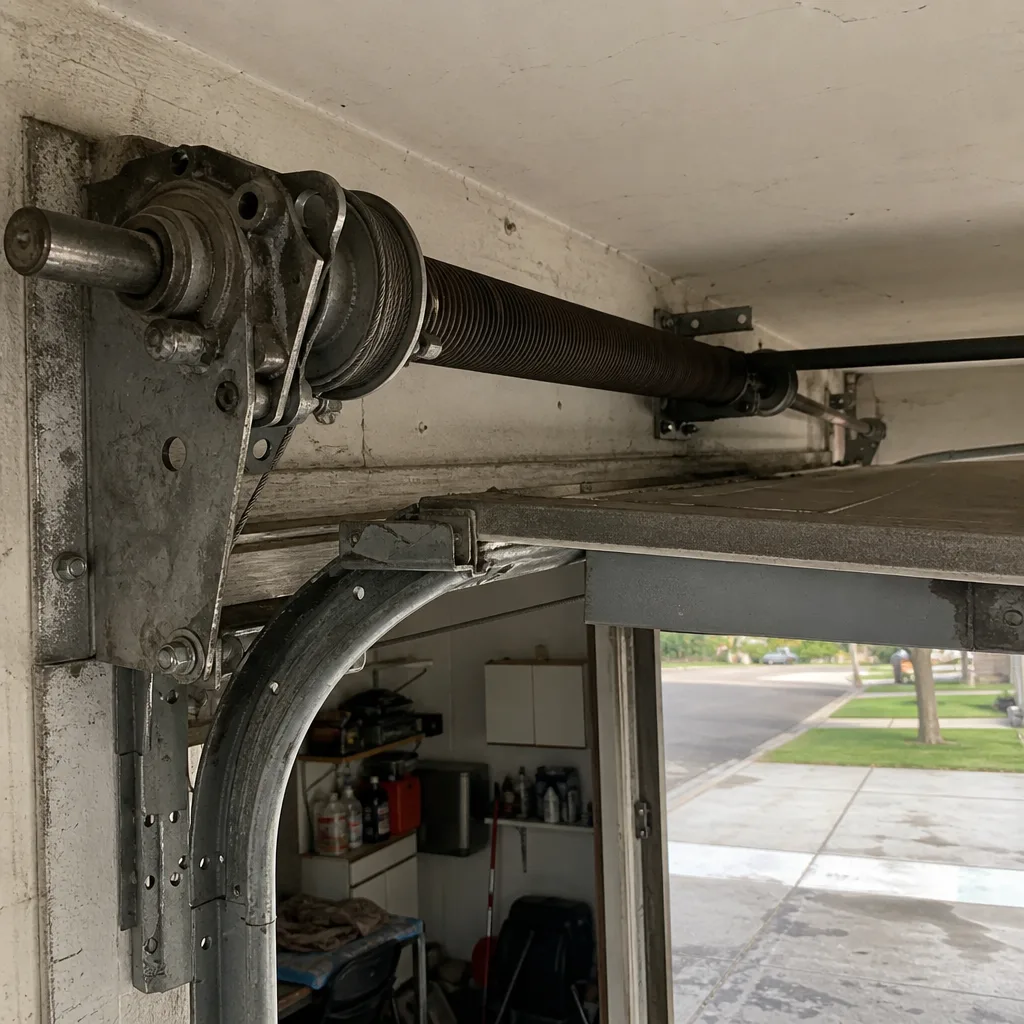 Before
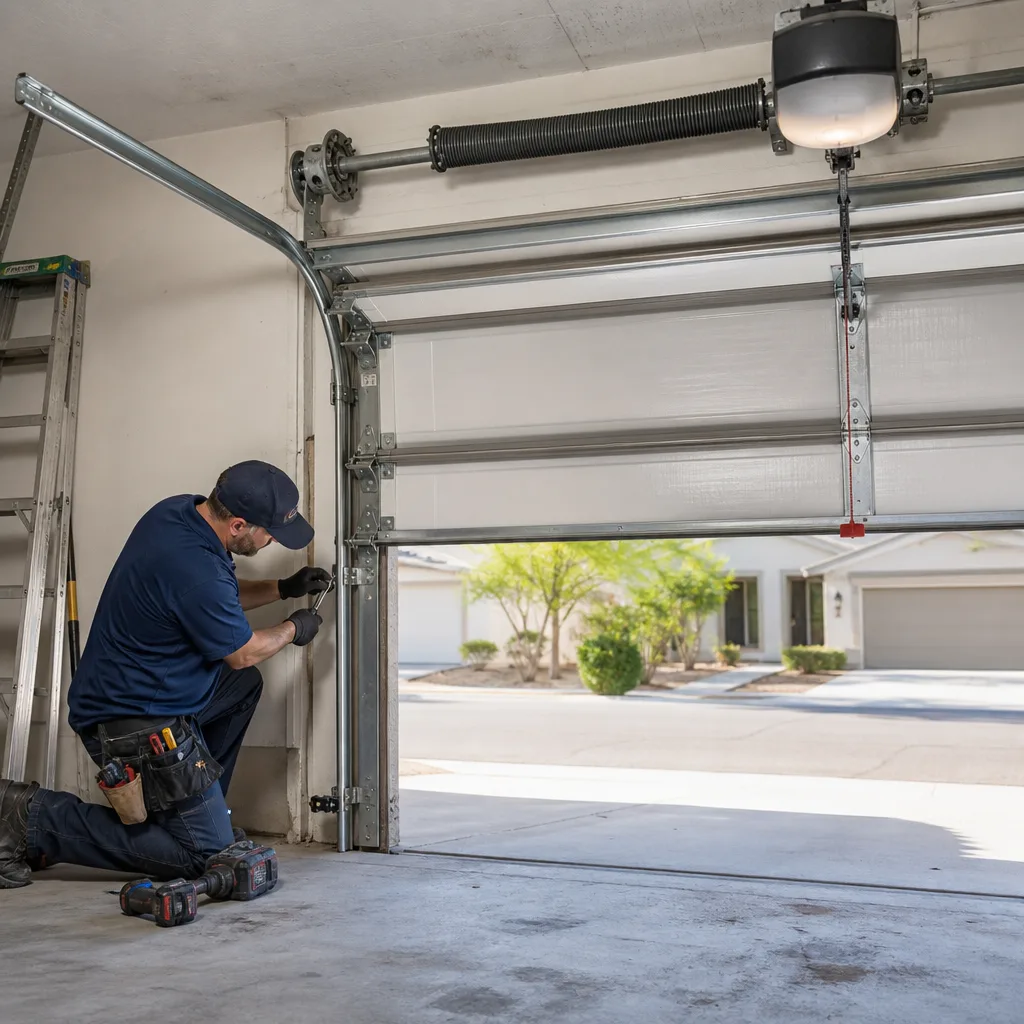 After
After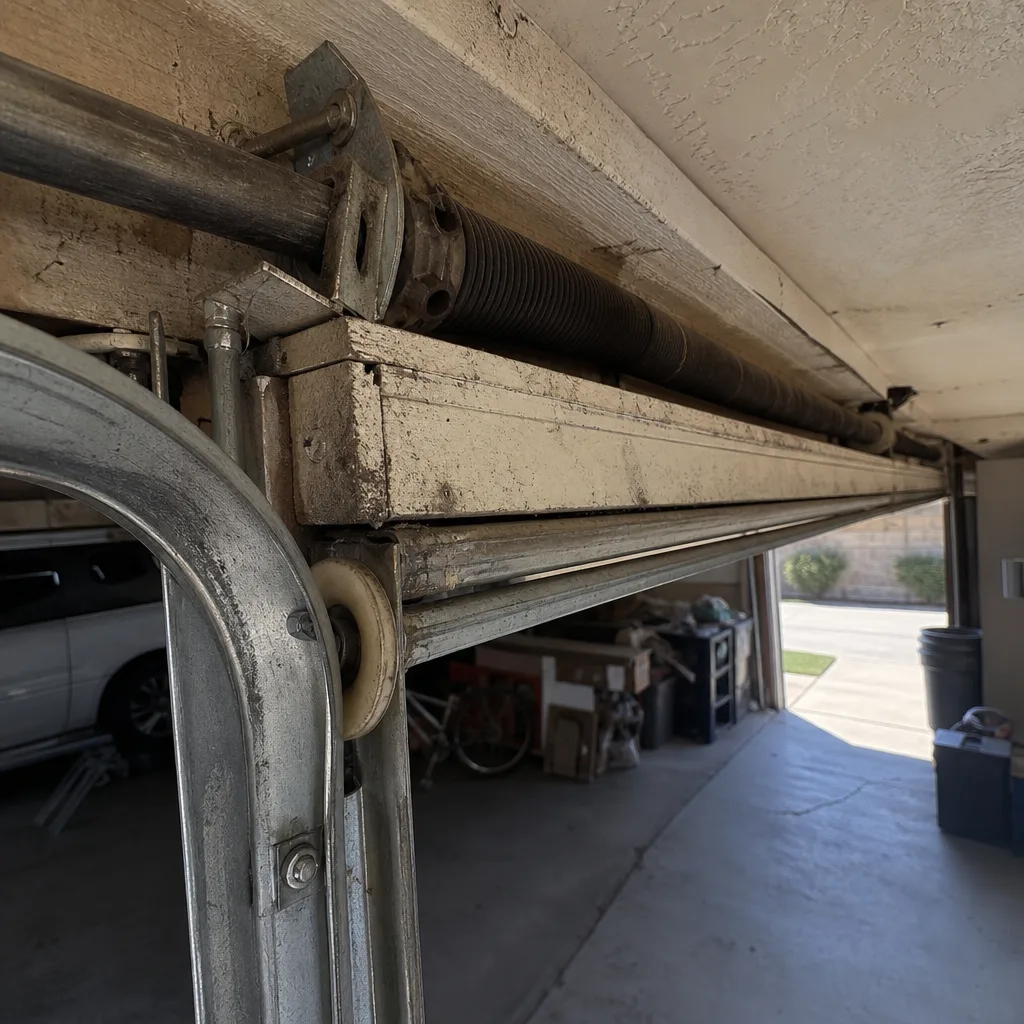 Before
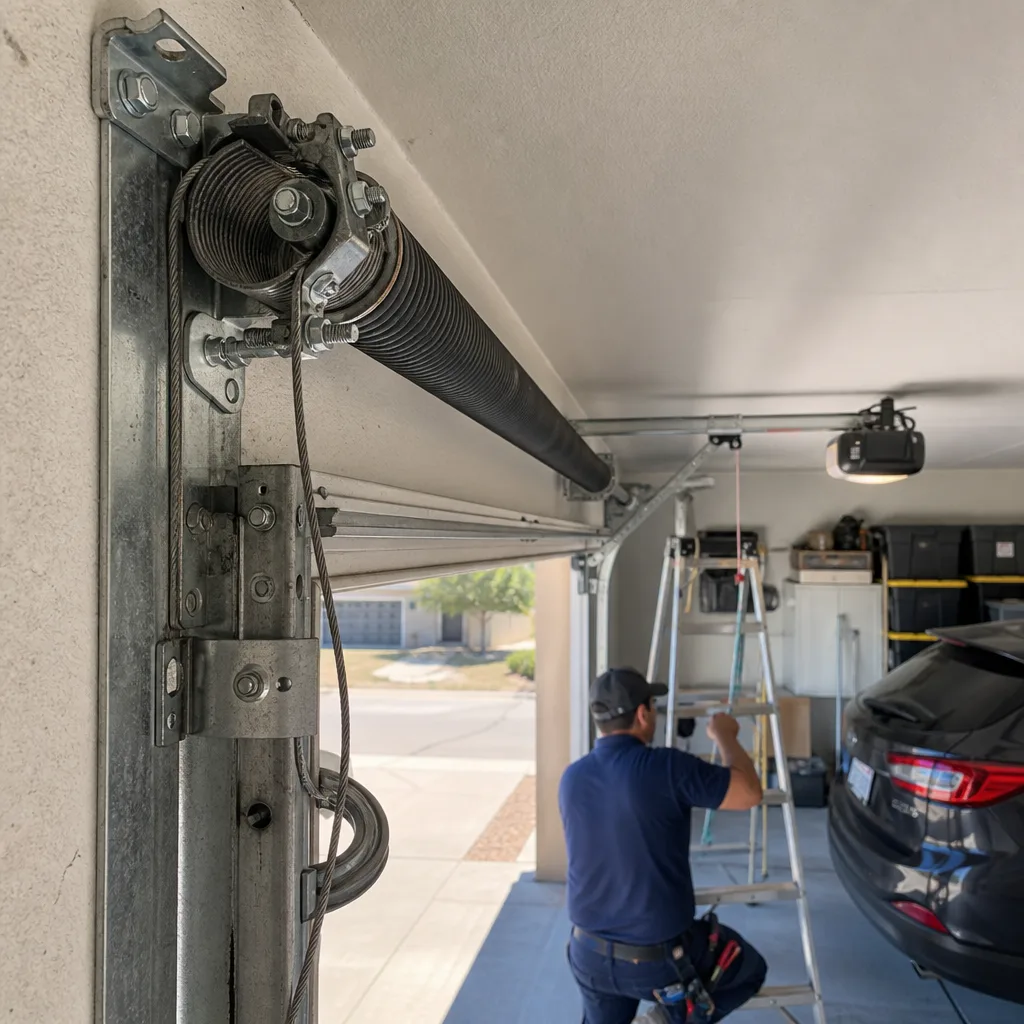 After
AfterGarage Door Warning Signs: A Gilbert Homeowner’s Reference Guide
Most garage door warning sign articles fail homeowners in one predictable way: they treat every noise, every hesitation, every uneven movement as a five-alarm emergency that demands an immediate service call. That’s not diagnosis, that’s marketing. Here’s the thing a lot of those articles won’t tell you: a garage door that groans at 6:45 a.m. on a January morning in Gilbert and a garage door that groans at 6:45 a.m. in July are often telling you two completely different stories. Cold weather stiffens grease. Monsoon humidity swells wood and corrodes contacts. Some sounds are seasonal, some are structural. This guide exists to help you tell the difference before you spend money on a service call you didn’t need, or worse, ignore a service call you absolutely did. For more, see our Complete Guide to Garage Door in Gilbert. We’re going to walk through what each warning sign actually means, which component it implicates, and whether you should lock the door and disconnect the opener tonight, book a visit this week, or just keep an eye on it and log what changes.
Quick Answer
A garage door warning sign in Gilbert is any observable change in how the door sounds, moves, or responds. The signs that demand same-day attention are a broken torsion spring, a frayed or unraveling lift cable, and a bent bottom section that compromises the seal or the safety sensors. Everything else, from grinding rollers to a sluggish opener response, can usually be logged, documented, and scheduled within the week. The single most useful diagnostic step any Gilbert homeowner can take before calling anyone is the manual disconnect test: pull the red emergency cord, lift the door by hand, and observe whether the problem follows the door or the opener.
Table of Contents
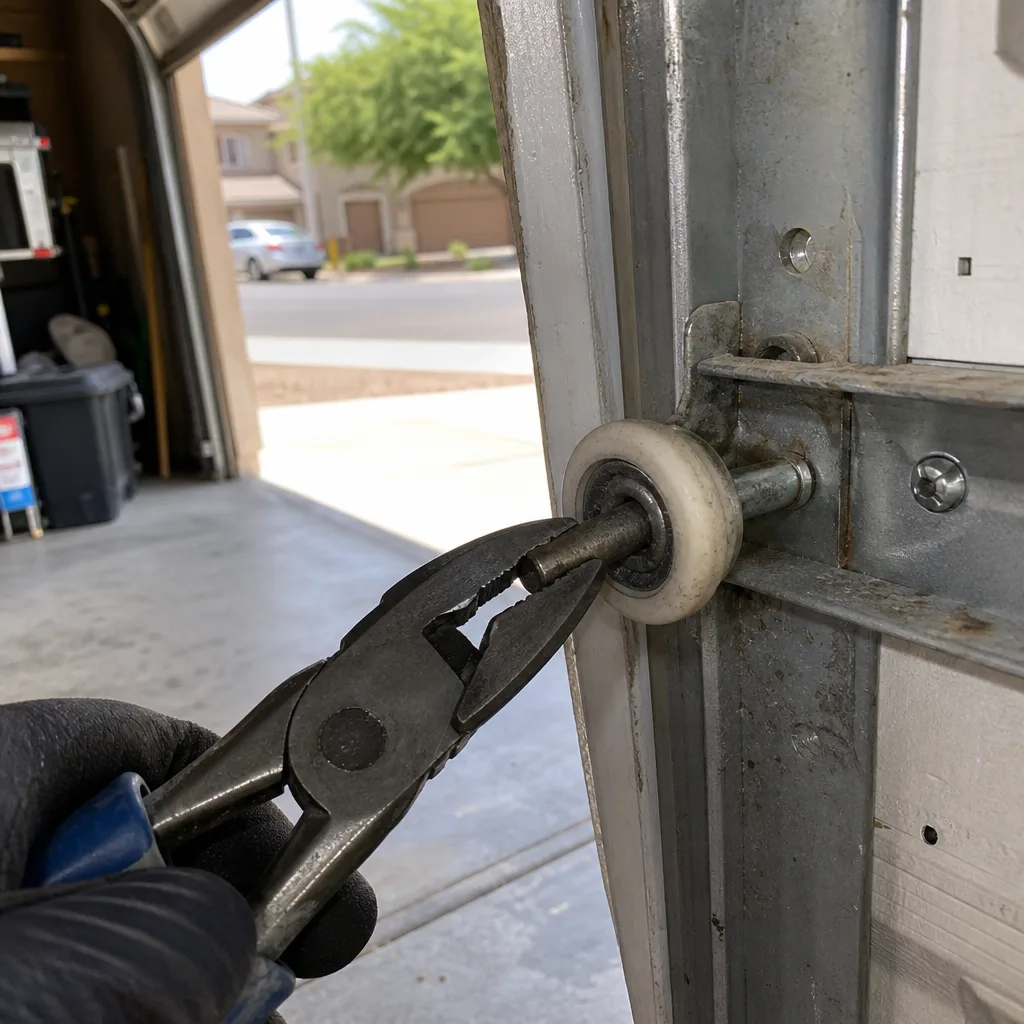
- Symptom-to-Component: What Each Warning Sign Actually Means
- The Three Signs That Require an Immediate Safety Stop
- Opener-Side vs. Door-Side Failures: The Manual Disconnect Test
- Gilbert-Specific Warning Signs: Heat, UV, and Landscaping
- What to Document Before You Call: The Evidence That Gets You a Written Quote
- What’s Normal Wear and What’s Not: Calibrating Your Alarm System
- Common Mistakes to Avoid
- When to Call a Professional
- Frequently Asked Questions
- The Bottom Line
 Before
 After
AfterSymptom-to-Component: What Each Warning Sign Actually Means
A garage door is a system, not a single machine. Half of it is the door itself: the panels, the rollers, the hinges, the tracks, the springs, the cables. The other half is the opener: the motor, the logic board, the trolley carriage, the limit switches, the safety photo-eyes. Most warning signs implicate one half or the other, and the fix, the cost, and the urgency are completely different depending on which side you’re dealing with. Here’s the diagnostic table we use internally, mapped to the urgency tier we’d assign if you called us in Gilbert.
| Symptom (What You Observe) | Likely Component | Urgency Tier | What to Do |
|---|---|---|---|
| Grinding or metal-on-metal scraping | Worn rollers, dry bearings, or track misalignment | Monitor and log; schedule within 7-10 days | Record a 10-second video from inside the garage, close to the track. Note whether the sound is constant or rhythmic. |
| Door pauses mid-travel, then continues | Track obstruction, roller binding, or logic board voltage drift (heat-related) | Schedule within the week | Inspect tracks visually for debris. Log the temperature and time of day when it happens. |
| Uneven movement: one side higher than the other | Cable drum slip, cable wear, or a failing spring on one side | Immediate if sudden onset; monitor if gradual | Stop using the door. Take a photo from outside showing both corners. Call for an assessment. |
| Door won’t stay closed; reverses before touching floor | Photo-eye misalignment or obstruction | Fix it yourself in 4 minutes or schedule same-day | Check for leaves, spider webs, or a shifted sensor bracket. Clean and realign. |
| Door reverses after touching the floor | Close-limit setting error or a worn limit switch | Schedule within 3-5 days | This is an opener adjustment issue. Document it with a video. Do not force the door closed manually. |
| Door feels heavy when you pull the emergency release | Torsion spring has lost tension or broken | Immediate safety stop | Lock the door if possible, disconnect the opener, and call. Do not attempt to open the door. |
| Loud bang from inside the track, door slams shut | Broken torsion spring | Immediate safety stop | Disconnect the opener at the wall. Do not use the door. Do not attempt a manual lift. |
| Slow response: press wall button, 2-3 second delay before movement | Logic board overheating (common in Gilbert attached garages), capacitor wear, or wireless interference | Monitor and log; schedule within 2 weeks | Note whether the delay is worse in the afternoon vs. morning. This pattern points to heat saturation. |
| Door sags when opening, bounces when closing | Worn torsion spring (low cycle count), worn extension spring, or stretched cables | Schedule within the week if gradual; immediate if sudden | Close the door. Photograph the spring assembly from a safe distance. Call for a written quote. |
Here’s what this table is actually telling you: most warning signs are not emergencies. They’re data points. The challenge for a Gilbert homeowner is that the same door in the same garage in August behaves differently than it does in February. Heat expands the metal track. UV embrittles the bottom seal. The opener’s logic board sits in a garage that can reach 120 degrees Fahrenheit or more in a Gilbert summer afternoon, and heat-induced voltage drift is a documented cause of limit-switch errors and delayed response. So before you assign a symptom to a component, log the temperature, the time of day, and whether the behavior is consistent or intermittent. That log is worth more than a verbal description when you call a technician.
One thing we want to be direct about: we’ve built our entire Servo Garage Doors Gilbert home documentation system around this principle. The technician who arrives at your door should arrive with a paper trail: what you described, what the photo record shows, and what the written scope will cover before any work begins. Not a phone call where someone says “sounds like a spring” and then hands you an invoice.
The Three Signs That Require an Immediate Safety Stop
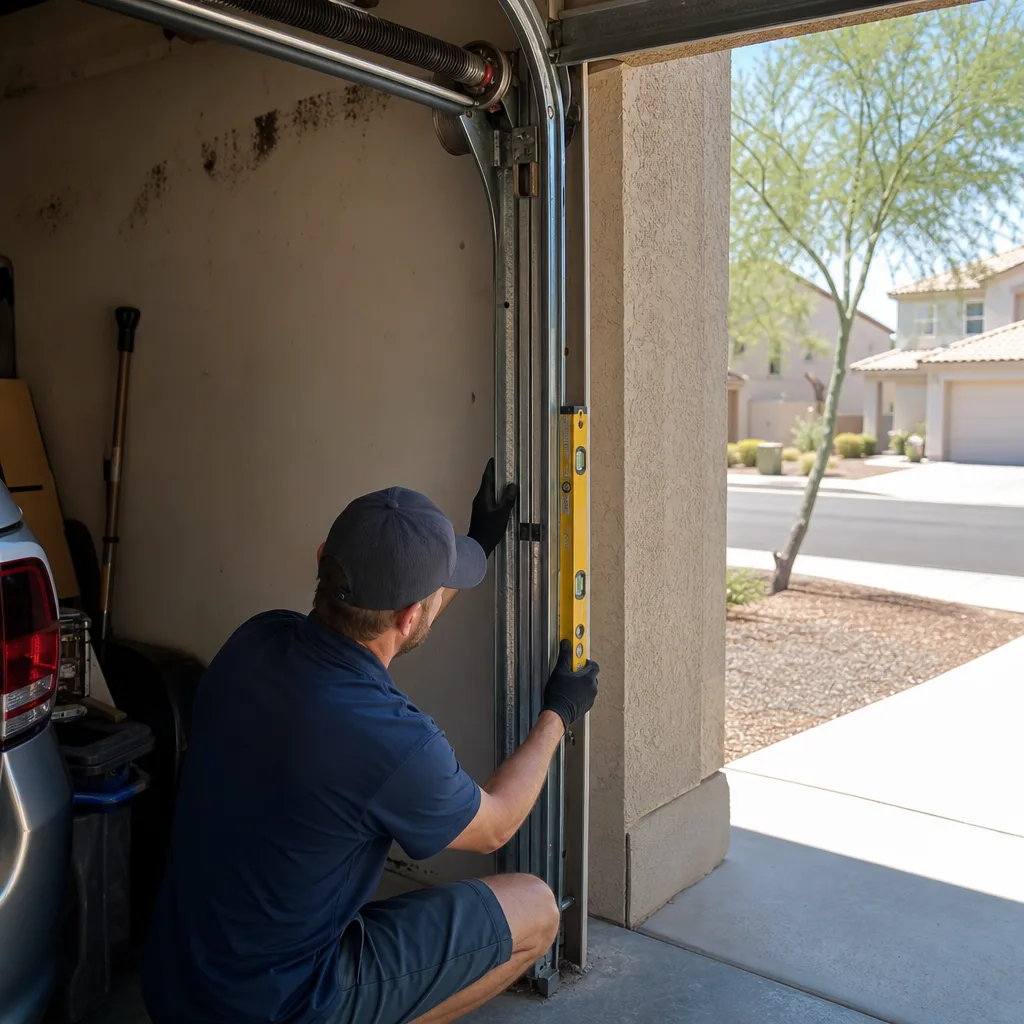
Three specific warning signs indicate an active safety hazard. These are not “keep an eye on it” situations. These are “lock the door, disconnect the opener, and call someone who knows what they’re looking at” situations. Here’s what they are, what they mean, and why they’re different from everything else in this guide.
1. A broken torsion spring. The torsion spring is the coiled steel component mounted on a metal shaft above the door opening. It stores the mechanical energy that counterbalances the door’s weight, which on a double-car garage door in Gilbert can exceed 250 pounds. When a torsion spring breaks, it releases that stored energy at once. You’ll hear it: a sharp bang, like a firecracker inside the track. After that, the door will not open manually, or if it does, it will slam shut with unmanageable force. Do not try to lift a door with a broken torsion spring. Do not try to disconnect the cables. Disconnect the opener at the wall button, if the door is closed, leave it closed. If the door is open, do not stand under it. Call a professional. Torsion springs are under extreme tension, and the repair involves winding and unwinding cycles that can cause serious injury if attempted without the correct winding bars and technique. This is one of the few garage door repairs where we’ll say it plainly: a real technician earns the service fee, and trying to save it can put you in a Gilbert emergency room.
2. A frayed or unraveling lift cable. The lift cables are the steel braided lines that run from the bottom brackets on each side of the door up to the cable drums on the torsion shaft. They work in tandem with the springs to distribute lifting force evenly. When a cable frays, individual strands start snapping. You’ll see it as a fuzzy or hairy appearance on the cable, or you might notice the cable has jumped off the drum and is now wrapped around the shaft in a loose coil. A frayed cable is a failure in progress. When it goes, the door drops on that corner, which can rack the entire panel assembly and bend the tracks. You may have a few hours or a few days, but you can’t know which. If you can see the cable is frayed, stop using the door and call. The good news: the cable itself is an inexpensive part. The bad news: the spring torque almost always needs to be released before the cable can be replaced safely, which is why this repair should not be attempted as a DIY job.
3. A bent bottom section that compromises the sealing bracket. The bottom section is the panel that sits at the floor when the door is closed. It carries the bottom rubber seal, the safety sensor brackets (on most openers), and the cable anchor brackets. If that section gets bent, usually from a car nudging it while the door is still traveling downward, the bend creates a gap at the floor, but more importantly, it changes the geometry of the cable anchors. The cables no longer pull straight, and that uneven tension loads one side of the spring system more than the other. The result is accelerated cable wear, uneven spring fatigue, and eventually a catastrophic failure. A bent bottom section is not something you can straighten with a rubber mallet and move on. The panel usually needs to be replaced, and the cables and springs need to be evaluated for secondary damage. If you see a visible crease or fold in that bottom panel, treat it as an immediate safety item.
We want to be explicit about one thing here because it matters: these three conditions are the ones where we advise disconnecting the opener and locking the door manually until a technician arrives. Not because we benefit from the urgency, but because a door that drops unexpectedly can injure a child, a pet, or an adult. We’ve seen the aftermath of a dropped door in Gilbert, and it’s not something any homeowner should experience. Garage Door Repair in Gilbert is something we do every day, and these three conditions are the core of our emergency call load in the summer months.
Opener-Side vs. Door-Side Failures: The Manual Disconnect Test
Here’s the single most useful diagnostic step you can perform before calling anyone: the manual disconnect test. It isolates whether the problem is in the opener (the motor, the logic board, the trolley, the sensors) or in the door itself (the springs, the cables, the rollers, the tracks). The test takes about two minutes, requires no tools, and gives you information that will make your service call faster and more accurate.
- Close the garage door completely.
- Locate the red emergency release cord hanging from the opener rail. It’s usually a red handle on a short rope.
- Pull it straight down. You’ll hear a click as the trolley disengages from the opener carriage.
- Lift the door by hand using the handle at the bottom. Lift slowly and observe.
- Note the weight. Does it feel balanced? Does it stay in place halfway up if you let go? Does it drop or jerk?
- Reconnect the opener by pressing the wall button or pulling the emergency cord again until you hear it re-engage.
Here’s how to interpret what you observed. If the door lifts smoothly by hand and stays where you put it, the door side of the system is fine. The springs are doing their job, the cables are intact, the rollers are rolling. Your problem is in the opener: the logic board, the limit switch, the trolley carriage, or the safety sensors. If the door feels heavy, won’t stay in place, grinds, or drops when you let go, the door side is failing: likely a tired torsion spring, worn rollers, or a cable that’s about to let go.
This test matters for one practical reason: it determines who you call and what they’ll need to bring. An opener-side failure generally means a repair on the motor unit. A door-side failure generally means springs, cables, or track work. If you can tell the technician “the door lifts fine by hand, so it’s the opener” you’ve saved a service call’s worth of diagnostic time and given the technician a head start on parts. It also protects you from the classic upsell: a technician who arrives for an opener problem and announces you need new springs. If the door lifts smoothly by hand, you don’t need new springs. Document the test with a quick phone video: thirty seconds of you lifting the door manually and narrating what you feel. That video is evidence, and evidence is the language that keeps a quote honest.
In our experience with Garage Door Opener Repair & Installation in Gilbert, roughly a third of the calls we take for “opener problems” turn out to be door problems, and vice versa. The manual disconnect test is the difference between a precise service call and a fishing expedition.
Gilbert-Specific Warning Signs: Heat, UV, and Landscaping
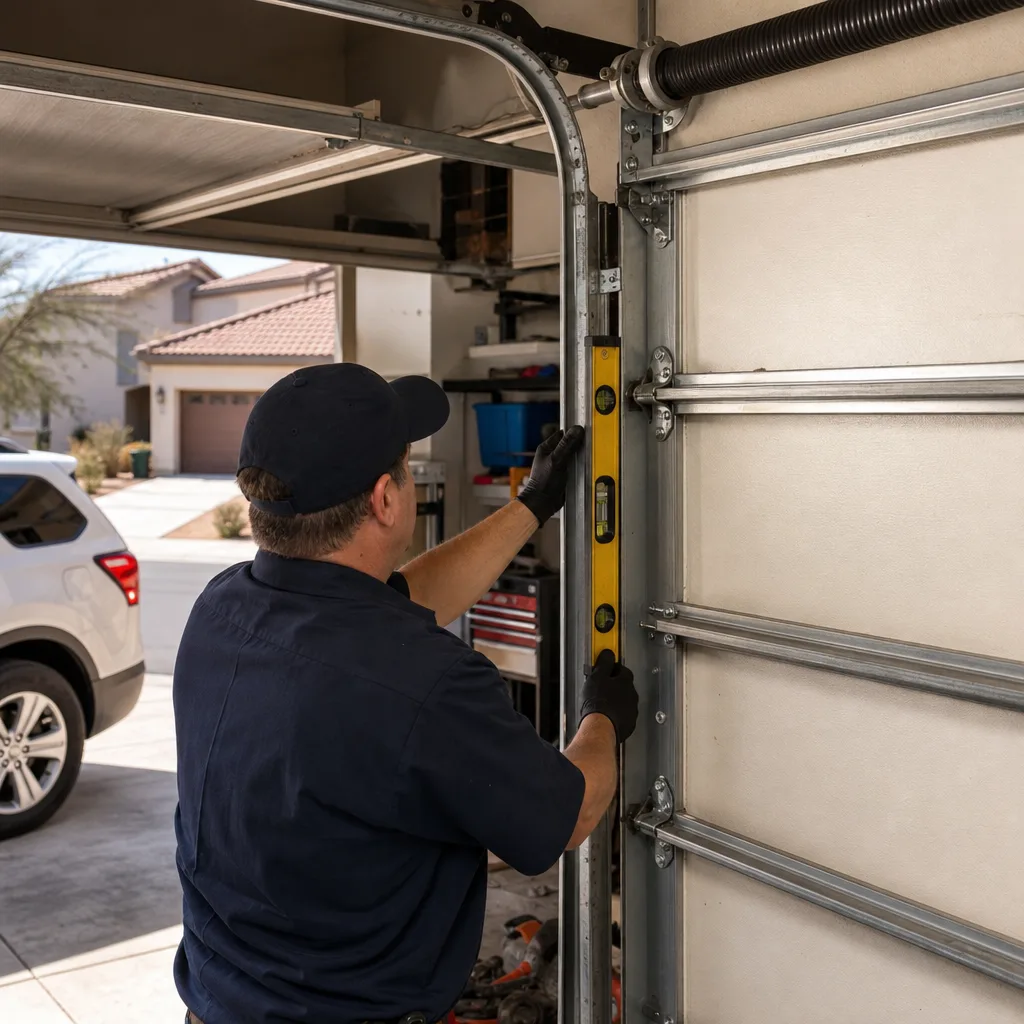
Garage doors in Gilbert fail differently than garage doors in Minneapolis or Seattle. Our climate is a hostile environment for the materials that make up a garage door system, and the warning signs our climate produces are specific enough to deserve their own section. Here are the three we see most often in Gilbert, and the neighborhoods where they’re most common.
UV-induced bottom seal brittleness. The rubber or vinyl seal along the bottom of the door exists to keep monsoon rain, dust, and desert critters out of the garage. In Gilbert, that seal sits in direct sunlight for hours a day if the door faces south or west, and UV radiation breaks down the polymer chains in the material faster than anything else. The result is a seal that looks fine on casual inspection but crumbles to the touch when you flex it. You’ll notice it as a visible gap of daylight under the door when it’s closed, or as a line of dust and debris that accumulates along the interior floor line after wind events. This is a monitor-and-log item, but it’s worth checking every six months, especially if you live in a community where the HOA expects the garage door to sit flush and sealed. The fix is a seal replacement, which is inexpensive and quick. The failure you’re preventing is more expensive: monsoon water intrusion that warps the bottom panel and the interior framing.
Track debris intrusion from landscaping adjacent to driveways. Gilbert’s native and landscaped vegetation, especially oleander, bougainvillea, and mesquite, produces fine debris that finds its way into the vertical track channels. Bougainvillea thorns are long enough and sharp enough to wedge between a roller and the track wall, which causes intermittent binding. Mesquite pods drop in enormous quantities in late spring and early summer, and they’re the right size to bounce into the track opening when a car brushes past the bushes on the way out of the driveway. The symptom is a door that hesitates or shudders when the rollers pass a specific point in the track. The fix is simple: clear the debris and, if the problem recurs, trim back the landscaping that’s dropping into the track path. This is the most preventable warning sign on this list, and the one that most often gets misdiagnosed as a “worn out track” by less scrupulous companies selling a replacement you don’t need.
Opener sensitivity drift from attic heat transfer in attached garages. Gilbert garages are punishing thermal environments. In July and August, the interior of an attached garage can exceed 125 degrees Fahrenheit, and the opener’s logic board sits at the highest point of the garage, where that heat concentrates. The electronic components on the logic board, particularly the capacitors and the limit-switch contacts, are rated for operating temperatures lower than what a Gilbert garage produces at peak. The symptom: an opener that works perfectly in the morning and starts acting erratically in the late afternoon, or one that opens the door fine but requires two or three presses of the wall button before the motor engages. That’s not a failing motor. That’s heat saturation on the logic board. If you log the time of day and the ambient garage temperature and the pattern lines up with the heat, you can cite that when you call, and it will stop the technician from replacing a motor that doesn’t need replacing. Some homes in Gilbert benefit from a simple fix: a small ventilation fan in the garage, or re-routing the opener’s transformer away from the hottest wall. But here’s the thing to know before you accept a repair quote: heat-related logic board drift is a documented condition, and a technician who can’t explain the temperature dependence of your opener’s behavior is guessing at the fix.
These three Gilbert-specific warning signs are exactly the kind of information you won’t find in a generic garage door article written for a national audience. They’re the product of servicing doors in this market, in these neighborhoods, for years. And they’re why a local technician who knows this climate will always diagnose more accurately than a national call center reading from a script.
What to Document Before You Call: The Evidence That Gets You a Written Quote
This is the section we hope you’ll remember because it’s where a Gilbert homeowner can directly control the cost and quality of the service they receive. Before you call anyone about a garage door warning sign, gather the following documentation. It takes ten minutes and it changes the entire dynamic of the interaction.
- A 10-second video of the door in motion. Stand inside the garage, about six feet back from the track, and record the door going through one full cycle (open and close). Narrate what you’re hearing and seeing as it happens. “There’s a grinding sound at about waist height on the left side.” “The door pauses right here and then continues.” That video is the single most useful piece of diagnostic information you can provide.
- A close-up photo of the components you can see. The torsion spring above the door (from a few feet back, not from a ladder), the lift cable on each side, the bottom seal, and the rollers in the track. If something looks worn, frayed, or broken, photograph it. If you know the make and model of the door or opener, photograph the label too.
- The symptom log. Note the date, time, temperature, and what the door did. Three lines is enough: “Monday 6:45am, 68F, door slowed at midpoint and made a grinding sound.” “Tuesday 7:10am, 74F, no noise, normal operation.” “Wednesday 6:50am, 72F, grinding sound again, same spot.” That log tells a technician whether the problem is temperature-dependent, load-dependent, or random.
- The manual disconnect test result. Did the door lift smoothly by hand? Did it stay where you put it? Did it feel heavy? Include this with your video and photos.
- Any existing documentation. If a previous company gave you a written estimate or repair record, keep it. If the door is still under warranty, have the warranty information ready. If you bought the home and the door came with it, note the panel brand and check the inside of the door for a manufacturer label.
Here’s why this matters, and why we’re being direct about it: a written quote without a diagnostic visit is only possible if the technician can see and hear what you’re describing. We quote flat, written prices before any work begins, per Clause 1 of The Haven Standard, the standard we work under. That means we need to know what the problem is before we can tell you what it costs to fix it. The video, the photos, and the symptom log are the evidence that lets us do that. If another company tells you they need a “diagnostic fee” before they’ll even name a price, that’s their business model. Ours is different: the documentation you provide lets us quote accurately from the start, and if we need to come out to confirm, the estimate is still free. This is what we mean when we say we sell a paper trail, not a pitch. Clause 4 of The Haven Standard is why the technician photographs the failed part before quoting a replacement. You should expect the same level of documentation from anyone you call.
What’s Normal Wear and What’s Not: Calibrating Your Alarm System
Not every noise is a warning sign. But if you don’t know what’s normal for your door, you’ll either overreact and spend money on unnecessary repairs or underreact and miss a failure in progress. Here’s the calibration guide we give Gilbert homeowners.
Normal: a low rumble or hum that’s consistent cycle to cycle. Garage doors aren’t silent. The motor hums, the rollers ride the track, the springs coil and uncoil. If the sound is consistent, doesn’t change in pitch or volume, and the door moves smoothly, it’s probably normal wear. Log it and check for changes.
Not normal: a new sound that appears suddenly. A grinding, scraping, or banging sound that wasn’t there last week is a warning sign. Something changed. Document it and figure out which component it’s coming from.
Normal: a slight pause or hitch when the door first starts moving. That’s the opener overcoming static friction. A half-second hesitation when the motor engages is normal, especially in cooler weather.
Not normal: a pause or stall mid-travel. The door should move continuously from fully open to fully closed. If it stops partway and then resumes, something is binding or the logic board is sending a false limit signal.
Normal: seasonal changes in speed. Your door will be slightly slower in the winter when the grease is cold and slightly faster in the summer when it’s thin. That’s material science, not a failure.
Not normal: a door that’s noticeably slower than it was a month ago, at the same temperature. That’s a spring losing tension, a roller wearing down, or a motor fighting increased friction. Log it. If the trend continues over a week or two, it’s a schedule-within-the-week item.
Here’s the key insight: a warning sign is a change from your door’s baseline. The person who knows your door’s baseline is you. The person who can interpret that change against the thousands of doors they’ve seen in Gilbert is a technician. The documentation you keep between service visits is what turns an ambiguous complaint into a precise diagnosis. For more guides & resources on keeping your garage door reliable, visit our blog. It’s also what protects you from buying a repair you don’t need. We’ve had Gilbert homeowners bring us symptom logs that resolved their problem in a single phone call: “your description matches a photo-eye misalignment, check for a spider web on the sensor” and the problem was gone in four minutes. No service call, no charge, no upsell. That’s the kind of outcome that only happens when both sides are working with actual evidence.
Common Mistakes to Avoid
- Ignoring the manual disconnect test. This is the highest-value free diagnostic step you have. Skipping it and calling a technician blind is like going to the doctor and refusing to describe your symptoms. The test takes two minutes and changes the entire conversation.
- Oiling or lubricating the door without knowing what you’re doing. A quick spray of WD-40 into the track is one of the most common and least helpful things a Gilbert homeowner can do. WD-40 is a degreaser, not a lubricant. It washes out the grease that’s supposed to be there and attracts dirt. The right lubricant is a silicone or lithium-based garage door grease, applied to the rollers, hinges, and springs, not the track. The track should be clean and dry.
- Trying to adjust the torsion spring yourself. Torsion springs are under loads that can exceed several hundred pounds of torque. The winding bars used to adjust them are specifically designed for that job, and even experienced technicians treat torsion spring work with respect. This is not a YouTube project. Attempting a torsion spring adjustment without the correct tools and training is how people end up in emergency rooms. A real professional will always flag this danger, and now we’ve flagged it for you.
- Calling a company that won’t give you a written price before starting. In Gilbert, there’s no reason to accept a verbal estimate. A company that can’t produce a written scope and a flat price before touching your door is not operating in your interest. The Haven Standard’s Clause 1, the standard we work under, requires a written price and written scope before any work begins. No exceptions. If a company won’t do that, keep calling.
- Replacing the opener before checking the door side. The manual disconnect test will tell you which half of the system is failing. Replacing a motor because the door is heavy from a worn spring will leave you with a new opener and the same problem. This is a classic upsell pattern, and the test is your protection.
- Treating every noise as an emergency. The urgency tiers in the table at the top of this guide exist for a reason. A grinding roller is a schedule-within-the-week item. A broken spring is a same-day safety stop. If you treat them interchangeably, you’ll overpay for the small problems and underreact to the big ones. There’s no countdown timer on a garage door, and any company that implies otherwise is selling you anxiety instead of service.
- Not documenting the baseline when the door is working fine. The single best time to record a video of your garage door operating normally is today, while nothing’s wrong. That baseline video is what you’ll compare against when a sound or a hesitation appears. If you don’t have it, you’re comparing against memory, and memory is unreliable. Take 20 seconds today and film the door going through a cycle. You’ll be glad you did.
When to Call a Professional
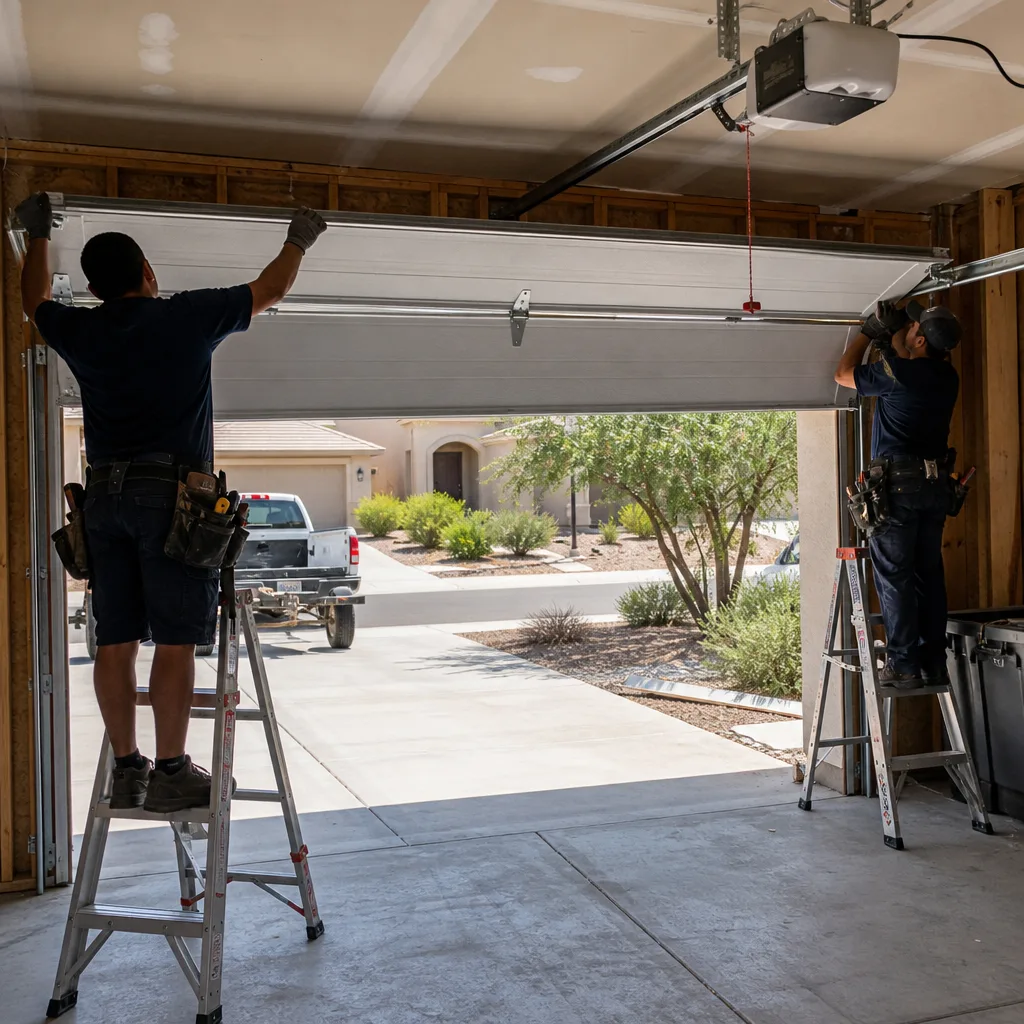
The decision tree is simple. If you observe any of the three immediate-safety-stop conditions, a broken torsion spring, a frayed cable, or a bent bottom section, disconnect the opener, lock the door if possible, and call a professional today. If you’ve logged a schedule-within-the-week item and the symptom is consistent or worsening, book an appointment before it becomes an emergency. If you’ve done the manual disconnect test, have your video and photos and symptom log ready, and you still can’t identify the component, call someone who can. The right technician will look at your evidence, explain what they see, and quote a written price before any work begins. If they won’t do that, that’s your answer too. Servo Garage Doors Gilbert offers free estimates in Gilbert, and we quote a flat, written price with a written scope before any work starts, on every job. Call (520) 482-3838 and have your video, your photos, and your symptom log ready. We’ll take it from there.
Frequently Asked Questions
Garage door spring repair in Gilbert typically costs between $180 and $340 depending on the spring type, wire diameter, and cycle rating. A standard torsion spring replacement on a single-car door is usually under $250, while a high-cycle spring on a double-car door can run higher. The price should be quoted in writing before any work begins, and any company that won’t do that is not worth your time. Call (520) 482-3838 for a written quote, free estimates are always included.
Yes, same-day garage door repair is available in Gilbert for emergency situations including broken springs, frayed cables, and doors that won’t close. We answer our phones 24/7 with a live person, not a recording, and you’ll get a named technician with an on-the-way text. Call (520) 482-3838 and describe what you’re seeing, and we’ll tell you whether it’s an emergency or a scheduled appointment.
No. Per Clause 1 of The Haven Standard, the written price and written scope are delivered before any work begins, and that price is the price. If additional work is discovered during the repair, we document it with photos and discuss it with you before proceeding. The quote is not a starting point for negotiation. Call (520) 482-3838 and ask about our written-price-first policy if you have any questions.
Yes, our Gilbert service vehicles carry the most common replacement parts: torsion and extension springs in multiple sizes, lift cables, roller sets, hinges, bottom seals, and all major opener brands including LiftMaster, Chamberlain, and Genie. The tech who arrives at your Gilbert home will have the parts needed for most common repairs on the truck, which means one visit instead of two. Call (520) 482-3838 and we’ll confirm parts availability for your specific door.
Pull the red emergency release cord to disconnect the opener, then lift the door by hand. If the door lifts smoothly and stays where you put it, the problem is in the opener. If the door feels heavy, drops when you let go, or grinds as you lift it, the problem is in the door itself: the springs, cables, rollers, or tracks. This test takes two minutes and gives you a precise answer before you call anyone.
That depends on the noise. A consistent hum or rumble that hasn’t changed in months is usually normal wear. A new grinding, scraping, or banging sound that appeared suddenly is a warning sign that something is failing. If the noise is a sharp bang from the track area and the door now won’t open, that’s a broken torsion spring, and the door should be disconnected and left alone until a technician arrives. If you’re not sure, record a video and call (520) 482-3838, we’ll talk you through it.
The Bottom Line
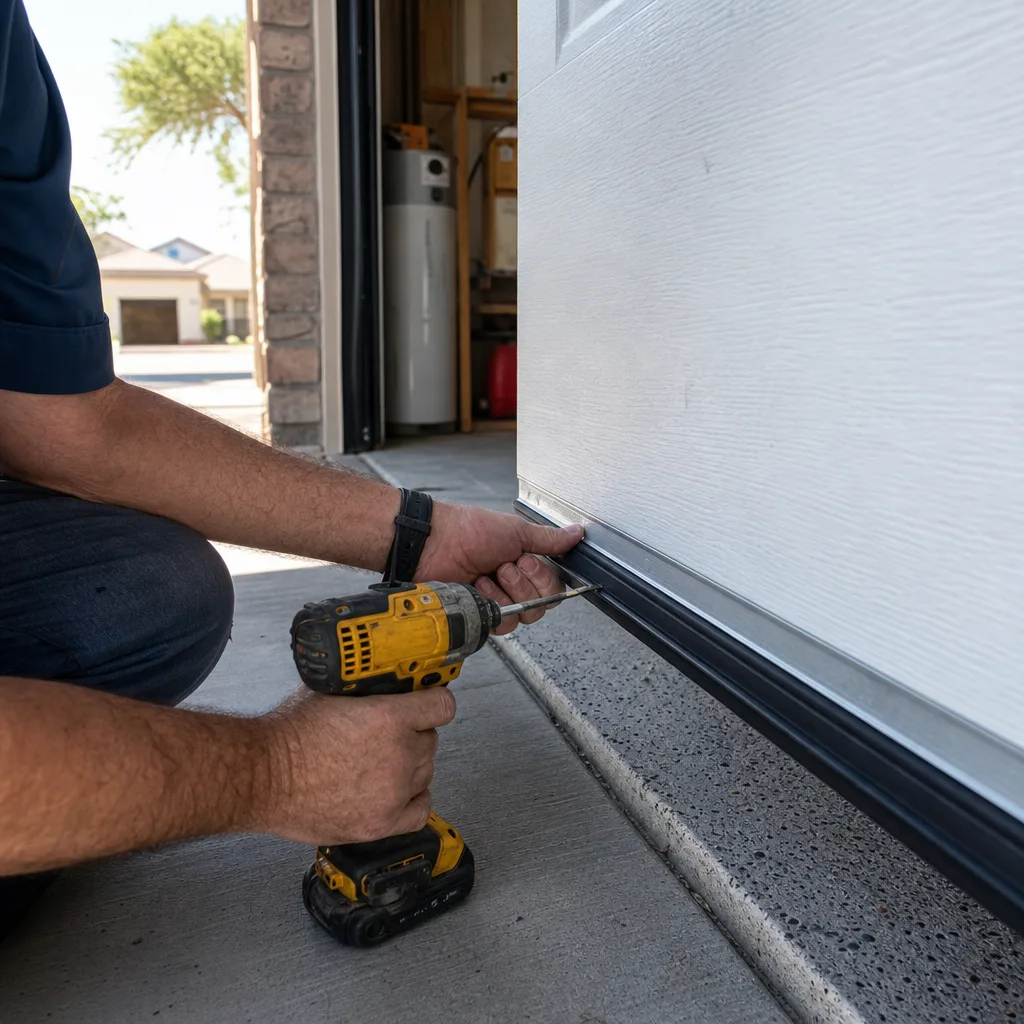
A garage door warning sign is not an emergency by default. It’s information. The job of a Gilbert homeowner is to gather that information accurately, which is what this guide has taught you to do: run the manual disconnect test, log the temperature and the time, photograph what you can see, and record the door in motion. Then use the urgency tiers to decide: immediate safety stop, schedule within the week, or monitor and log. The three conditions that require an immediate safety stop are a broken torsion spring, a frayed cable, and a bent bottom section. Everything else can usually wait a few days. Garage Door Installation in Gilbert is a separate conversation for when the door has reached the end of its useful life, and a good technician will tell you honestly when repair no longer makes sense. The company that gives you a written price before touching the door, documents everything with photos, and lets the evidence speak first is the company worth your call. That’s what we built Servo Garage Doors Gilbert to be, and that’s the standard we hold ourselves to on every job since 2015.
Written by Marcus Deller, Owner at Servo Garage Doors Gilbert, serving Gilbert since 2015.