
Last updated September 20, 2026
Full 25-point door and opener safety check with every visit - springs, cables, rollers, tracks, and your LiftMaster or Chamberlain opener included
You get a price before we start. It does not change when the truck arrives.
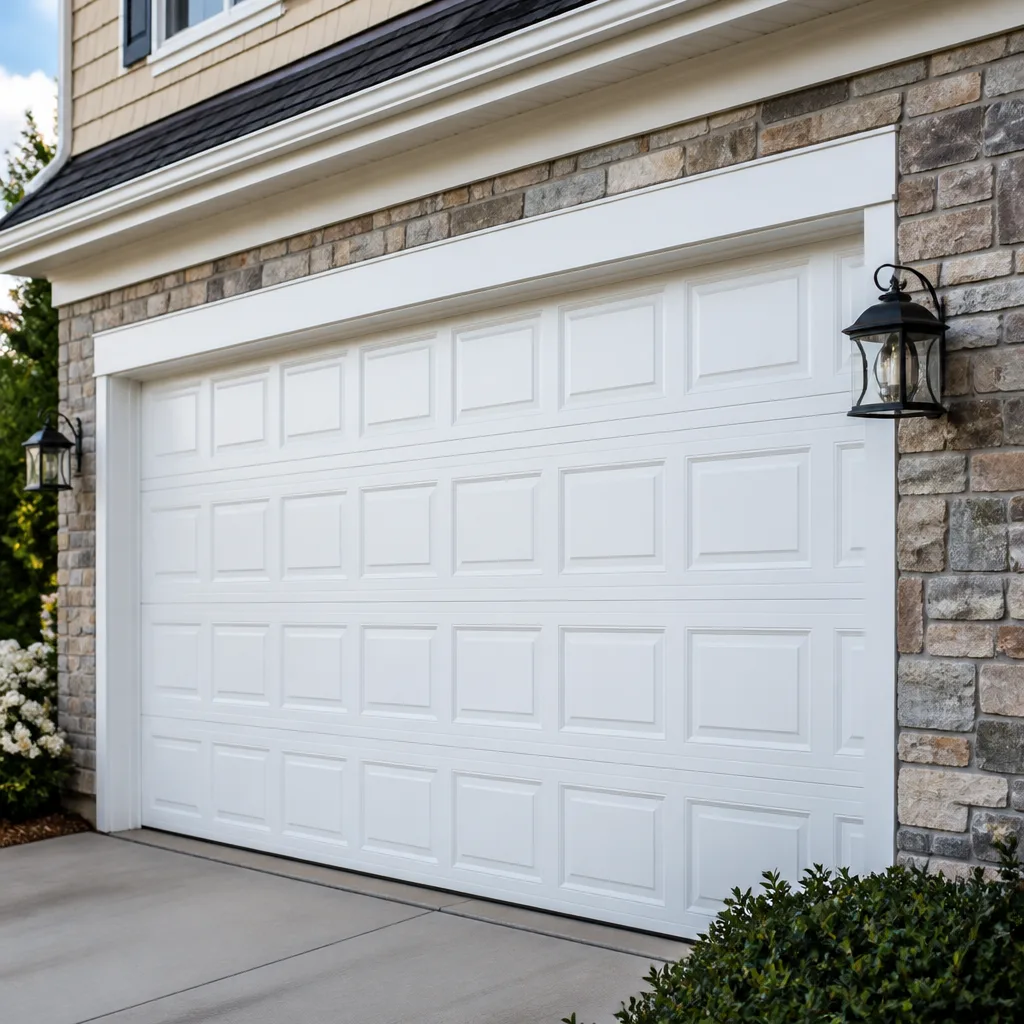
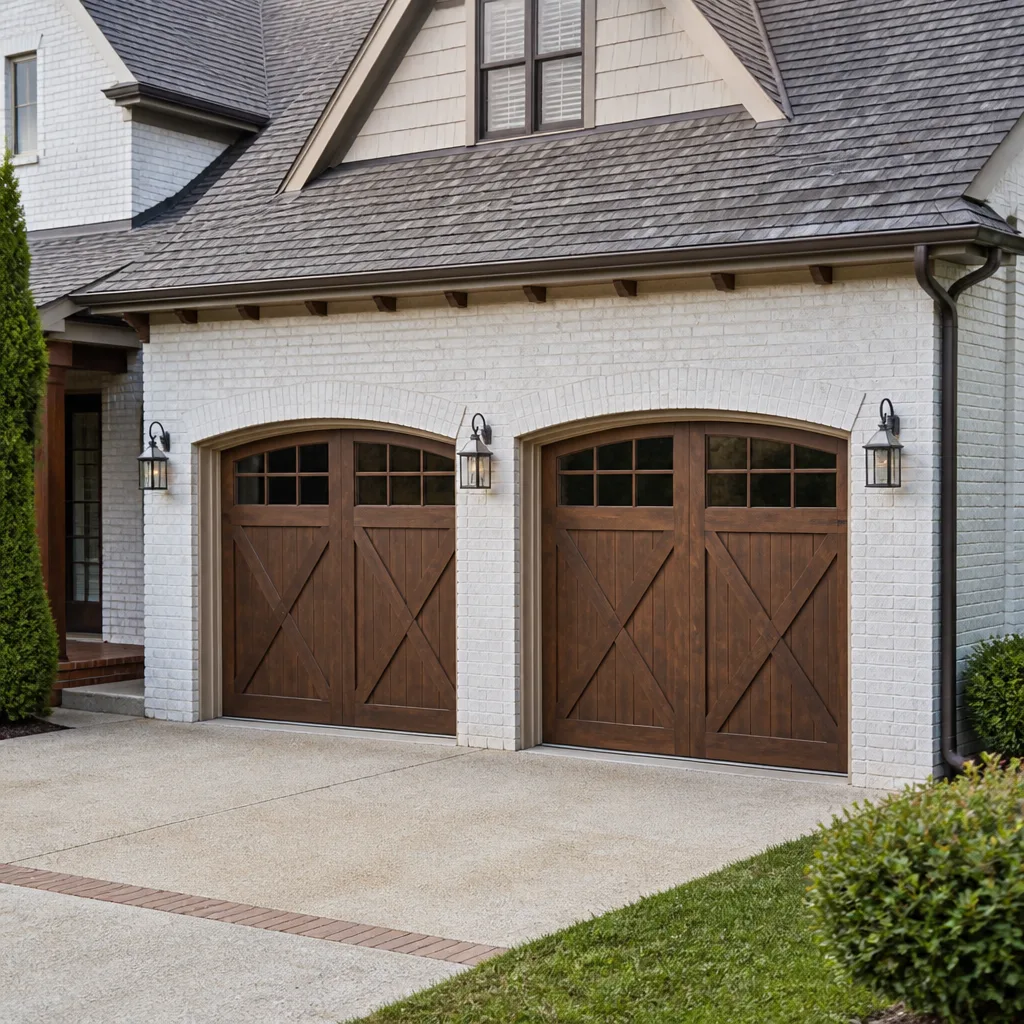
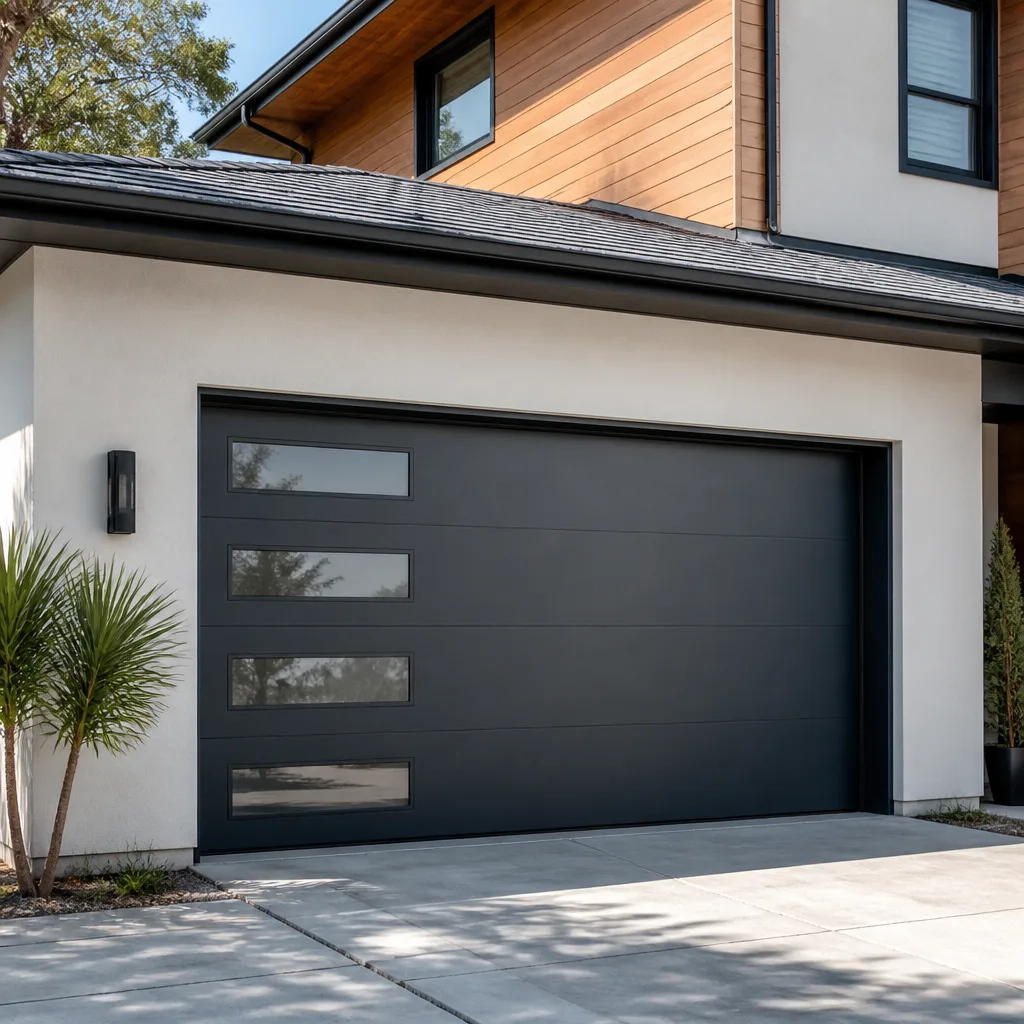
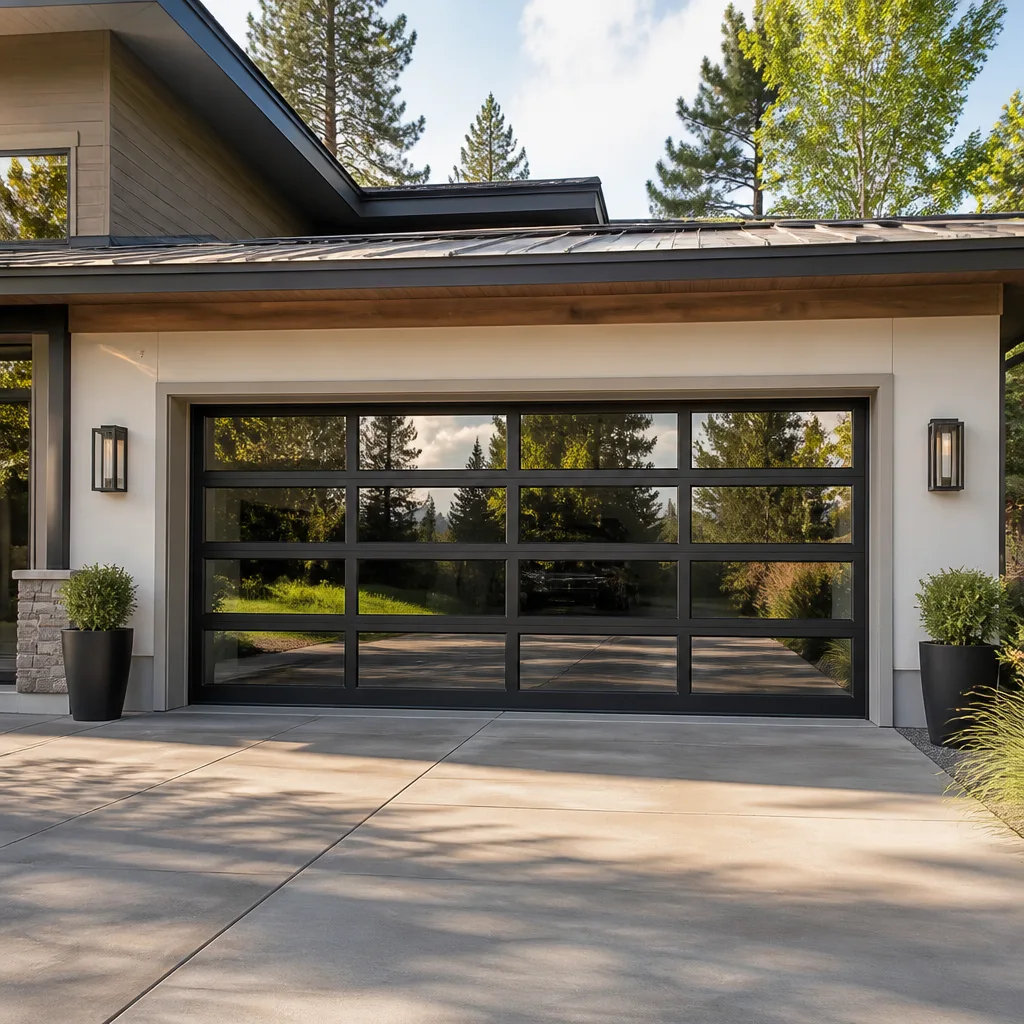
 Before
 After
After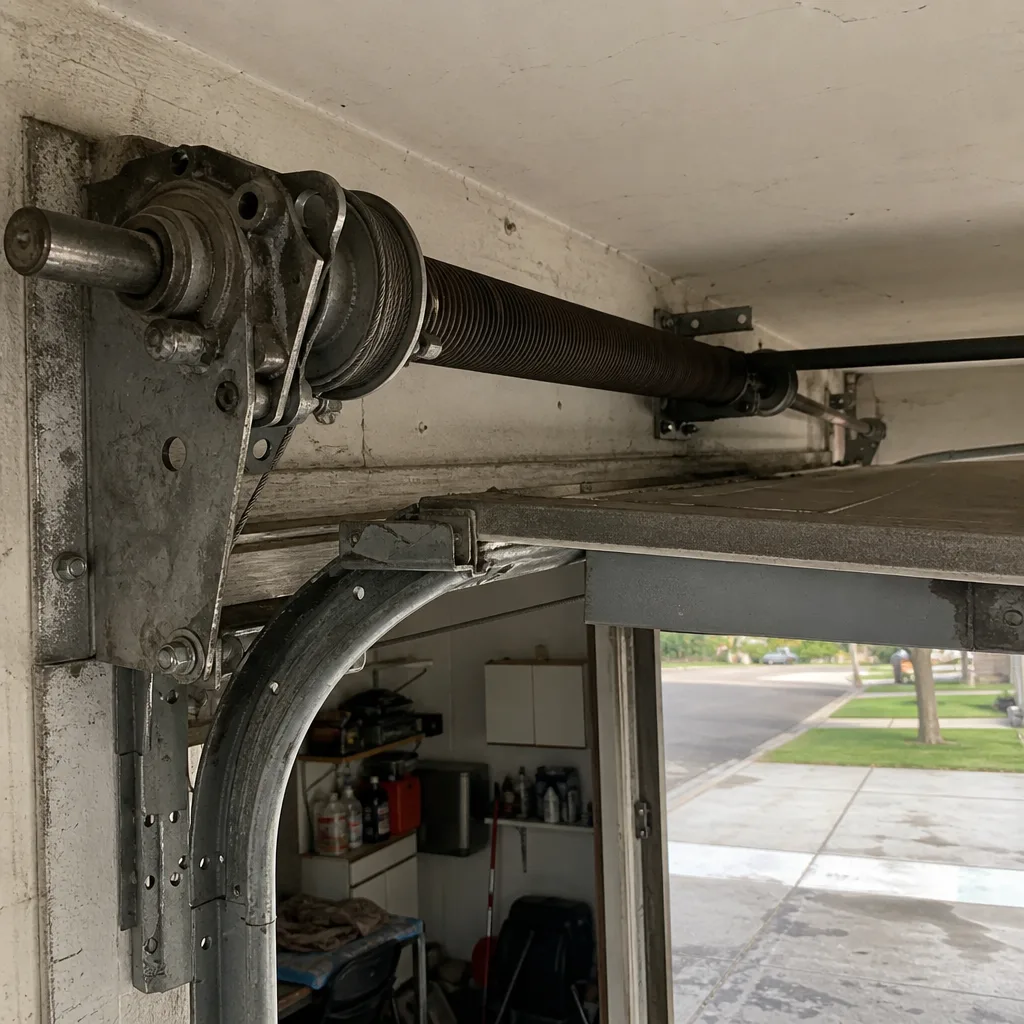 Before
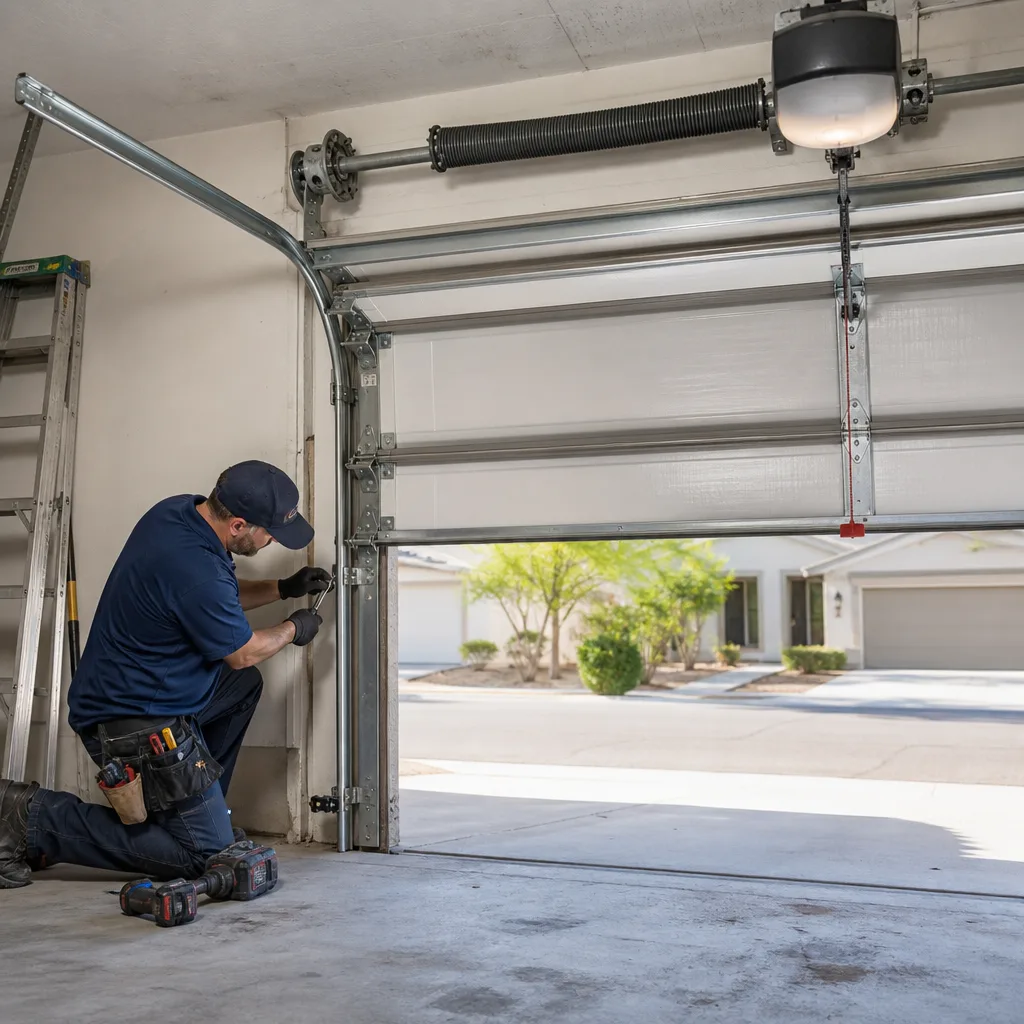 After
After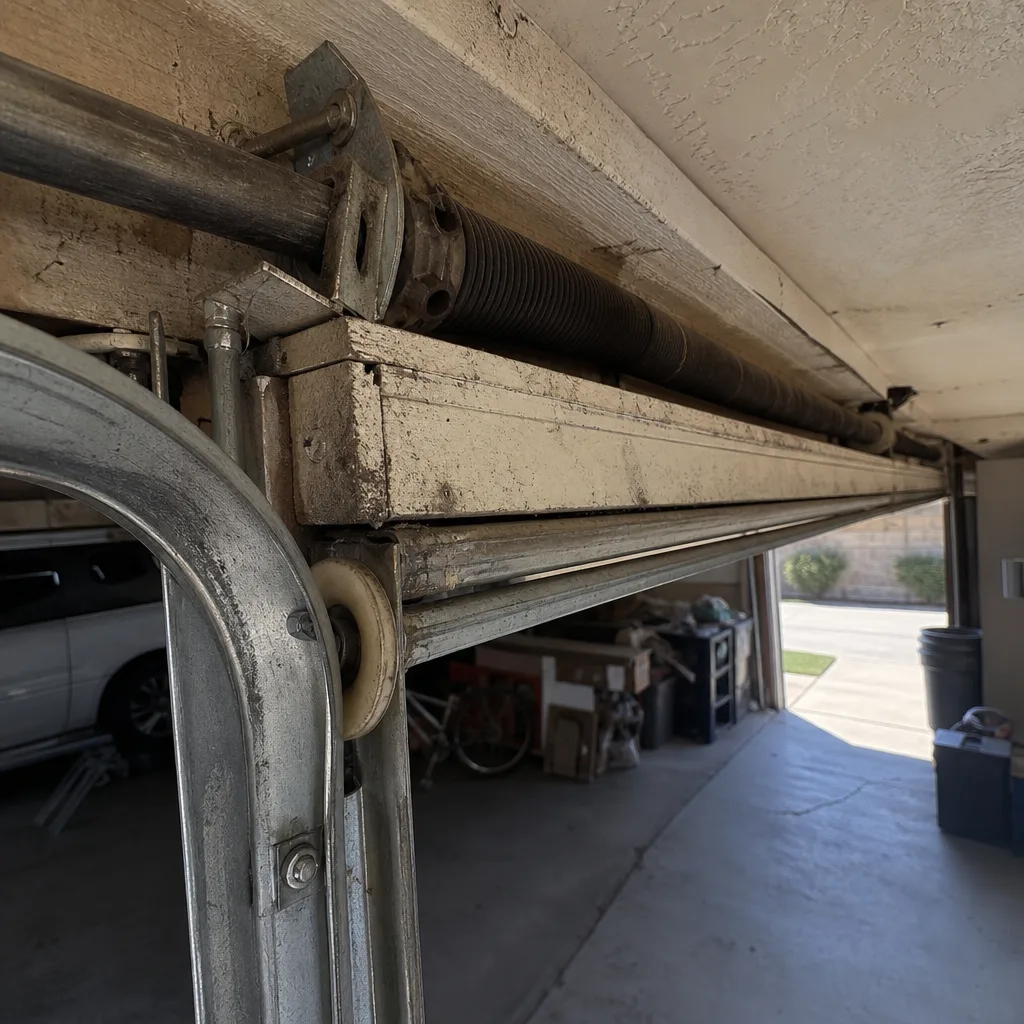 Before
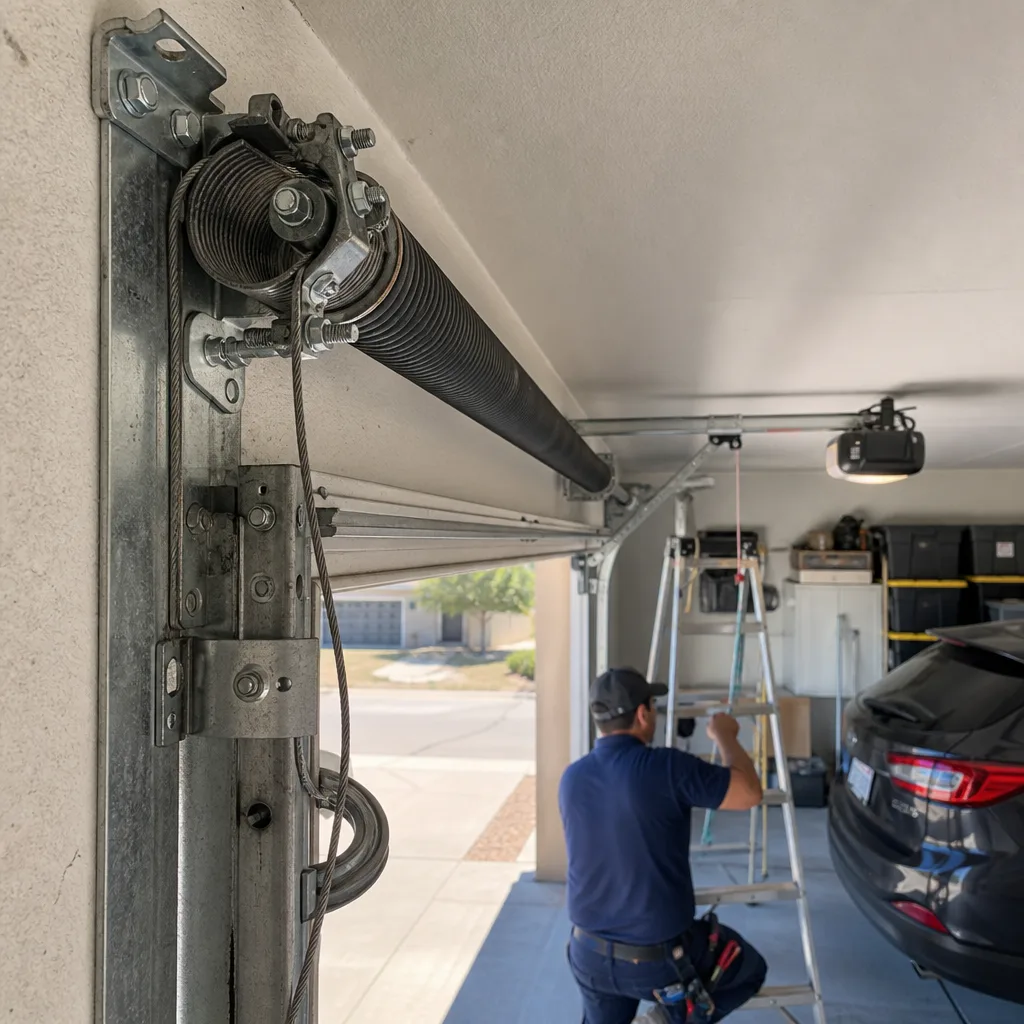 After
AfterGarage Door Repair Maintenance Checklist for Gilbert Homeowners
A frayed cable and a dirty cable look almost identical to someone who has never replaced one. The difference is roughly $180 and a door that drops without warning. Gilbert’s hard water and 110-degree summers don’t cause garage door failures so much as they accelerate the small ones already forming: a dry roller bearing seizes in June, a photo-eye mounting screw works loose during a monsoon wind in August, a spring near the end of its rated cycle count lets go on the first cold morning in December. This checklist is built for the homeowner who wants to know what to inspect, what a real failure actually looks like from the ladder, and what each finding should honestly cost to fix in Gilbert, where the market rate for our Garage Door Repair services runs notably higher than Phoenix because of our newer housing stock’s heavier door packages. We’ll walk through every component, pair each inspection with a pass/fail description a non-technician can apply, and give you the dollar range that goes with each finding so you can distinguish a 10-minute adjustment from a $400 repair before anyone sets foot in your driveway.
Quick Answer
A garage door maintenance checklist for Gilbert homeowners should cover six areas every six months: torsion spring condition (visible coil gaps mean replacement, not adjustment), cable integrity (fraying anywhere means immediate replacement), roller and hinge lubrication with lithium grease (never WD-40), safety reverse testing with the CPSC cardboard test, photo-eye alignment and bracket stability, and opener force and limit settings. For Garage Door Warning Signs: A Gilbert Homeowner’s Reference Guide, see our dedicated post. A full professional inspection and tune-up in Gilbert typically runs $89 to $149, while identified repairs range from $85 for a limit switch adjustment to $220 to $400 for a torsion spring replacement and $340 to $700 for a full panel or section replacement. October is the single best month to do this maintenance in Gilbert, after the monsoon winds and temperature swings have done their damage and before snowbird traffic makes scheduling slower.
Table of Contents
- The Torsion Springs: What a Broken One Actually Looks Like
- The Cables: The $180 Mistake Hiding in Plain Sight
- Rollers and Hinges: Lubrication Type, Interval, and What Wear Sounds Like
- Safety Reverse and Force Settings: The Liability Test You Can Run Yourself
- Tracks, Brackets, and the Photo-Eye: DIY Resets vs. Written-Quote Repairs
- Why October Is the Right Maintenance Window for Gilbert Homes
- What a Failing Opener Sounds and Feels Like Before It Dies
- When a $100 Tune-Up Becomes a $500 Repair: The Findings That Trigger a Written Quote
 Before
 After
AfterThe Torsion Springs: What a Broken One Actually Looks Like
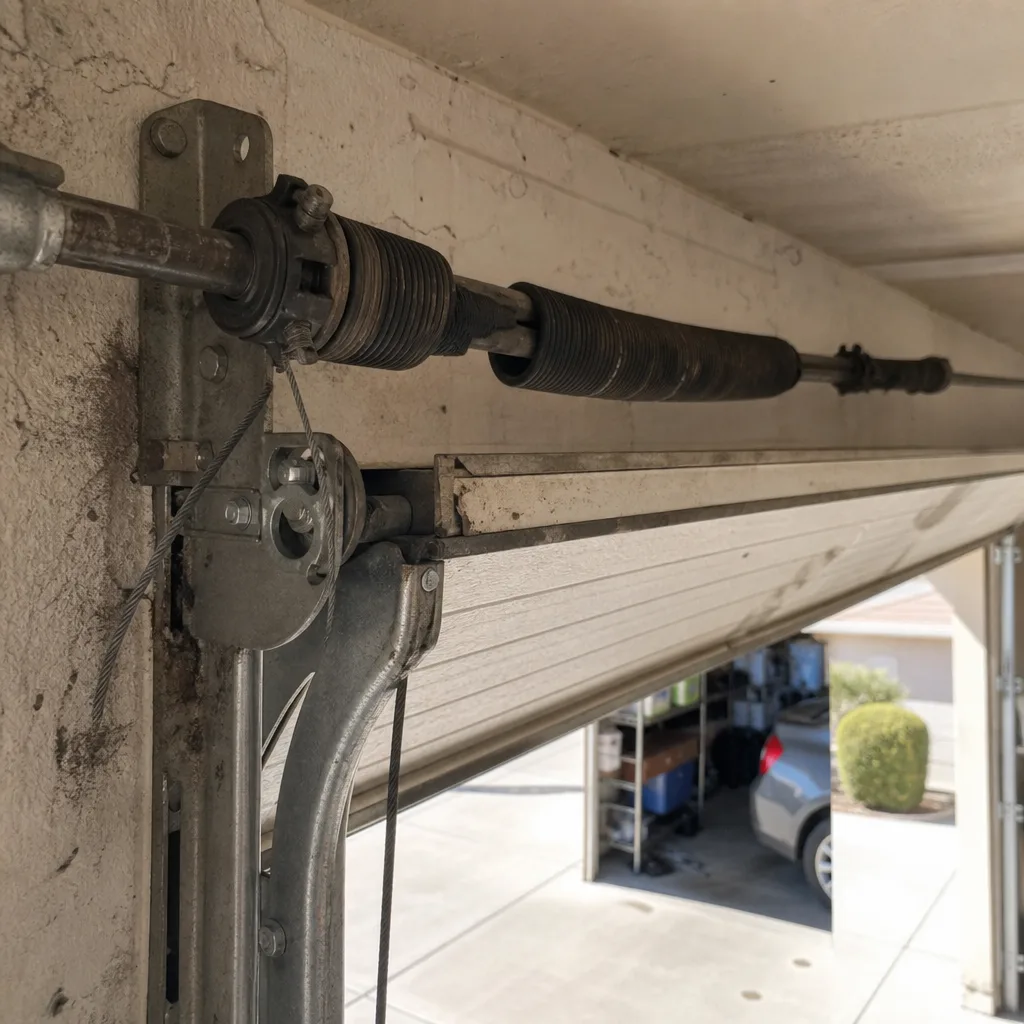
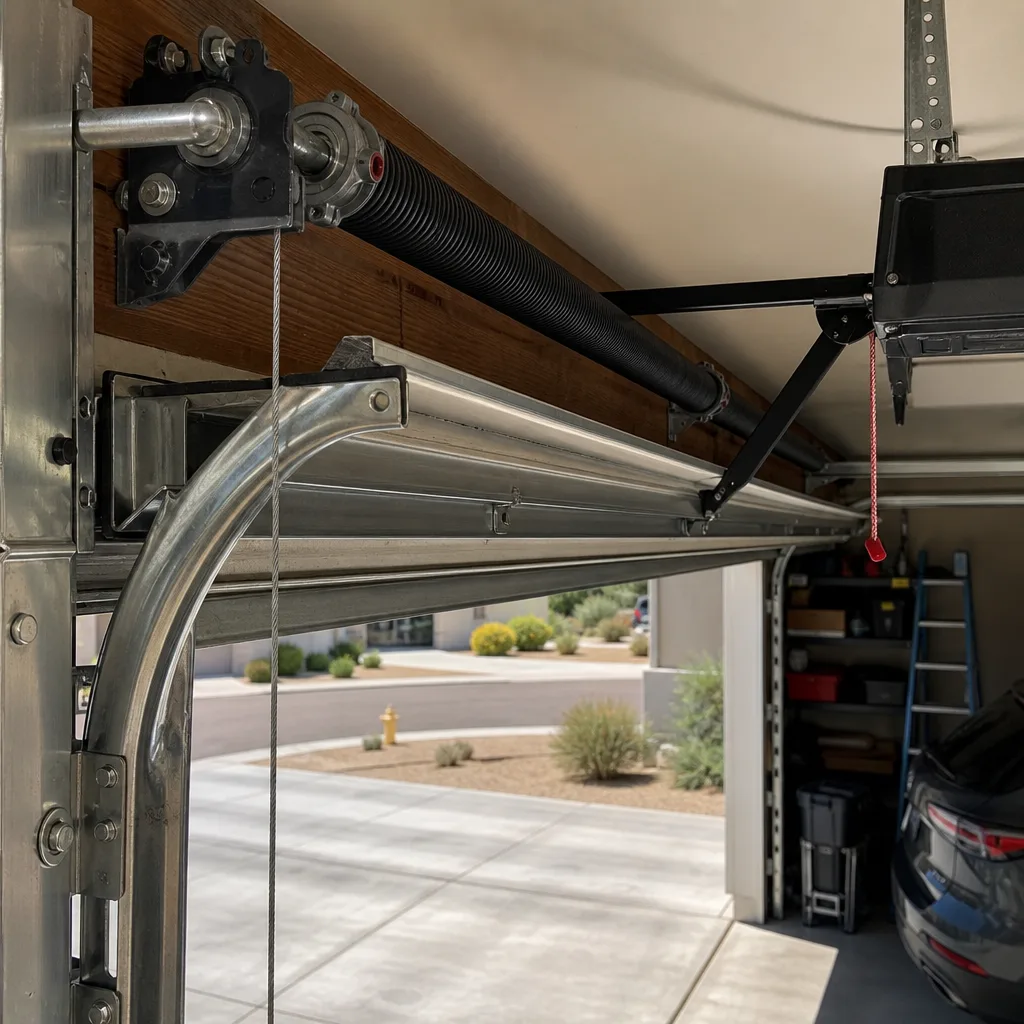
Torsion springs are the two coiled steel shafts mounted horizontally above your garage door opening. Every time the door moves, these springs wind and unwind to carry most of the door’s weight, typically 150 to 400 pounds depending on the material and size of the panel. The springs aboard a Clopay or Amarr door installed in a Gilbert home built in the last decade are rated for roughly 10,000 cycles, which translates to about 7 to 10 years of normal use here, where garage doors get opened more often because few homes have covered parking or a carport alternative.
The pass/fail check for a torsion spring does not require a torque wrench or a dial indicator, contrary to what most generic checklists imply. You need a ladder, a bright flashlight, and a way to look at the spring from two feet away. Here is what separates a serviceable spring from a failed one:
- Pass: The coils are wound tightly against each other, with no visible gap between adjacent coils. The spring’s powder coat or oiled surface is mostly intact, maybe with light surface oxidation at the ends. The spring is straight along its axis, not bowed in the middle.
- Fail – broken spring: A clean break shows as a visible gap between coils of more than 1/4 inch, usually one to two feet from one end. You will often see a shiny metallic face at the break point where the steel snapped, because the fracture happened recently and hasn’t oxidized yet. The door will feel unusually heavy when opened manually, and if you release the opener carriage, the door may drop from the open position faster than normal.
- Fail – worn spring: The spring shows a slight bowing or a loss of coil tension without an actual break. This is harder to spot, but the tell is a door that creeps down after you push it to the halfway open position. A properly tensioned door should stay at half-open on its own. If it drifts, the spring is losing its rated torque and will fail soon.
In Gilbert, torsion spring replacement runs $220 to $400 for both springs on a standard two-car door, including parts and labor. This is the single most common repair we perform, and it is also the one where the range is widest, because spring wire diameter and cycle rating vary significantly by door weight. A 0.225-inch wire spring on a lightweight single-car Amarr costs less than a 0.283-inch high-cycle spring on a heavy wood-overlay Clopay. Any quote you receive for spring work should state the spring wire diameter, the cycle rating, and the warranty length in writing before the work is scheduled. Clause 1 of The Haven Standard is why we hand every Gilbert homeowner a written price and a written scope before any spring is removed, and Clause 4 is why the technician photographs the failed spring where it sits before quoting a replacement. If a contractor will not show you the broken part, you cannot verify the finding.
A broken torsion spring is a safety issue, not a cosmetic one. The spring holds stored mechanical energy even after it breaks, and the unwinding force can cause serious injury to anyone attempting to remove or adjust it without the proper winding bars and procedure. Do not attempt a DIY spring replacement. The danger is specific: a steel winding bar can kick back with several hundred foot-pounds of force if the technician loses control during winding. We recommend a trained professional for any spring work on a Gilbert home, and that professional should hand you a written price before touching anything.
The Cables: The $180 Mistake Hiding in Plain Sight
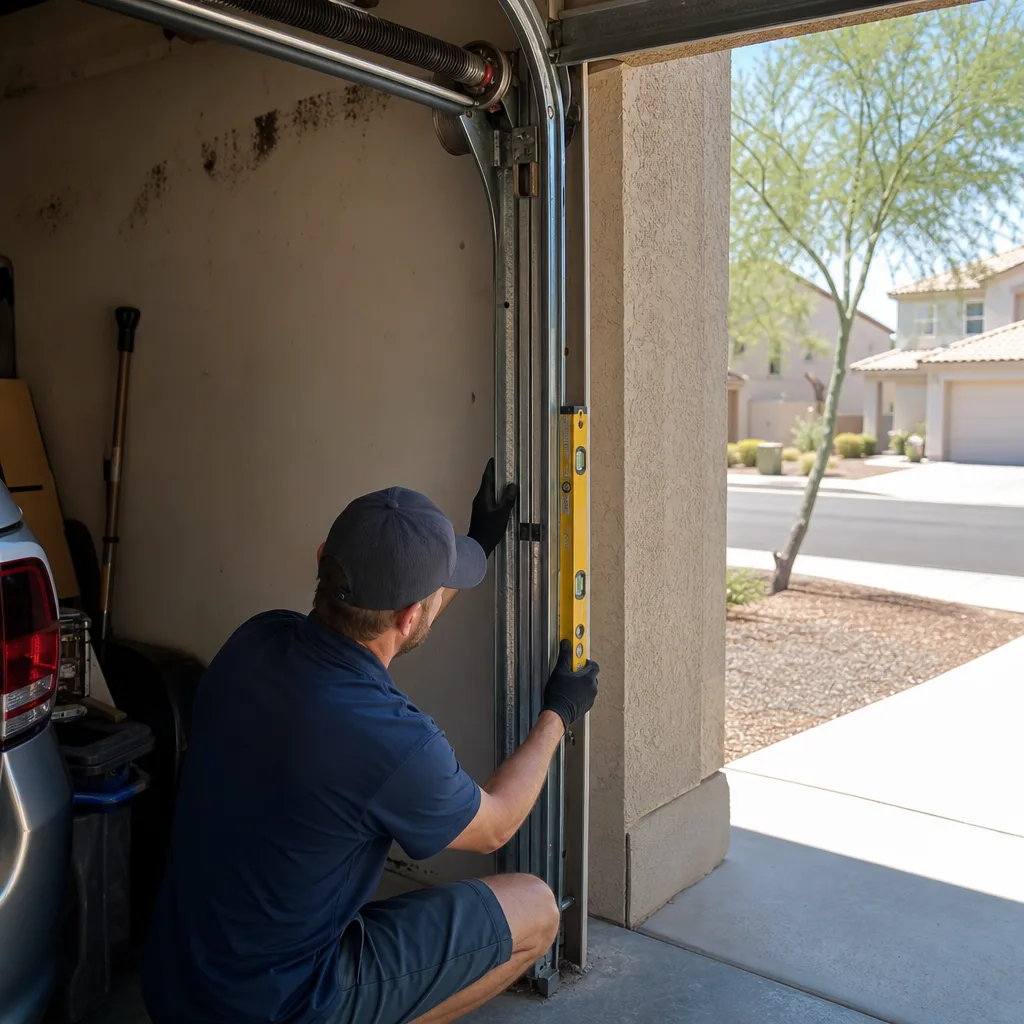
The lift cables on a standard sectional garage door are the two steel cables that run vertically along the door tracks on each side and attach to the bottom roller brackets. They connect the door to the torsion system, so when the spring winds, the cable spools on the drum and lifts the door. When a cable frays, the individual wire strands begin to separate from the cable body, usually near the bottom bracket or where the cable wraps onto the drum. A dirty cable, by contrast, simply has dust and grease buildup on the surface, with all the wire strands still tightly wound.
The practical difference matters because a frayed cable is a failure finding, not a cleaning finding. A dirty cable costs nothing to clean and maybe $10 for a new set of cable keepers. A frayed cable costs $180 to $250 to replace in Gilbert, including both cables, because they are replaced as a matched pair, and labor is required to de-tension the spring system safely. If a frayed cable is ignored, the cable can snap while the door is in motion, and the door will drop unevenly, often damaging the panel, the track, or both. At that point, the $220 cable repair becomes a $500 to $900 repair involving panel realignment or section replacement.
Here is the pass/fail inspection that works from the ground, no ladder required on most doors:
- Pass: Run your finger along the full length of the cable while the door is closed. It should feel smooth and uniformly round, with no protruding wires. Surface dirt is acceptable.
- Fail – frayed: You can see or feel individual wire strands poking out from the main cable body. This often looks like a fuzzy spot or a small “pigtail” of wire near the bottom bracket. If you see this, the cable is compromised and should be replaced immediately.
- Fail – corrosion: In Gilbert, we do not see much rust from rain, but we do see cable oxidation from evaporative cooler runoff and from the mineral content in our water if a cable gets splashed regularly. Corrosion looks like brown or white crusty buildup that has penetrated the cable’s surface, not just sat on top of it. A corroded cable has reduced tensile strength and should be replaced.
- Fail – cable off the drum: If the cable has jumped off the drum and is wrapped around the shaft or hanging loose, this is a symptom of a bigger problem, usually a broken spring that was not caught in time or a drum that has shifted out of alignment. This is not a DIY fix. The spring is under tension and the cable needs to be re-spooled with the spring de-tensioned.
Cable inspection is the part of the checklist where most Gilbert homeowners get injured, because the natural impulse is to try to push a frayed cable back into place or to re-seat a cable on the drum. But the cable is under tension from the spring, and any mistake releases that force through the cable and the bottom bracket, which is bolted to a moving door panel. The right move when you see any of the fail conditions above is to leave the door alone, unplug the opener if you can reach the cord safely, and call a repair company that will quote the cable replacement with a written price before work begins. Garage Door Repair in Gilbert from Servo includes the photo record of the frayed cable before we touch it, so you can verify the finding yourself.
Rollers and Hinges: Lubrication Type, Interval, and What Wear Sounds Like
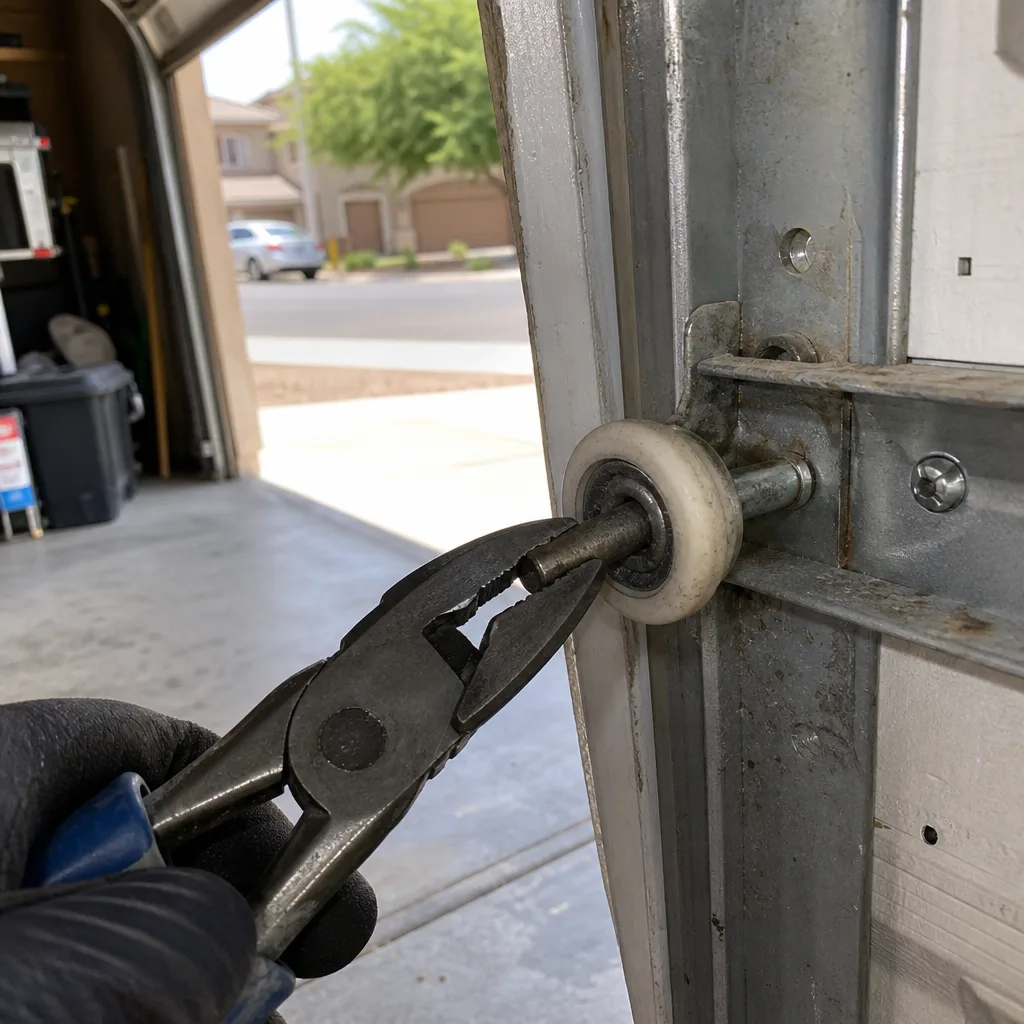
Garage door rollers are the small wheels, usually 10 to 14 per door, that ride inside the vertical and horizontal tracks. Most Gilbert homes built after 2015 came with nylon rollers with sealed bearings, which is good news, because nylon rollers do not require lubrication at the wheel and will typically last 10 to 15 years. What they do require is lubrication at the hinge points where the roller stem meets the hinge, and periodic replacement of the rollers themselves when the nylon wheel begins to wear flat on one side.
The lubrication question is where most generic checklists go wrong, and we want to correct it in plain language: use a white lithium grease specifically intended for garage doors, or a silicone-based lubricant, on the roller stems, hinges, torsion spring shaft, and opener trolley rail. Use it every six months, in October and April for Gilbert’s climate. Do not use WD-40 aerosol under any circumstances. It is a water-displacing solvent, not a lubricant, and it will strip whatever grease remains on the moving parts and leave them running metal-on-metal within a few weeks. We have replaced more prematurely worn hinges in Gilbert than we can count because a homeowner lubricated the door with the aerosol can that was sitting on the garage shelf.
Here is the lubrication pass/fail list by component, with the specific location and the correct material:
- Rollers (nylon): No lubrication at the wheel. Apply one drop of lithium grease at the roller stem hinge every six months. Fail condition: roller wheel has flat spots, visible cracks, or chunks missing from the nylon. A flat-spotted roller makes a rhythmic thumping sound as the door moves.
- Rollers (steel): If you have older steel rollers, they should be lubricated at the bearing with lithium grease every three months. Fail condition: a screaming or grinding noise during operation. Steel rollers have a shorter service life than nylon, typically 5 to 7 years in Gilbert’s heat.
- Hinges: The hinge plates that connect each door panel need lithium grease at every pivot pin every six months. Fail condition: a popping or creaking sound as the door passes through the curved track section. A bent or cracked hinge plate is a replacement, not a lubrication problem.
- Torsion spring shaft: A light coat of lithium grease on the spring itself helps prevent surface rust and keeps the coils from binding. Do not oversaturate. A thin film is enough.
- Opener trolley rail: The metal rail that the trolley carriage rides on gets lithium grease every six months. Fail condition: the opener sounds labored or the carriage chatters as it moves. This is usually a sign the rail is dry or the carriage is worn.
The diagnostic value of listening to your door is underrated. A Gilbert homeowner who has owned their home for three years knows the normal sound of their door by heart. When the sound changes, the door is telling you something. A grinding sound at the opener rail is a dry trolley. A squeak at the hinge line is a dry hinge. A thumping sound that matches the door speed is a flat roller. A popping sound through the curve in the track is a loose hinge bracket or a track that has shifted out of alignment. All of these except a broken roller are fixable with lubrication or a bolt tightening in an afternoon. The lithium grease costs about $8 a tube, and the time investment is about 20 minutes.
For Gilbert homeowners, the October lubrication pass serves a second purpose: it puts a fresh film of grease on every moving surface before the winter temperature swings arrive, when metal contracts and expands repeatedly through the season’s cold overnight lows and warm afternoon highs. A door that has been running dry through the summer will often bind or stall on the first morning the temperature drops below 40 degrees, because the metal track contracts just enough to catch a dry roller.
Safety Reverse and Force Settings: The Liability Test You Can Run Yourself
Every automatic garage door opener manufactured since 1993 is required by federal law to have a safety reverse mechanism, which is the system that stops and reverses the door when it contacts an object in its path. The safety reverse has two components: the photo-eye sensors mounted about six inches off the floor on each side of the door opening, which project an invisible beam, and the mechanical force-sensing reverse inside the opener motor, which measures resistance to the door’s downward movement. Both are supposed to reverse the door. The photo-eye is the primary safety device, and the force reverse is the backup.
The CPSC standard test is called the cardboard test, and every Gilbert homeowner should run it twice a year, in October and April, right after the lubrication pass. It takes five minutes and it tells you whether the safety system that protects your kids, your pets, and your car is actually functioning. Here is the procedure:
- Place a 2×4 piece of wood or a full-size roll of paper towels flat on the floor in the center of the garage door opening. The object should be roughly 1.5 to 2 inches tall.
- Close the door using the opener button or remote. Watch the door and the object carefully.
- The door should contact the object and reverse direction within two seconds of contact, returning to the fully open position. If the door crushes the object, keeps pushing down, or stops without reversing, the safety reverse has failed.
- Repeat the test with the object placed directly under the photo-eye line, about six inches from the left sensor, and then again six inches from the right sensor. Some failures are specific to one area of the door’s travel.
- Check that the photo-eyes are clean and aligned by looking at each sensor. Each unit has a small LED light. A solid green light on one and a solid amber or red light on the other means the beam is connected. A blinking or absent light means the beam is broken or misaligned.
A failed safety reverse test is a repair priority, not a maintenance finding. In Gilbert, most safety reverse failures trace to three causes: dirty or misaligned photo-eyes from monsoon dust and wind, a force setting that was cranked up by a previous homeowner or a handyman to overcome a door that was binding, or a worn logic board inside the opener that no longer processes the reverse signal correctly. The first cause is a DIY reset, covered in the next section. The second cause is a five-minute adjustment on the opener’s force dial, but only if the binding condition that prompted the adjustment is also corrected. The third cause, a failing logic board, is an opener replacement, which on a LiftMaster or Chamberlain unit installed in a Gilbert home typically runs $350 to $550 for the opener and installation.
The liability consequence of a failed safety reverse is not abstract. If the door closes on a child or a pet and the safety system had been disabled, the homeowner is responsible, and the insurer will ask whether the safety system was functional. In our experience, most Gilbert homeowners have never run the cardboard test, and a surprising share of doors fail it. We include the safety reverse test in every tune-up we perform, and the result is documented in the photo record and the written service report we leave with each customer. The report states whether the door passed or failed, the force settings we found, and what we adjusted.
Tracks, Brackets, and the Photo-Eye: DIY Resets vs. Written-Quote Repairs
Most garage door maintenance checklists collapse the vertical and horizontal tracks, the mounting brackets, and the photo-eye sensors into a single “track alignment” item. That undersells the diagnostic value of this section, because track and photo-eye findings divide cleanly into two categories: the small number of things a Gilbert homeowner can genuinely reset in ten minutes, and the larger number of things that require a written quote before anyone touches a bolt.
Let us start with the genuine DIY resets, because this list is short and specific:
- Photo-eye realignment: If the LED on one or both sensors is blinking, the beam is not reaching the receiving eye. This is usually because the mounting bracket got bumped by a garbage can, a ladder, or a monsoon gust. Loosen the wing nut on the sensor bracket, aim the face of the sensor at the opposite sensor, and gently move it until the LED goes solid. Tighten the wing nut. This is a five-minute fix that requires no tools beyond a wing nut’s hand-tightening.
- Photo-eye cleaning: Gilbert dust and spider webs collect on the sensor lenses, especially in garages with visible light gaps at the door seal. Wipe the lens with a dry cloth or a slightly damp cloth. Do not use glass cleaner, because the residue can scatter the infrared beam. A cotton swab works for the corners.
- Limit switch adjustment (minor): If the door does not close fully and leaves a 1-inch gap at the floor, or if the door reverses immediately after hitting the floor, the opener’s close limit may be set too short or too long. On most LiftMaster and Chamberlain units, the limit adjustment is a small dial or button on the opener body, usually marked “close limit” or with an arrow icon. Adjust it by one or two clicks per the opener’s manual. This is a homeowner-adjustable setting, not a service call, unless the door is banging hard into the floor or reversing without contact, which points to a force or travel issue deeper in the opener.
That is the complete list of track, bracket, and photo-eye conditions we consider safe for a Gilbert homeowner to address themselves. Everything else on this part of the checklist is a quote-first repair, because the underlying problem is usually structural or electrical:
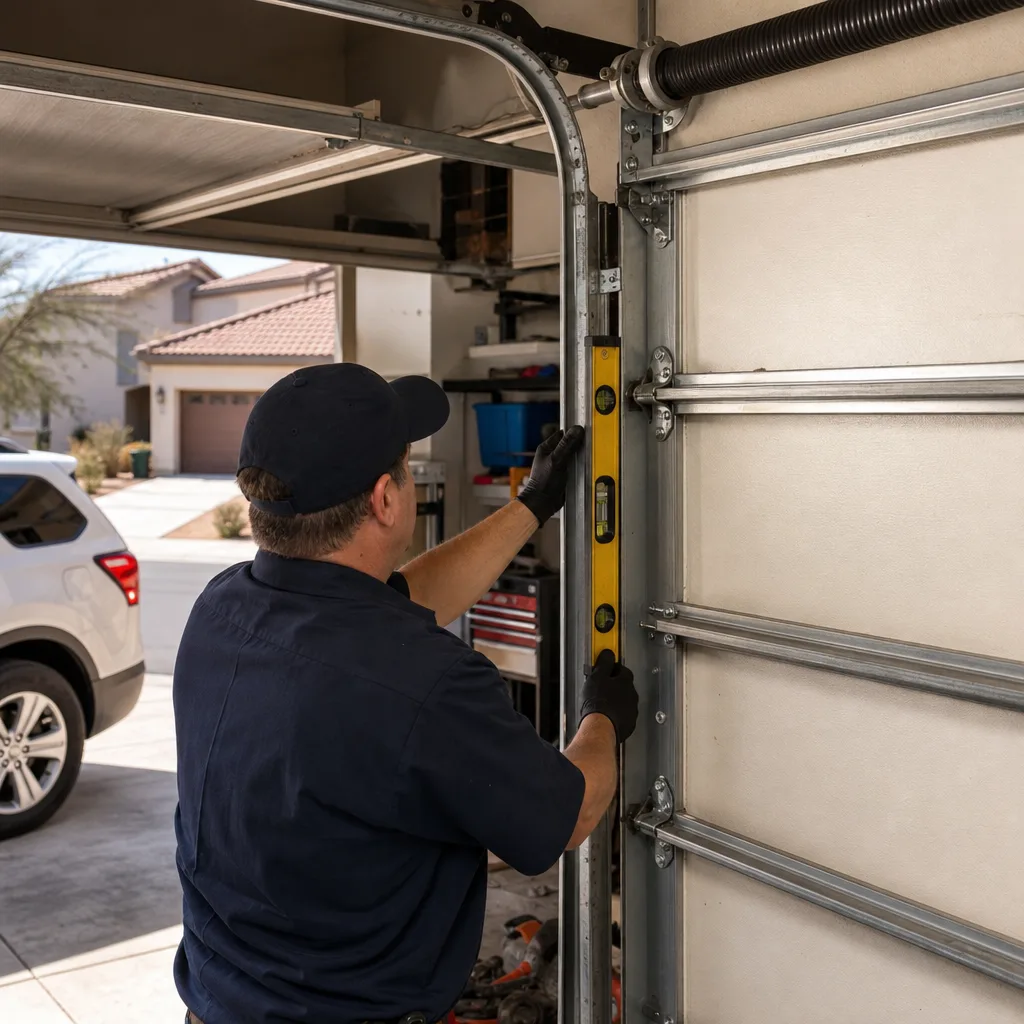
- Bent track or horizontal track out of level: A visibly bowed vertical track or a horizontal track that slopes is not adjustable by loosening and re-tightening bolts. The track is bolted to the wall framing, and a bend means the metal has deformed, usually from a door impact or an opener pulling against a bound panel. The repair typically requires track replacement at $180 to $350 per section.
- Loose or broken mounting bracket: The steel brackets that hold the track to the wall and the door panels together are under real load. A bracket that has pulled loose from the framing or cracked at the bend is not re-tightened; it is replaced. A cracked bracket on a Wayne Dalton or Craftsman door is a $75 to $150 part, plus labor.
- Photo-eye wiring fault: If the sensors have power but the beam will not hold alignment, the low-voltage wire between the sensor and the opener may be damaged, usually where it runs along the wall or across the floor. This is an electrical repair, not a cleaning issue, and the quote will reflect the labor to run new wire.
- Track that has shifted along the wall: If the track has moved laterally and the door binds on one side during travel, the door may have been installed with undersized lag bolts or the framing behind the drywall may not be holding. This requires removing the track and re-anchoring it, often with longer lags into the studs.
The distinction matters because a Gilbert homeowner who tries to fix a bent track by loosening bolts and re-tightening them has done nothing structurally, and the door will bind again within days. A fast quote for a track repair should include the component cost, the labor, and whether the wall anchors are being replaced. At Servo, every track, bracket, or photo-eye finding is photographed before we quote the repair, so you see the actual bend, crack, or wire damage in the photo record, not a verbal description.
Why October Is the Right Maintenance Window for Gilbert Homes
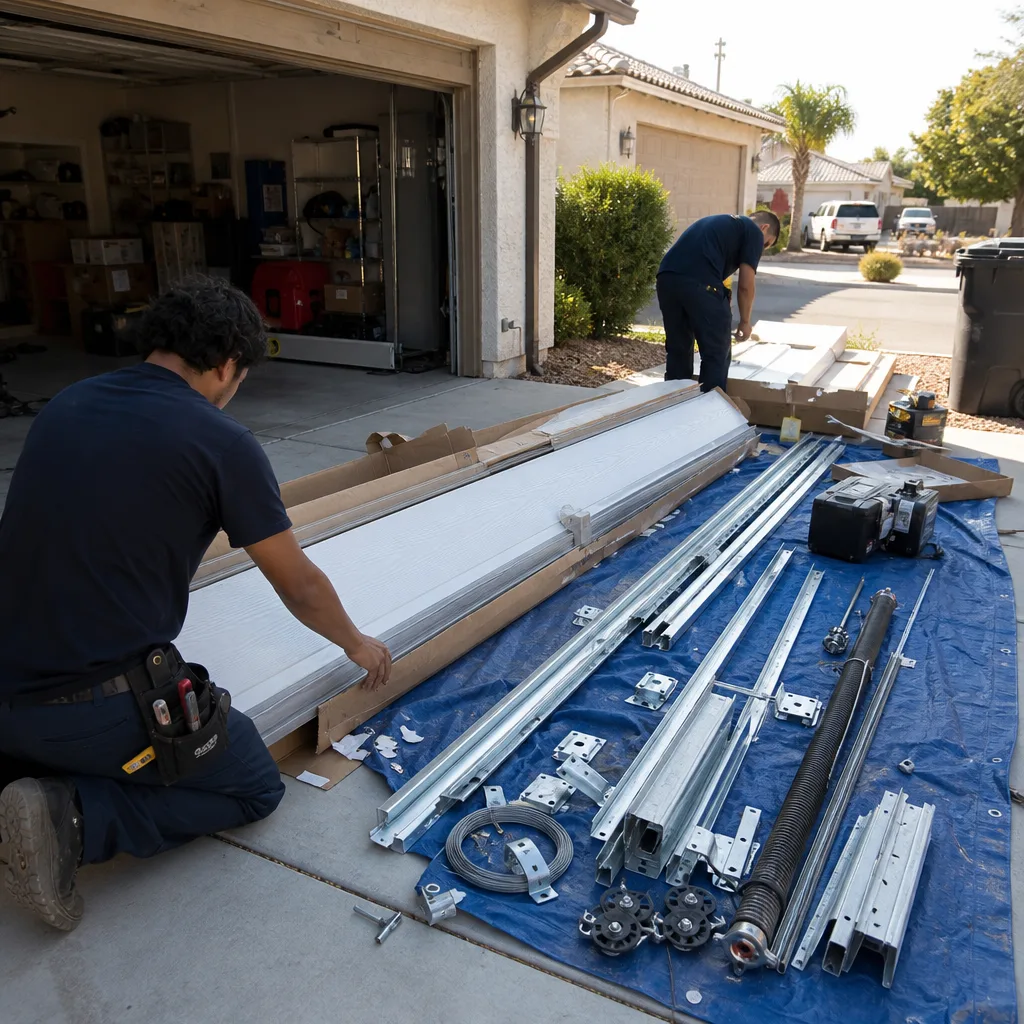
Most national maintenance checklists are written for a four-season climate, with a spring and fall cadence tied to temperature changes. Gilbert does not have that climate. We have three real seasons: a hot dry summer that punishes every moving part in the garage, a modest winter that brings the region’s only significant overnight temperature swings, and the pre-monsoon and monsoon corridor from June through September, when wind, dust, and microbursts hit garage doors with unexpected lateral force. The maintenance calendar that works for a Gilbert home is built around those three forces, not around a generic spring cleaning schedule.
October is the single best maintenance window for an East Valley home, and here is the reasoning in concrete terms:
- The monsoon has finished its damage: By October, the monsoon-season wind events have already knocked photo-eyes out of alignment, blown dust into the sensor lenses, dried out the track lubricant, and stressed the cable drums and the torsion springs through repeated barometric and temperature swings. The October inspection catches that damage after it has happened, not before it happens.
- The winter temperature swings are a real thing in Gilbert: The East Valley routinely sees overnight lows in the 30s and low 40s from December through February, with daytime highs that still reach the 60s and 70s. That 30-degree daily swing causes the metal track, springs, and hardware to expand and contract, which tests every bolt, bracket, and bearing. A door that is properly lubricated and torqued in October will pass that test. A door that has been running dry since last winter will bind or stall on the first cold morning.
- Snowbird season slows everything down: Gilbert and the surrounding East Valley see a measurable increase in demand for home services from November through March as the winter residents return. Scheduling a tune-up in October means the work happens before the seasonal backlog, and any repair parts are sourced before the distribution delays that can hit in December.
- The summer heat has already done its worst: By October, the extreme heat has either killed a component or it hasn’t. A roller bearing that was going to seize in August has already seized. A spring that was near its cycle limit has already been pushed to the breaking point by the summer’s high usage. The October pass is the clean-up pass.
The second maintenance pass for a Gilbert home should happen in April, before the monsoon season begins. That pass is lighter: lubrication, photo-eye check, safety reverse test, and a visual on the cables and springs. The two-pass rhythm of October and April gives a Gilbert door six-month coverage without over-servicing a door that might only need an annual tune-up in a less punishing climate.
We schedule our own Gilbert tune-up calendar on that October/April rhythm, and we recommend our customers do the same. A professional tune-up in Gilbert runs $89 to $149, depending on the door’s age and the number of moving parts, and the service should include the cardboard safety test, lubrication on every friction point, bolt torque-check on the track and brackets, and a written report of what was found. That written report is the part most homeowners never get from a handyman or a flyer coupon service. A real garage door company hands you a document that says what the spring measured, what the force setting was, and what the photo-eye alignment showed. If the tune-up comes with no paper, the homeowner has paid for a squirt of grease and a handshake. For How to Hire a Garage Door Contractor in Gilbert: A Step-by-Step Guide, read our step-by-step resource.
What a Failing Opener Sounds and Feels Like Before It Dies
The garage door opener, which is the motor and logic board assembly mounted on the ceiling and connected to the door by a rail, trolley, and arm, is the component most Gilbert homeowners ignore until the day it stops responding to the remote. But openers fail incrementally, and the signs are audible and tactile if you know what to listen for. The diagnostic value of this section is that it can save you from a $400 replacement by telling you when a $100 repair is still possible.
The telltale signs of an opener in decline, in the order we typically hear them from Gilbert homeowners:
- The motor runs but the door does not move: This is usually a broken trolley carriage, a stripped gear inside the opener, or a coupler between the motor and the drive system that has sheared. On a LiftMaster or Chamberlain chain-drive unit, a stripped gear sounds like a grinding or ratcheting noise from the opener body. The repair is typically $120 to $200 for the gear and labor, versus $350 to $500 for a full opener replacement.
- The opener reverses on its own with no obstruction: This is a force-sensing problem, and it has two causes: the door is actually binding somewhere and the opener is correctly reversing against the resistance, or the force setting has drifted and the opener is reversing too easily. The test is simple: pull the red release handle and operate the door by hand. If the door moves smoothly and balanced, the problem is the opener’s force setting. If the door is heavy or binds, the problem is the door, not the opener.
- The remote range has shrunk dramatically: This is often an LED bulb in the opener or the garage that is emitting radio-frequency interference, which is a known issue with certain LED fixtures near the opener’s antenna. The fix is to replace the bulb with a garage-door-rated LED or a incandescent. If the range is still poor, the opener’s receiver board may be failing.
- The opener is visibly louder than it was a year ago: A chain-drive opener that has developed a slap or a rattle at the rail is usually a worn trolley carriage or a loose chain. Both are repairable. A belt-drive opener that has developed a whine is often a failing motor bearing, which is a replacement, not a repair.
For Gilbert homeowners, the life expectancy of an opener installed in the last decade is 10 to 12 years for a chain-drive unit and 12 to 15 for a belt-drive. The heat is not the primary killer; the cycle count is. A Gilbert family that opens and closes the garage door six to eight times a day puts roughly 2,500 to 3,000 cycles a year on the opener, and the logic board and the drive gear are rated for a finite cycle count. When an older opener starts misbehaving, the repair-or-replace decision should be made on economics: if the unit is within two years of the end of its expected life and the repair is half the cost of replacement, replacement is usually the better financial decision. Garage Door Opener Repair & Installation in Gilbert from Servo includes a written quote that states the year, make, and model of the existing opener, the repair cost, and the replacement cost, side by side, so the homeowner is making the decision on numbers, not on a technician’s recommendation.
When a $100 Tune-Up Becomes a $500 Repair: The Findings That Trigger a Written Quote
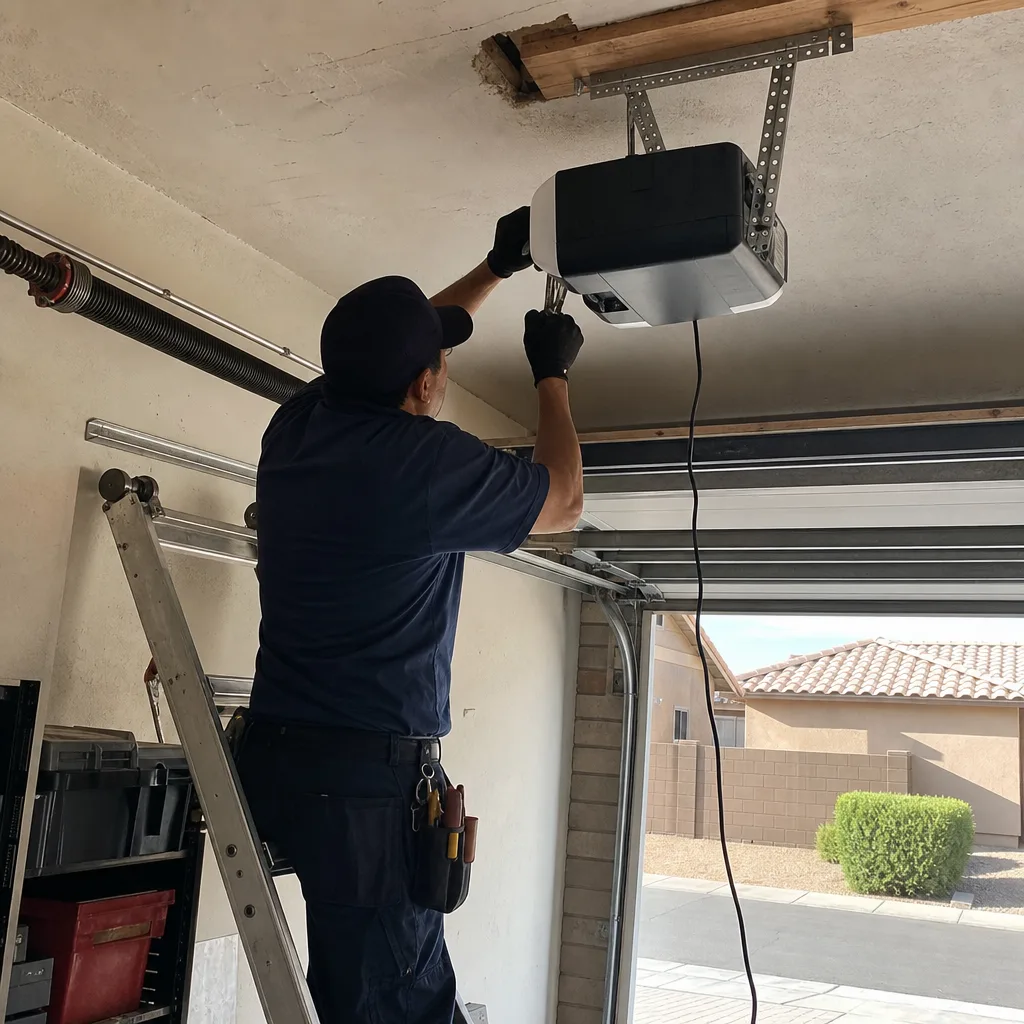
Every checklist should tell you what to do when you find something, not just what to look at. The findings below are the ones we see most often on Gilbert doors during a maintenance pass, and each one triggers a written quote before any work is done. The purpose is not to alarm you; it is to tell you what the honest math looks like so you are not surprised at the price, and so you can recognize a quote that is out of line with the Gilbert market.
Here is the list, with the price range for each repair in Gilbert, including parts and labor, and the standard clause from The Haven Standard that applies:
- Broken torsion spring (single or both): $220 to $400. Clause 4 applies: the technician photographs the broken spring before quoting. The quote states wire diameter, cycle rating, and warranty length.
- Frayed lift cable (pair): $180 to $250. Clause 4 applies: the fraying is photographed. The quote is for both cables, always, because a matched pair is the only safe installation.
- Bent or damaged door panel section: $340 to $700 per section, depending on the brand and whether the panel is a stamped steel, an insulated steel, or a wood overlay. A Clopay or Amarr panel is typically at the higher end of that range. Clause 1 applies: the panel replacement is quoted as a written scope with the exact part number.
- Worn or seizing roller set (all rollers replacement): $120 to $180 for nylon rollers, $80 to $120 for steel. This is a maintenance replacement, and the quote includes the roller count and the bearing type.
- Bent track section replacement: $180 to $350 per section. The quote includes the track gauge and whether the wall anchors are being replaced.
- Opener logic board or drive gear failure: $120 to $200 for a gear repair, $250 to $400 for a logic board replacement, $350 to $550 for a full opener replacement with installation. The quote states the opener make and model.
- Cracked or broken hinge bracket: $75 to $150 per bracket. The quote includes the bracket gauge and the panel it attaches to.
What ties every one of these together is the written price before the work starts. A tune-up that turns into a $500 repair should never be a surprise at the end of the visit; it should be a conversation that happens with the failed part in front of you and a printed quote in your hand. That is the difference between a company that photographs the failed component before quoting a replacement and a company that asks you to trust their word. Our Gilbert maintenance customers tell us the same thing in different words: the photo record they receive at the end of a visit is the reason they do not call anyone else for the next one. Explore more guides & resources on our blog.
For homeowners reading this who have never had a professional garage door tune-up, or whose last one produced a verbal “you need a new spring” with no paperwork, we invite you to bring the quote from any other company to us for a Free Second Opinion. Bring the written estimate, and we will verify the finding, photograph the component in question, and give you our written number. No coupon, no code, no obligation. That offer exists because a documented finding is a higher standard than a verbal one, and we want to be measured against it. Garage Door Installation in Gilbert from Servo follows the same rule: the quote for any new door includes the written scope, the panel material and R-value, and the installation timeline, with no “call for pricing” anywhere in the process.
Common Mistakes to Avoid
- Lubricating with WD-40: The aerosol solvent strips grease from hinges and rollers, leaving the door running dry within weeks. Use white lithium grease or a garage-door-specific silicone lubricant instead, and apply it to the roller stems, hinge pins, spring shaft, and trolley rail.
- Ignoring a frayed cable because the door still works: A cable with visible wire strands is a failure in progress, and the door can drop when it snaps, damaging panels and tracks well beyond the $200 cable repair. Replace frayed cables in pairs, not singles.
- Adjusting the opener force setting to fix a binding door: Cranking the force dial to push through a door that binds is how safety reverse systems get disabled, and the liability lands on the homeowner when the door hits a child or pet. Fix the binding first, then reset the force correctly.
- Running the safety reverse test only once a year or never: The CPSC cardboard test takes five minutes and should be run in October and April in Gilbert, with the monsoon winds and winter temperature swings each having the chance to knock the photo-eyes or force settings out of calibration.
- Treating a tune-up as a visual once-over: A tune-up that does not produce a written report of spring measurements, force settings, and photo-eye alignment results is a handshake, not a service. Ask for the documentation before you schedule the visit.
- Replacing springs without asking the wire diameter and cycle rating: A $220 spring replacement and a $350 spring replacement are often different products, not different profit margins. The quote should state what you are buying, and the warranty length should be on the paper.
- Waiting until snowbird season to schedule maintenance: October is the sweet spot for Gilbert garage door work, after the monsoon damage and before the winter service backlog. By December, the parts and the appointment slots are both harder to come by.
When to Call a Professional
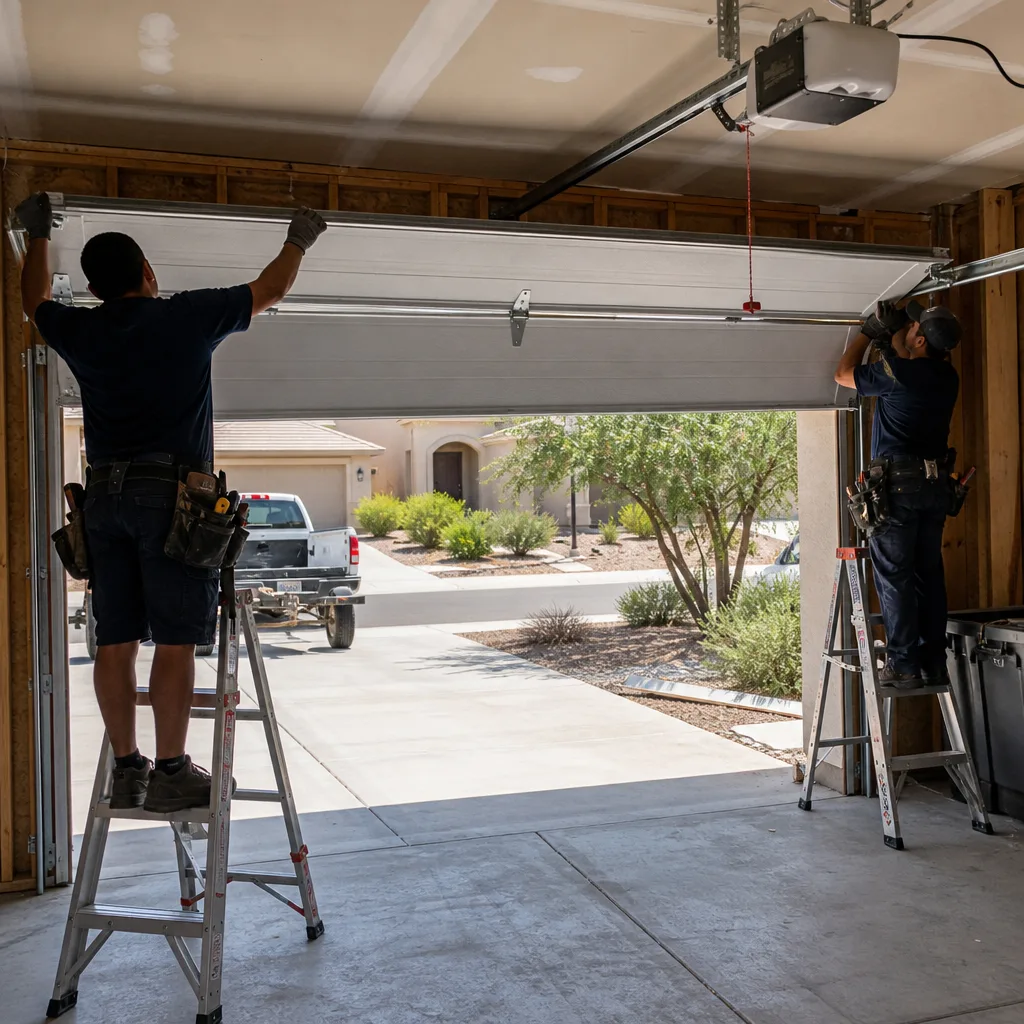
Call a professional garage door company in Gilbert when you find any of these: a torsion spring with a visible coil gap of more than 1/4 inch, a frayed or corroded lift cable, a door that drops from the open position faster than normal, a safety reverse test that fails the cardboard procedure, a bent track or a loose bracket, or an opener that runs without moving the door. These are not tune-up items; they are quote-first repairs, and the finding should be documented and priced before any work starts. Servo Garage Doors Gilbert offers free estimates in Gilbert, and the estimate is a written price with a written scope, handed to you before the technician touches anything. Call (520) 482-3838 to schedule a maintenance pass or a repair, and you will see the photo record of whatever we found, whether it is a pass or a fail. We have operated under The Haven Standard since 2015, and Clause 1 means you get the number on the page before the work begins, every time. Servo Garage Doors Gilbert home is the starting point for any of our services, including the Free Second Opinion on a competing written estimate.