
Last updated September 20, 2026
Full 25-point door and opener safety check with every visit - springs, cables, rollers, tracks, and your LiftMaster or Chamberlain opener included
You get a price before we start. It does not change when the truck arrives.
 Before
 After
After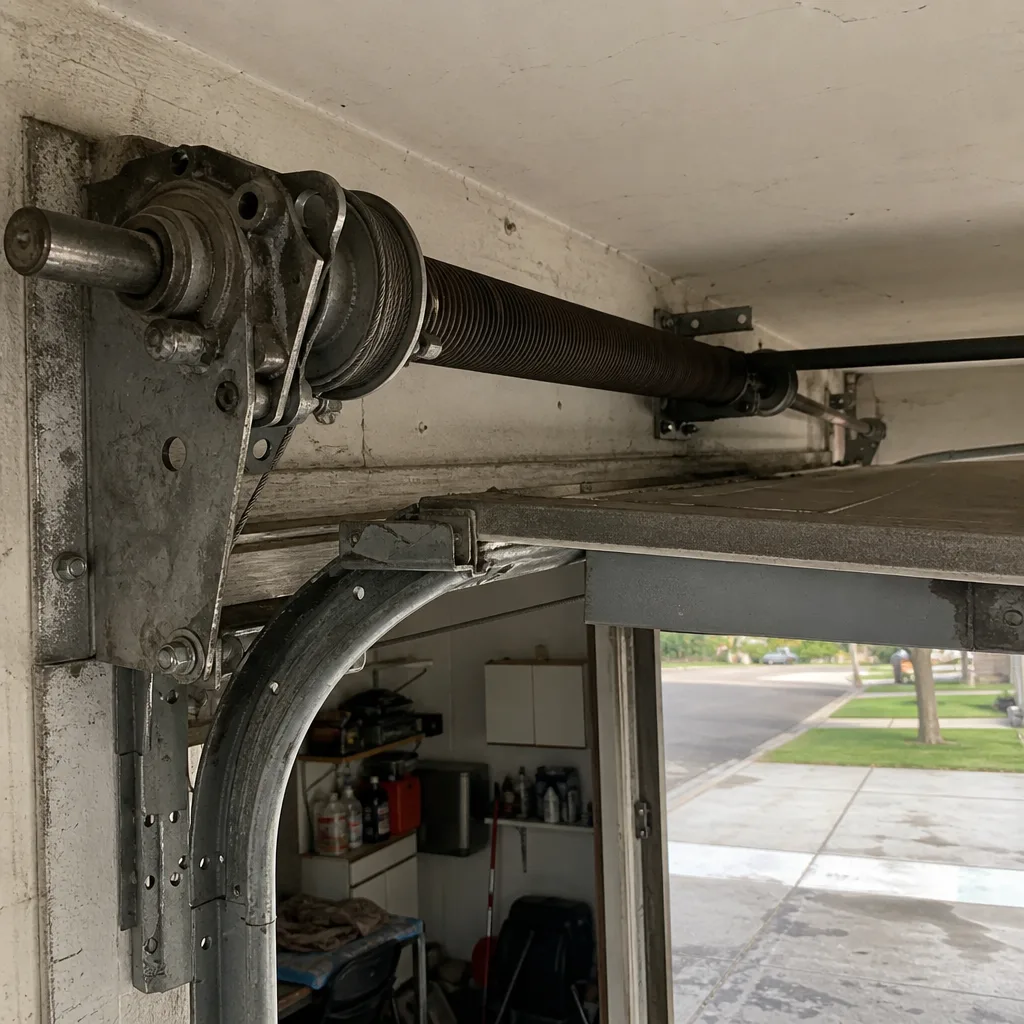 Before
 After
After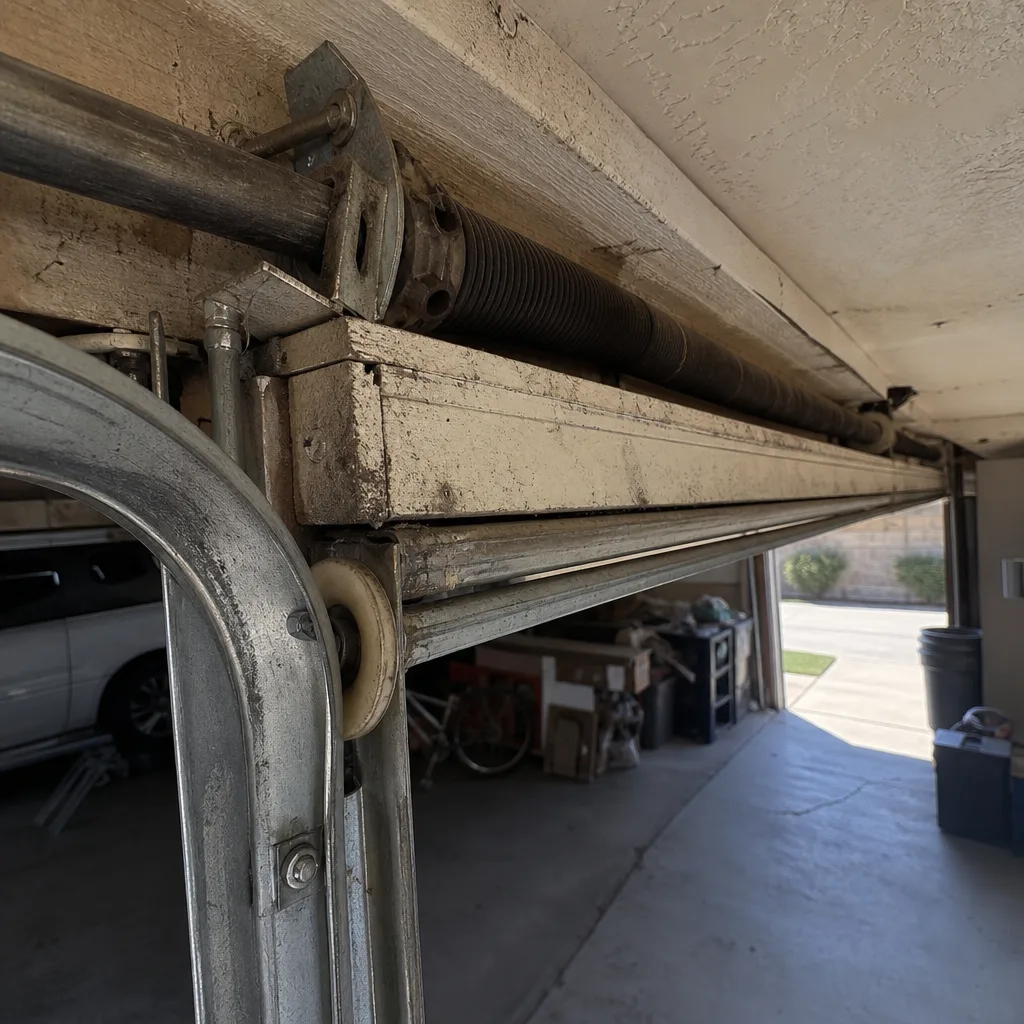 Before
 After
AfterSeasonal Garage Door Care for Gilbert: Year-Round Homeowner’s Guide
The garage door failure most likely to strand a Gilbert homeowner happens in October, not July. Monsoon humidity corrodes cable fittings through August. Summer heat fatigues torsion springs daily from June through September. October is when both failure modes mature at the same time, usually on a morning when the door refuses to open and the car is still inside. This guide walks through the three stress phases Gilbert actually has, what to check in each one, and which tasks prevent the failures we see most often at Servo Garage Doors Gilbert home.
Quick Answer
Seasonal garage door maintenance in Gilbert means three distinct inspection cycles per year: a heat-phase check from June through September focused on track alignment and lubrication, a monsoon-phase check from July through September focused on cable corrosion and bottom bracket debris, and an October-November reset window that catches accumulated damage before it becomes a winter failure. The mild December-February season still requires a spring tension check because Gilbert’s 40°F overnight lows change torsion spring behavior. Most seasonal breakdowns are preventable with about 30 minutes of inspection per cycle, and the work that can’t be done safely by a homeowner should be handled by a Garage Door Repair in Gilbert professional.
Table of Contents
- The Heat Phase: June Through September
- The Monsoon Phase: July Through September
- The October-November Reset Window
- The Mild Winter: December Through February
- Photo-Eye Alignment: The Year-Round Task
- Lubrication: What Gilbert’s Heat Actually Does
- Common Mistakes to Avoid
- When to Call a Professional
- Frequently Asked Questions
 Before
 After
AfterThe Heat Phase: June Through September
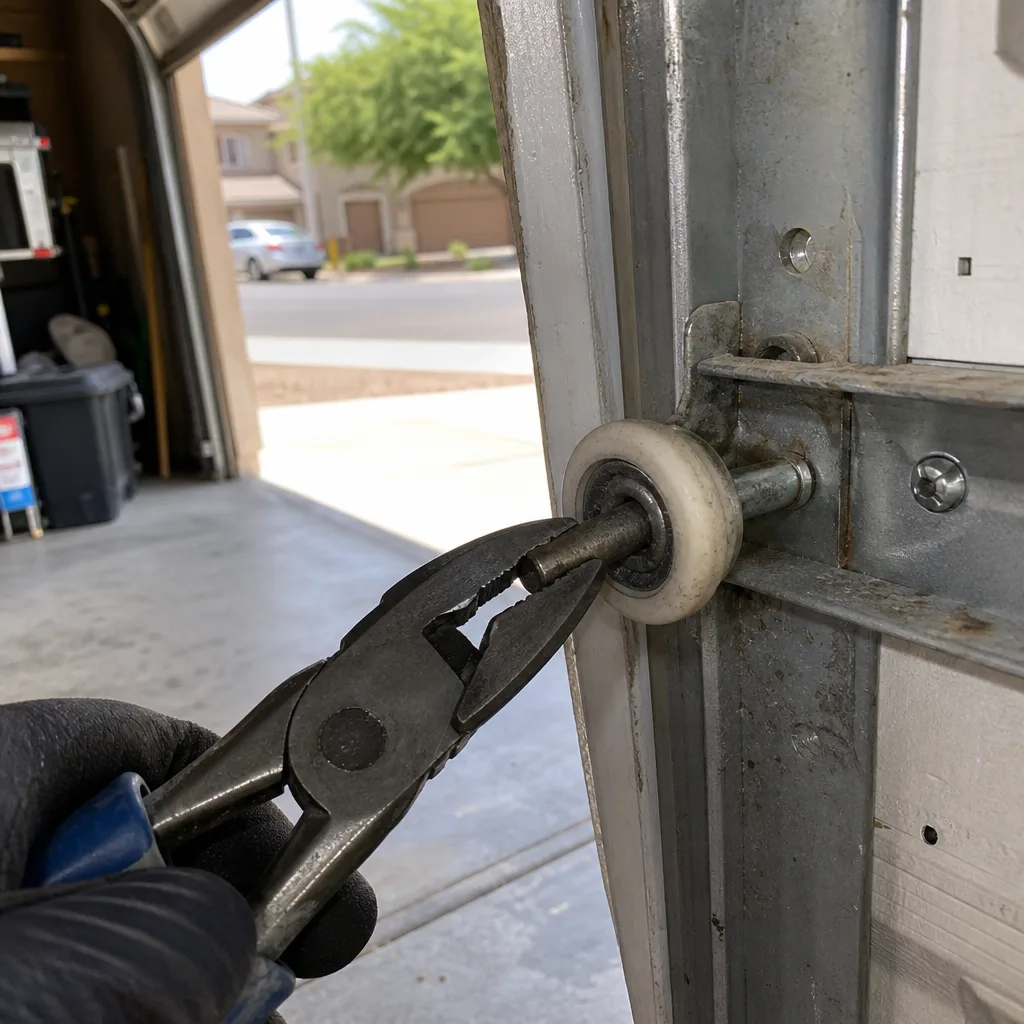
Gilbert’s summer heat does two things to a garage door: it expands the metal track and it changes how the opener’s force settings behave. The first is physics. The second is the problem most homeowners ignore until the door stops halfway up in August and reverses back down.
Steel track sections expand when ambient temperature climbs past 100°F, which in Gilbert is most days from mid-June through early September. A track that was perfectly parallel in April can bow outward by a fraction of an inch by July. That fraction is enough to make the rollers bind, which makes the opener work harder, which triggers the force-reversal safety mechanism. The door opens six inches, stops, and closes again. From the homeowner’s perspective, the opener “broke.” What actually happened is that the track moved and the opener’s force limits, calibrated for cooler weather, now read the increased resistance as an obstruction.
What to check during the heat phase:
- Track gap at the rollers. With the door closed, look at the gap between each roller and the inside of the track. The gap should be consistent. If a roller presses hard against the track on one side while showing daylight on the other, the track has expanded out of alignment.
- Opener force behavior. Run the door through a full open-close cycle early in the day when the garage is cooler, then again at 3 p.m. when the garage is hottest. If the afternoon cycle stalls or reverses, the force settings need adjustment, not a new opener.
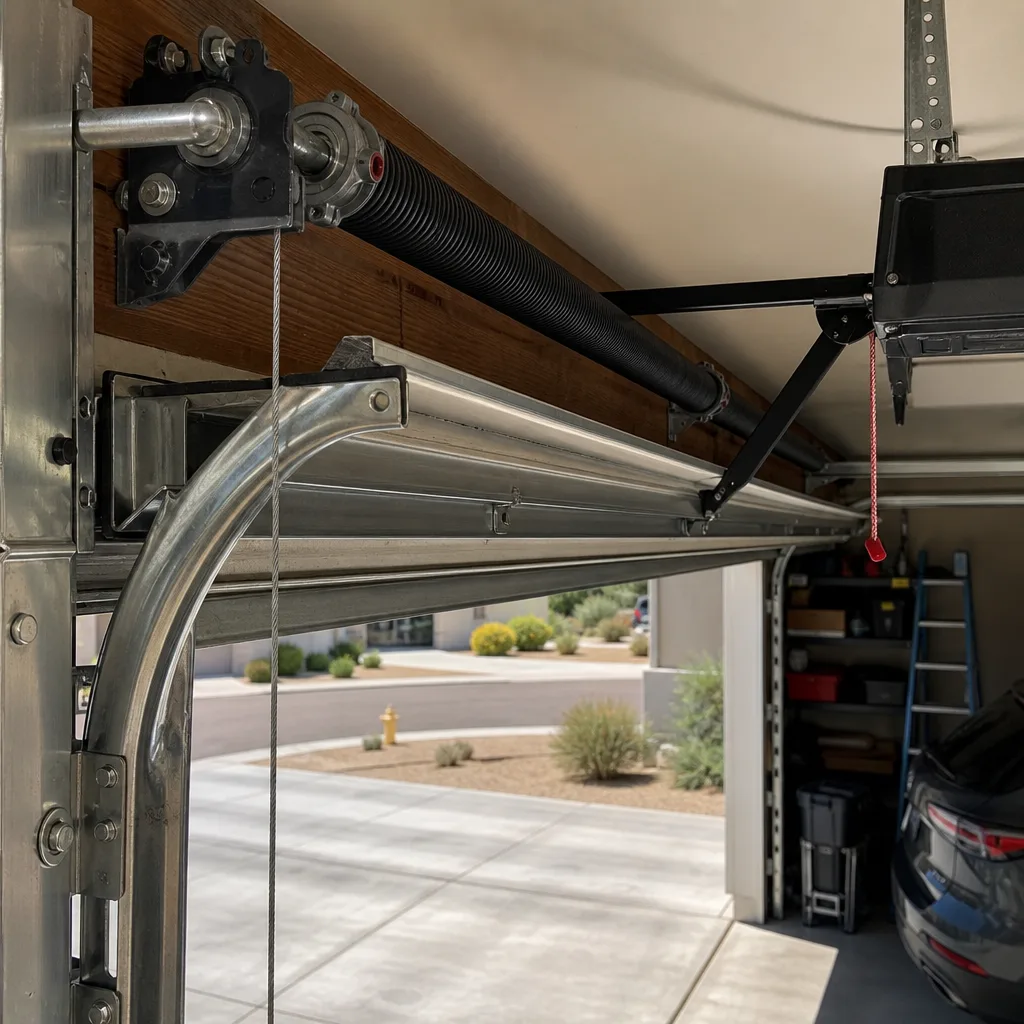
- Lubricant condition on the torsion spring. Gilbert’s heat volatilizes petroleum-based lubricants. A spring that was lubricated in May can be dry by August. We recommend inspecting the spring coil surface monthly during peak heat.
Opener force adjustment is a simple procedure on most LiftMaster and Chamberlain units, but it requires removing the opener cover and turning a dial or pressing a button sequence. If you are not comfortable with that, this is a 20-minute service call for a Garage Door Opener Repair & Installation in Gilbert technician. Do not keep running a door that reverses on its own. The reversal is the safety system doing its job, and overriding it is how doors damage vehicles and injure people.
The Monsoon Phase: July Through September
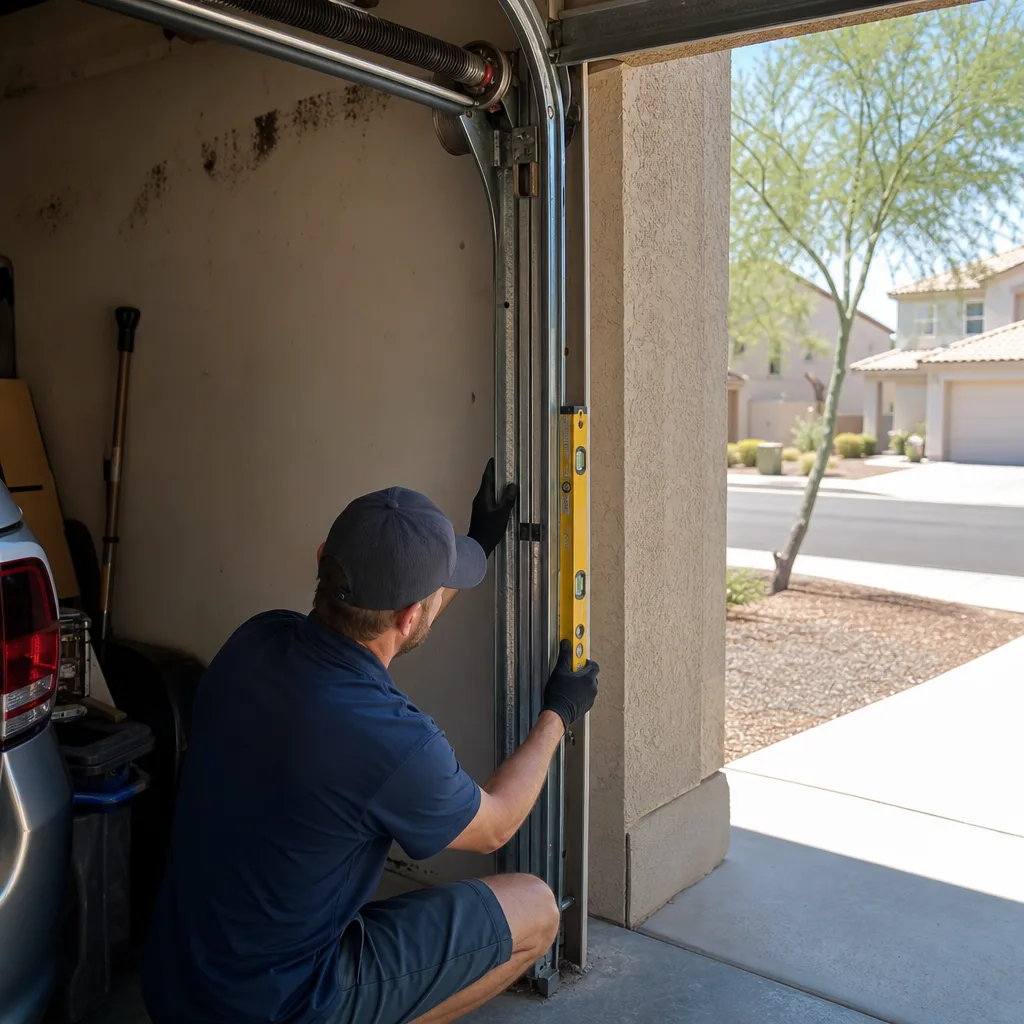
Monsoon season overlaps with peak heat, which is why Gilbert’s garage doors take a double hit from July through September. The specific concern during monsoon season is not the dust itself. It is what the dust carries and where it settles.
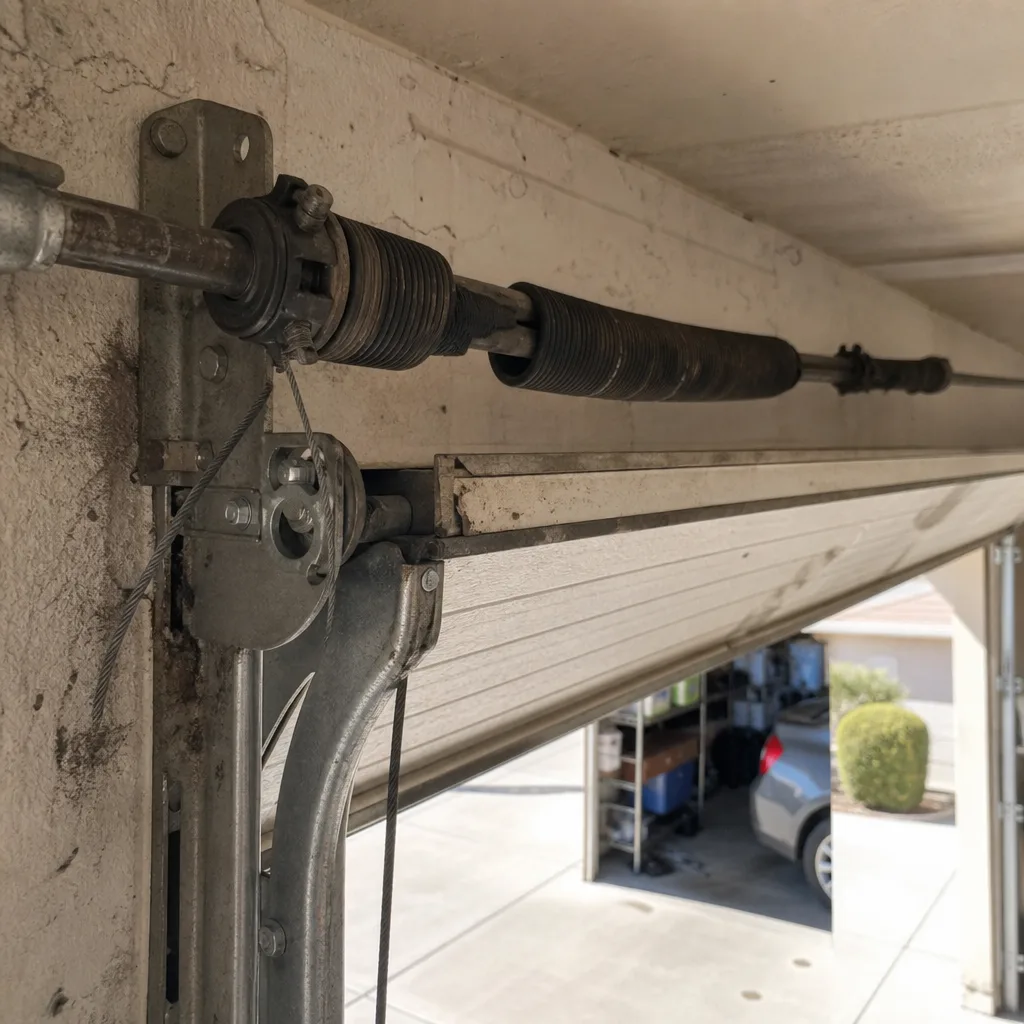
Dust storms deposit fine alkaline particulate on every horizontal surface in a garage, including the cable drums, the bottom brackets, and the torsion spring. That dust is mildly corrosive on its own. When humidity follows the dust, which is the standard monsoon pattern, the dust absorbs moisture and activates a corrosion cycle on exposed metal fittings. The components most vulnerable are the cable fittings at the bottom brackets, where the lift cable attaches to the door, and the cable drums at the top corners.
After a dust storm, inspect these specific points:
- Cable attachment points at the bottom bracket. Look for rust-colored staining that bleeds downward from the crimped cable end. This staining indicates moisture-activated corrosion inside the cable crimp. Surface oxidation that wipes off with a dry rag is normal. Staining that has penetrated the cable strands is accelerated wear.
- Cable drum seating at the top corners. The cable should sit in its groove cleanly. If the cable looks fuzzy, that is individual wire strands beginning to fray. Frayed cable strands that contact the drum edge will eventually snap the cable, and a snapped cable drops one side of the door several feet without warning.
- Bottom bracket bolts. Monsoon humidity rusts the bolts that hold the bottom brackets to the door panels. These bolts are under significant tension when the door opens. A rust-compromised bolt fails during an open cycle, and the bracket separates from the panel.
We have documented hundreds of Gilbert cable failures, and the pattern is consistent: the fitting looked fine in June, showed staining by late August, and snapped by mid-October. The corrosion window is short. Catching it during monsoon season means a cable replacement that costs a few hundred dollars. Missing it means an emergency call when the door is stuck open or closed with one side sagging.
Safety note: do not attempt to remove or replace a cable that is still under tension. The torsion spring holds enough stored energy to cause serious injury if released improperly. If you see fraying or staining at the cable fitting, leave the door closed and call a professional.
The October-November Reset Window
October through November is the most important maintenance period for a Gilbert garage door, and the one most homeowners skip because the weather feels mild and nothing appears broken. That is precisely the point. The damage accumulated during heat and monsoon phases matures during this window.
Think of it as a smoke-detector check for your door. The components are not failing yet, but the conditions that will cause failure are already present. The reset window is when you identify those conditions while the repair is scheduled and inexpensive rather than emergency and costly.
Run this full component check sequence in October or November:
- Balance test. Pull the red emergency release cord with the door closed. Lift the door manually to waist height and let go. A balanced door stays in place, moves slightly, and does not drop. A door that drops from waist height has weakened torsion springs. A door that shoots upward has springs that are over-wound for the door’s current weight, which happens after panel replacement or added insulation.
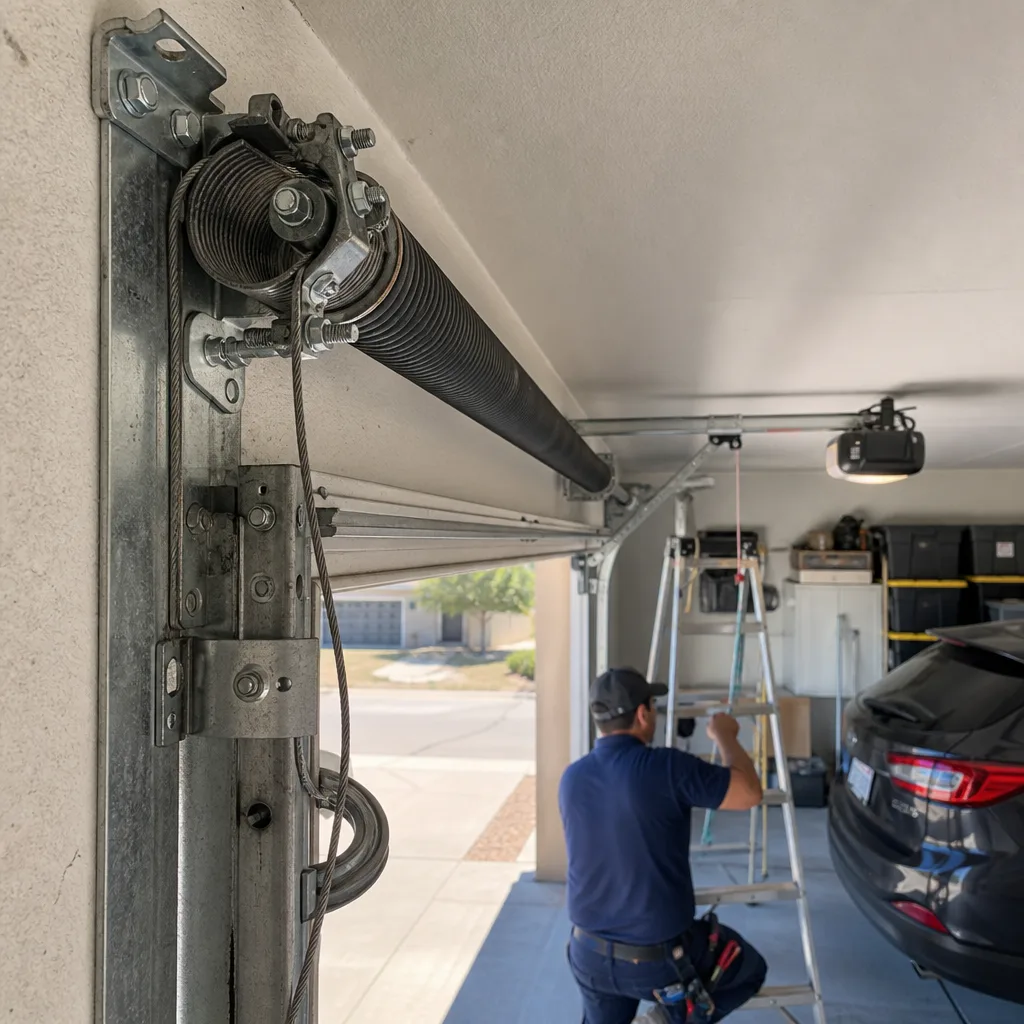
- Torque check on spring bolts. With the door closed, visually inspect the set screws on the torsion spring cones. Do not touch them. Look for rust accumulation around the screw heads and any visible gap between the cone and the spring coil. A spring cone that has loosened will let the spring unwind, which changes the door’s balance and accelerates fatigue at the coil ends.
- Hinge inspection. Open the door halfway and look at the hinges from inside the garage. Gilbert’s dry heat causes the nylon bushings inside residential hinges to crack and fall out. A hinge without its bushing rides metal-on-metal, which has a distinct gritty sound and leaves metal shavings on the hinge face.
- Roller inspection. Rollers should spin freely when the door moves. A roller that slides instead of spins is worn flat on one side and is grinding against the track. Worn rollers accelerate track wear, which is a more expensive problem than the roller replacement itself.
- Opener gear check. Remove the opener cover and look at the white worm gear on the drive shaft. This gear is plastic on most LiftMaster and Chamberlain models and wears down over time. A gear that shows visible shaving or flattened teeth will fail within months, and it typically fails mid-cycle with the door half open.
Each of these items is independently minor. Together, they are the difference between a door that runs for another five years and a door that fails on a Tuesday morning in January. If you find anything on this list that looks worn or out of spec, a Garage Door Repair in Gilbert technician can address all of it in a single visit before the winter holidays.
The Mild Winter: December Through February
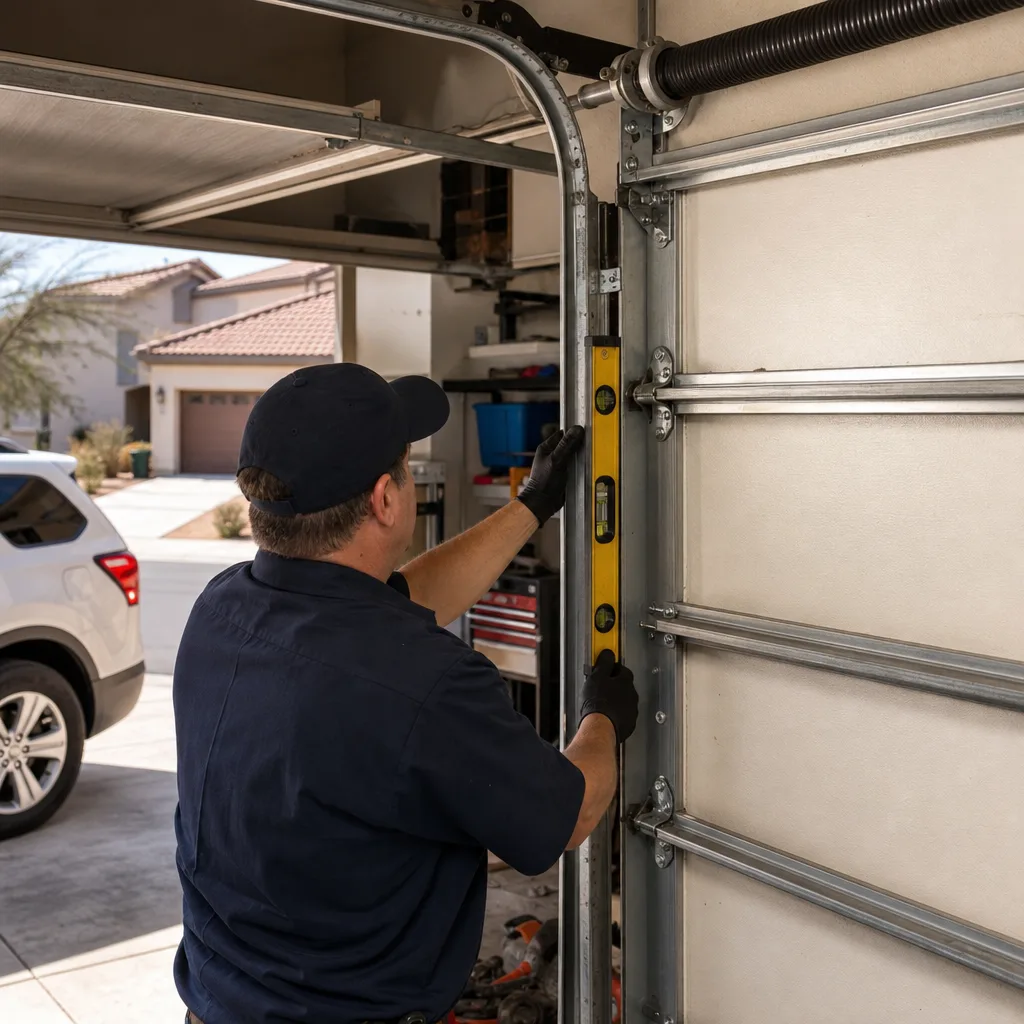
Gilbert’s winter is easy to dismiss because daytime highs still reach 60°F and the door works fine most days. What homeowners miss is that overnight lows in the 35°F to 45°F range change torsion spring behavior enough to matter, and the winter season is when spring fatigue from the prior summer finally reveals itself.
Torsion springs are rated for a specific number of cycles, and each open-close operation takes one cycle off that rating. A standard 10,000-cycle spring on a door that opens four times daily lasts about seven years. But heat accelerates spring fatigue because the steel expands and contracts daily, which work-hardens the coil ends where the spring breaks. A spring that spent June through September in a 140°F garage has aged more than the calendar suggests. When winter arrives and the ambient temperature drops 30 to 40 degrees overnight, the already-fatigued spring stiffens, and that stiffness changes the door’s behavior.
What to look for during winter:
- Slower opening on cold mornings. If the door opens noticeably slower when the garage is cold and returns to normal speed after a few cycles, the opener motor is working harder against a stiffening spring. This is an early fatigue signal.
- A door that stops 12 to 18 inches from the closed position. This is the classic torsion spring failure signature in winter: the spring has lost enough tension that the opener cannot set the door down fully, so the door reverses as a safety response. What looks like an opener problem is actually a spring that has already begun to fail.
- Uneven closing. If one side of the door touches the ground before the other, one of the two springs has weakened more than its partner. The door will still close, but the imbalance accelerates wear on every other component.
The winter season is also the right time to schedule any deferred maintenance, because service demand in Gilbert drops after the monsoon and before the spring rush. For Garage Door Cost Breakdown: The Gilbert Homeowner’s Reference for 2026, see our detailed pricing guide. Technicians have open schedules. Parts ship faster. The work gets done without urgency, which means it gets done correctly. If your October reset window check turned up anything questionable, December is the time to address it.
Photo-Eye Alignment: The Year-Round Task
There is one component in a garage door system that Gilbert’s soil affects year-round, regardless of season: the photo-eye sensors mounted near the bottom of the door tracks. These sensors project an invisible beam across the door opening. When the beam is interrupted, the opener refuses to close. The problem in Gilbert is that the ground under the garage slab moves.
Gilbert sits on expansive clay soil in many areas, particularly across the southeast neighborhoods and the Agritopia and Seville corridor. Expansive clay shrinks and swells with moisture changes, and monsoon season delivers all of Gilbert’s moisture in a few weeks. When the soil expands, it lifts the garage slab slightly. When it dries out, the slab settles. This movement is small, measured in fractions of an inch, but it is enough to knock the photo-eye sensors out of alignment because the sensor brackets are attached to the track, and the track is attached to the structure of the garage.
A door that refuses to close and blinks the opener light twice is almost always a photo-eye alignment issue, not a failed sensor. The fix is straightforward: loosen the wing nut on the sensor bracket, re-aim the sensor at its partner across the door, and tighten the nut. You will know the alignment is correct when both sensors show solid indicator lights, not blinking ones.
Check photo-eye alignment monthly in Gilbert. It is a 30-second visual inspection per side. This one habit prevents more no-close service calls than any other single maintenance task, and it belongs on every season’s checklist regardless of what the weather is doing.
Lubrication: What Gilbert’s Heat Actually Does
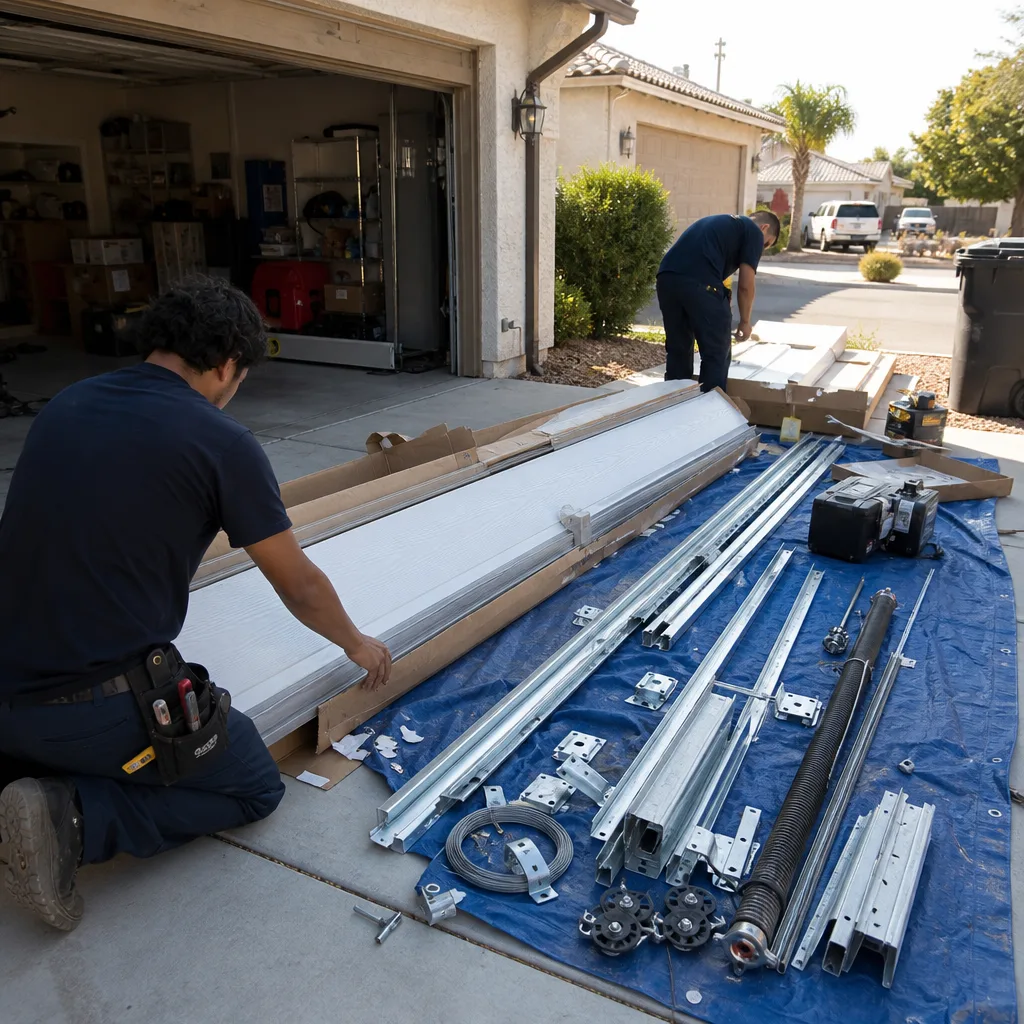
Standard garage door maintenance advice says to lubricate the moving parts twice a year. That advice was written for climates with moderate summers. In Gilbert, the heat changes the math because petroleum-based lubricants have a temperature ceiling, and Gilbert exceeds it for months at a time.
Most hardware-store garage door lubricants are solvent-carried oils with a working range up to about 120°F. A Gilbert garage door in direct afternoon sun reaches surface temperatures above 140°F on the metal components. At that temperature, the solvent carrier evaporates and the oil fraction thins to the point where it runs off, leaving behind a sticky residue that attracts dust. That dust then enters the roller bearings and hinge bushings, which accelerates wear rather than preventing it.
The practical rule for Gilbert is different from the national advice:
- Use a lithium-based white grease or a specifically formulated garage door lubricant rated for high-temperature use. Avoid WD-40 and similar penetrating oils, which are too thin to lubricate door components and wash away existing lubricant.
- Lubricate in the early morning when the components are cool and the lubricant will set rather than run.
- Check the torsion spring monthly during heat phase. A dry spring coil squeaks and accelerates wear on the spring’s own coating. A properly lubricated spring is quiet and has a light sheen.
- Do not lubricate the track itself. The rollers ride on sealed bearings and do not need track lubrication. Oiling the track attracts dust, which builds up into a grinding paste that wears the rollers flat.
If the door has become noticeably louder over a summer, the lubrication has failed or the rollers are already worn. Silent operation is not a luxury. It is the sound of a system running without metal-on-metal contact, and a loud door is a door that is actively wearing itself down.
Common Mistakes to Avoid
- Skipping the October reset window because the door “works fine.” By the time a Gilbert garage door stops working, the failure has usually been developing for months. The reset window exists specifically because the door still works while the damage is accumulating.
- Using WD-40 or penetrating oil on hinges and rollers. These products are too thin for garage door components and strip the lubricant that is already there. They work for breaking loose rusted bolts, not for lubricating moving parts under spring tension.
- Adjusting the opener force settings instead of finding the source of the resistance. When a door starts reversing in August, the answer is usually track alignment or a failing component, not the force dial. Increasing force to overcome resistance just transfers the load to the parts that are already struggling.
- Lubricating the track. Garage door rollers are designed to roll, not slide. Track lubrication attracts Gilbert’s dust, which creates the exact grinding compound you are trying to prevent.
- Ignoring a blinking opener light. The blinking light is a diagnostic code, not a nuisance. A double blink means photo-eye interruption, and in Gilbert that usually means slab settlement knocked a sensor out of alignment. A 30-second adjustment saves a service call.
- Attempting torsion spring work without training. The torsion spring stores enough energy to kill. This is not an exaggeration. The set screws, the winding cones, and the cable tension all require specific tools and specific knowledge. If the spring needs adjustment, a professional’s service fee is cheaper than an emergency room visit.
When to Call a Professional
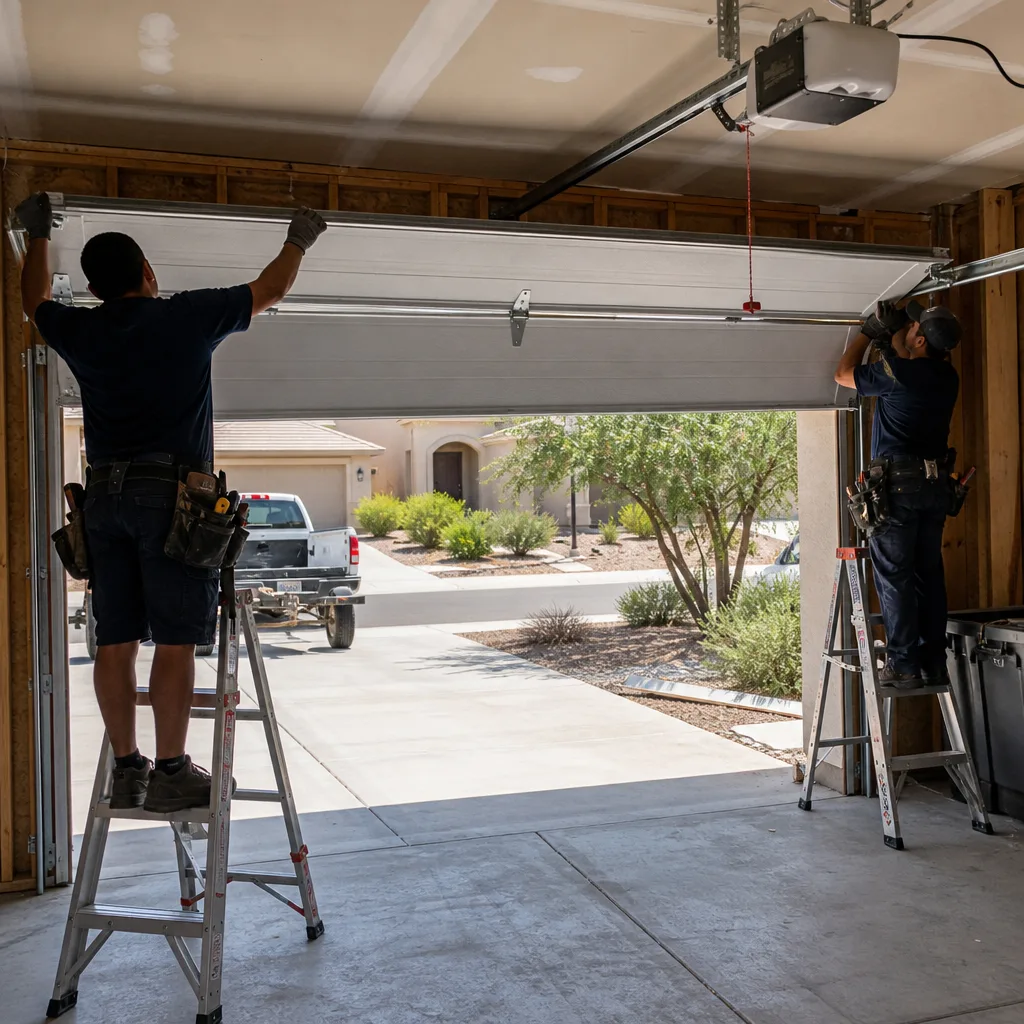
You can handle photo-eye alignment, visual inspections, and lubrication on your own. You should call a professional the moment a torsion spring, lift cable, or bottom bracket shows signs of wear, because those components are under tension and the failure mode is sudden and dangerous. A cable that has begun to fray can snap while you are standing next to it. A torsion spring that breaks while the door is open drops the door with enough force to crush anything underneath. These are not DIY repairs. Servo Garage Doors Gilbert offers free estimates in Gilbert, with a flat written price and written scope before any work starts, and every visit includes a documented photo record of what was found and what was done. Explore more guides & resources on our blog. If you see wear or hear grinding, call (520) 482-3838 and have it looked at before it becomes an emergency.
Frequently Asked Questions
A seasonal maintenance inspection in Gilbert typically costs $75 to $150 for the inspection itself. If the inspection finds worn components, repairs are quoted separately as a flat price before work starts. The most common seasonal repairs we quote in Gilbert are roller replacement at $120 to $200 for a full set, hinge replacement at $25 to $45 per hinge installed, and cable replacement at $180 to $280 per cable. Every quote is a written flat price with a written scope, delivered before any work begins, so the number you approve is the number you pay. Call (520) 482-3838 for an exact quote on your specific door.
Yes. We answer the phone with a live person 24 hours a day, 7 days a week, including holidays. For emergency calls, you get a named technician and an on-the-way text, not a callback window. Same-day service is available for most repair calls in Gilbert, including cable, spring, and opener issues. Call (520) 482-3838 and tell the person who answers what the door is doing; they will tell you when a technician can be there.
No. The price you are quoted before the technician arrives is based on the symptoms and the door’s make and model. If the technician finds something additional during the inspection, you will receive a new written quote for the additional work before anything else is done, and you can decline it. Clause 1 of The Haven Standard requires a flat, written price and written scope before any work starts, on every job, with no exceptions. Nothing gets added to the invoice without your approval first.
In most cases, yes. Our trucks are stocked with torsion springs in the most common Gilbert wire sizes, cables, rollers, hinges, bottom brackets, photo-eye sensors, and opener parts for LiftMaster, Chamberlain, and Genie units. If your door has an unusual spring size or a specialty part from a smaller manufacturer, we may need to source it from a local supplier, which typically adds 24 to 48 hours. We will tell you before scheduling the visit if that is likely.
In Gilbert, check the torsion spring and hinge lubrication monthly from June through September, and lubricate in the early morning when the components are cool. For a full walkthrough of seasonal care, read The Complete Guide to Garage Door in Gilbert. Use a lithium-based white grease or a dedicated garage door lubricant rated for high temperatures. Skip WD-40 and skip the track entirely. During the rest of the year, every three months is sufficient for most homes, with a fresh application during the October reset window.
The 365-Day Done Right Promise means that if a repair we perform is not right, we make it right within a year of the original work. This is written into The Haven Standard, not delivered as a handshake promise. If something fails on a component we installed or repaired, call us, and we will return and address it. The promise applies to workmanship and the components we installed, and the terms are documented on our terms page. Call (520) 482-3838 and ask to see the written terms if you want to review them before booking.
The Bottom Line
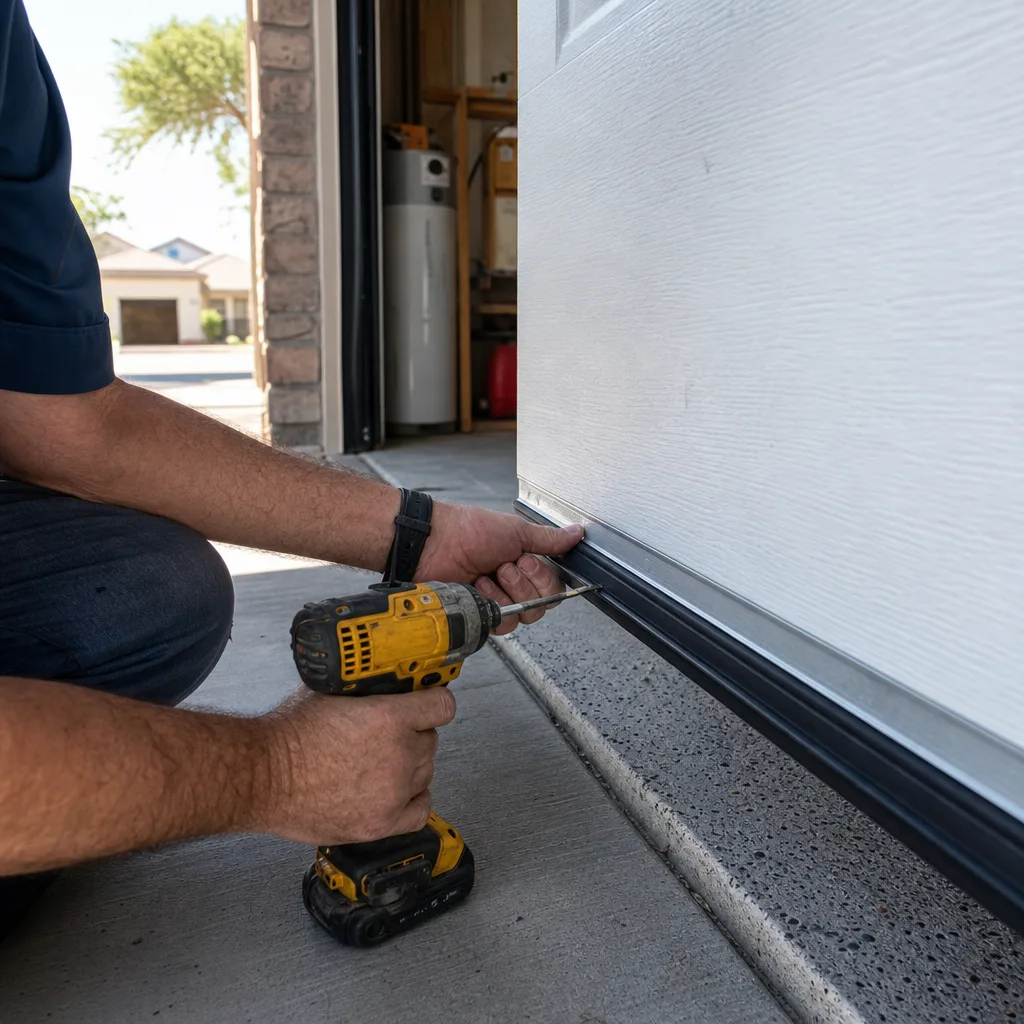
Gilbert’s garage door seasons are not winter, spring, summer, and fall. They are heat, monsoon, reset, and mild cold. The heat phase expands track and volatilizes lubricant. The monsoon phase corrodes cable fittings and bottom brackets. The October-November reset window is when the prior two phases mature, and it is the single most important maintenance period of the year. The mild winter hides spring fatigue that started months earlier. A homeowner who runs the three seasonal checks, keeps the photo-eyes aligned against slab settlement, and uses the right lubricant will catch most failures before they become emergencies. For everything that needs a professional’s tools and training, Garage Door Installation in Gilbert and repair work comes with a written price before anything starts and a photo record after everything is done. Call (520) 482-3838 with questions or to schedule a free estimate.
Written by Marcus Deller, Owner at Servo Garage Doors Gilbert, serving Gilbert since 2015.