
Last updated September 20, 2026
Full 25-point door and opener safety check with every visit - springs, cables, rollers, tracks, and your LiftMaster or Chamberlain opener included
You get a price before we start. It does not change when the truck arrives.
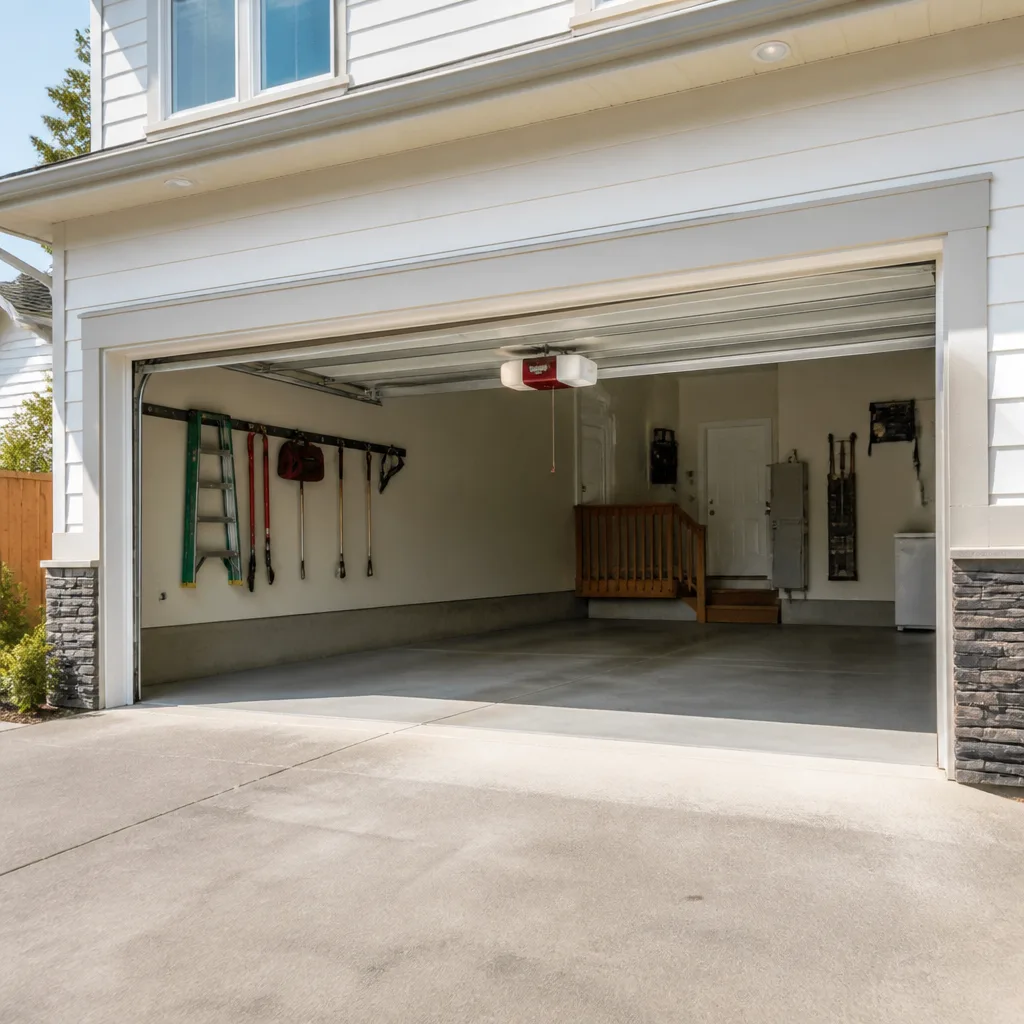
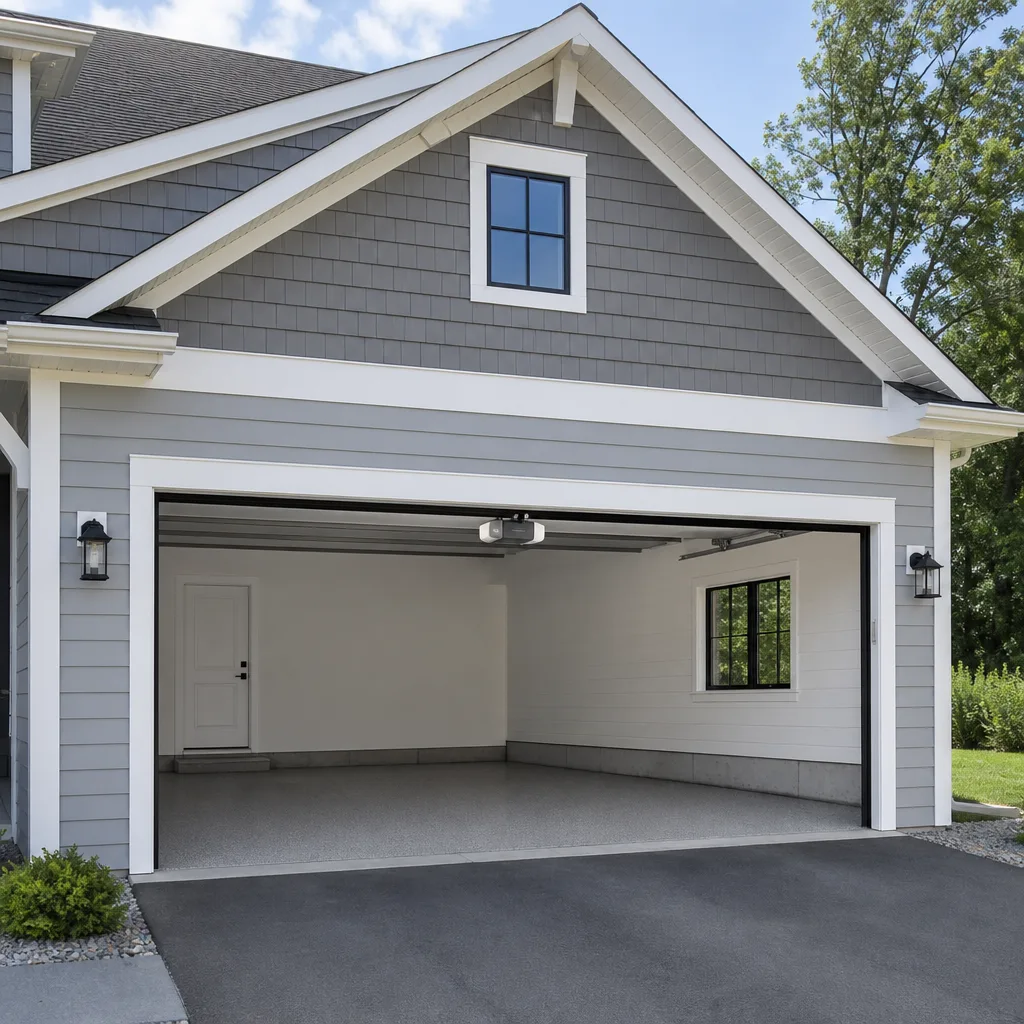
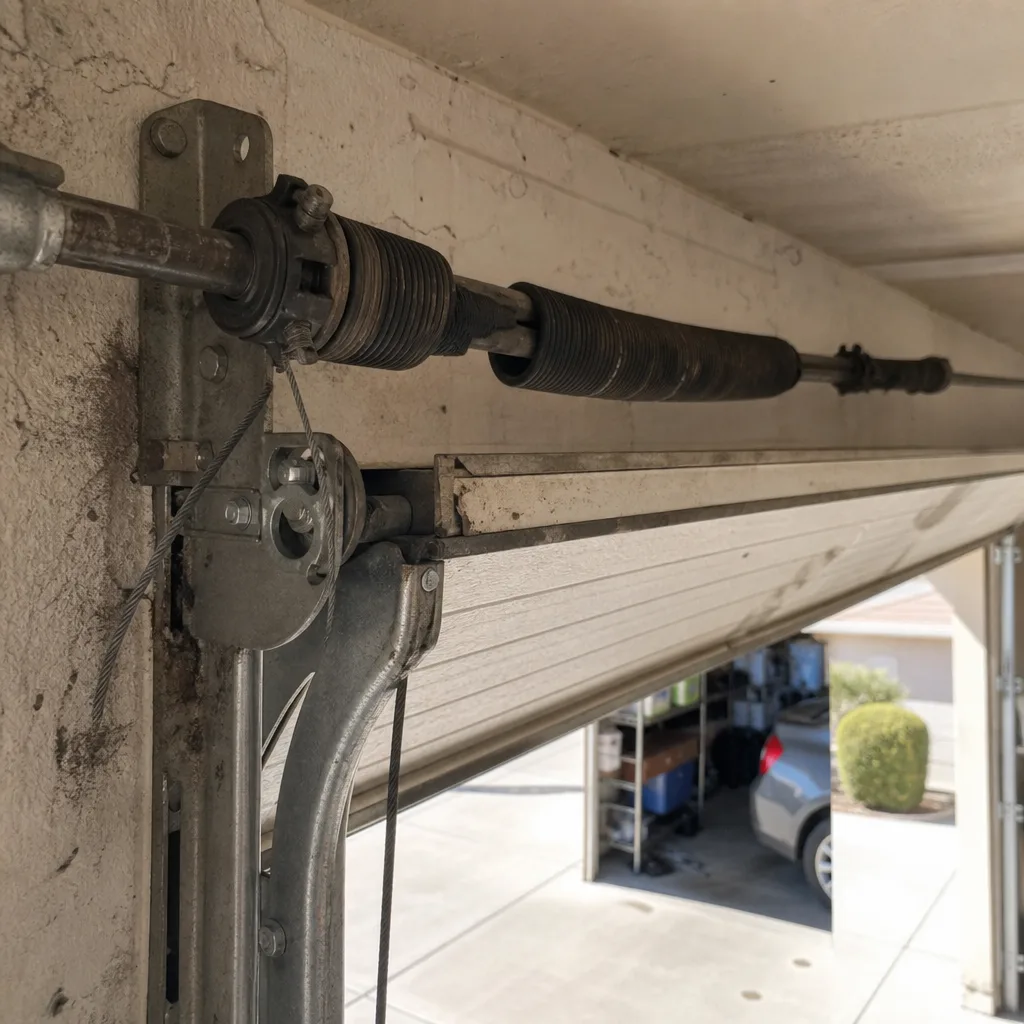 Before
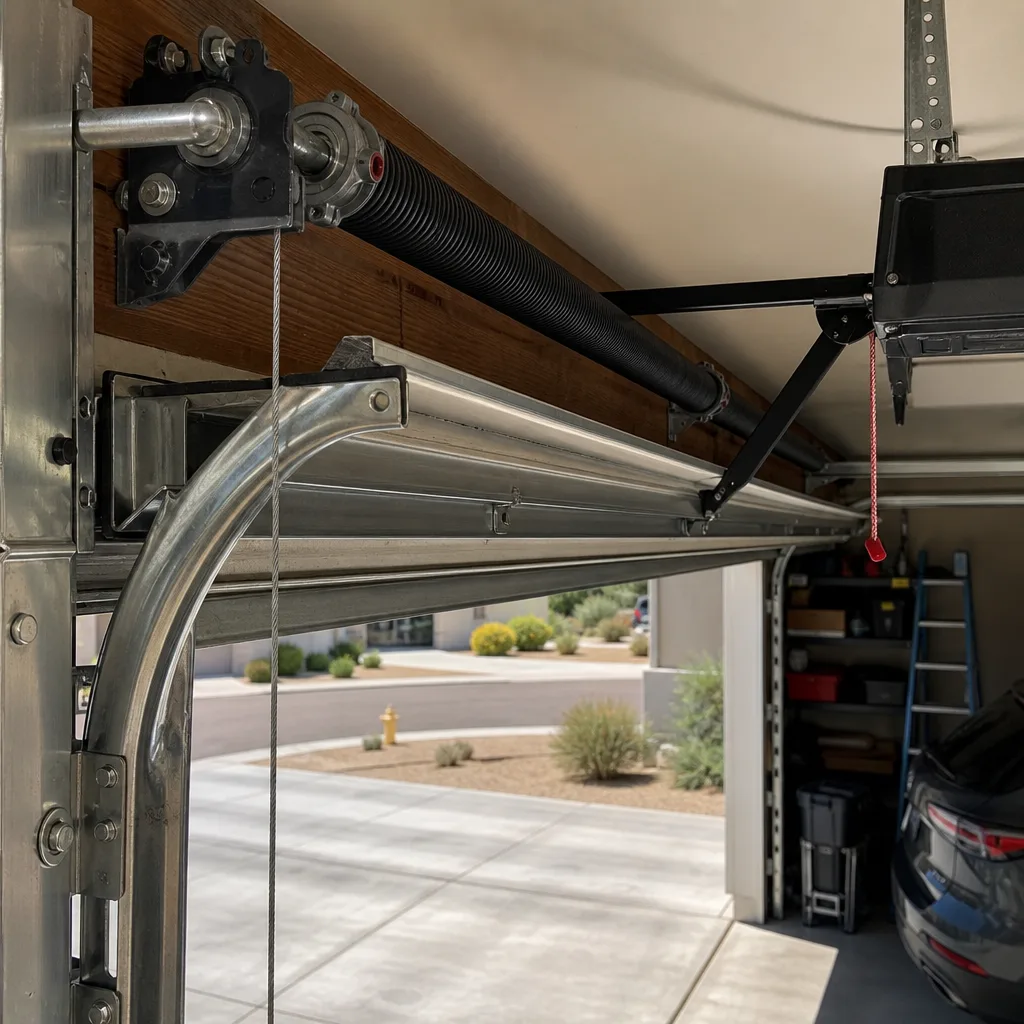 After
After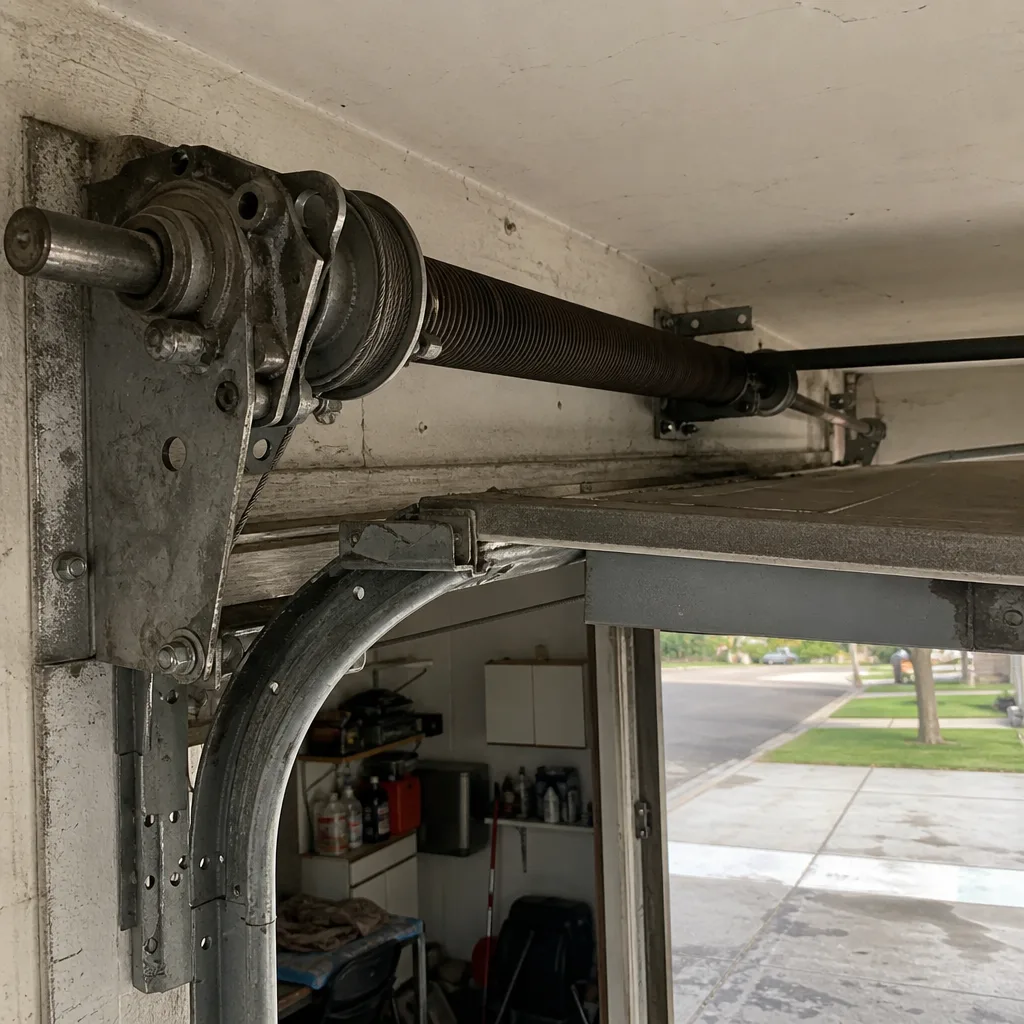 Before
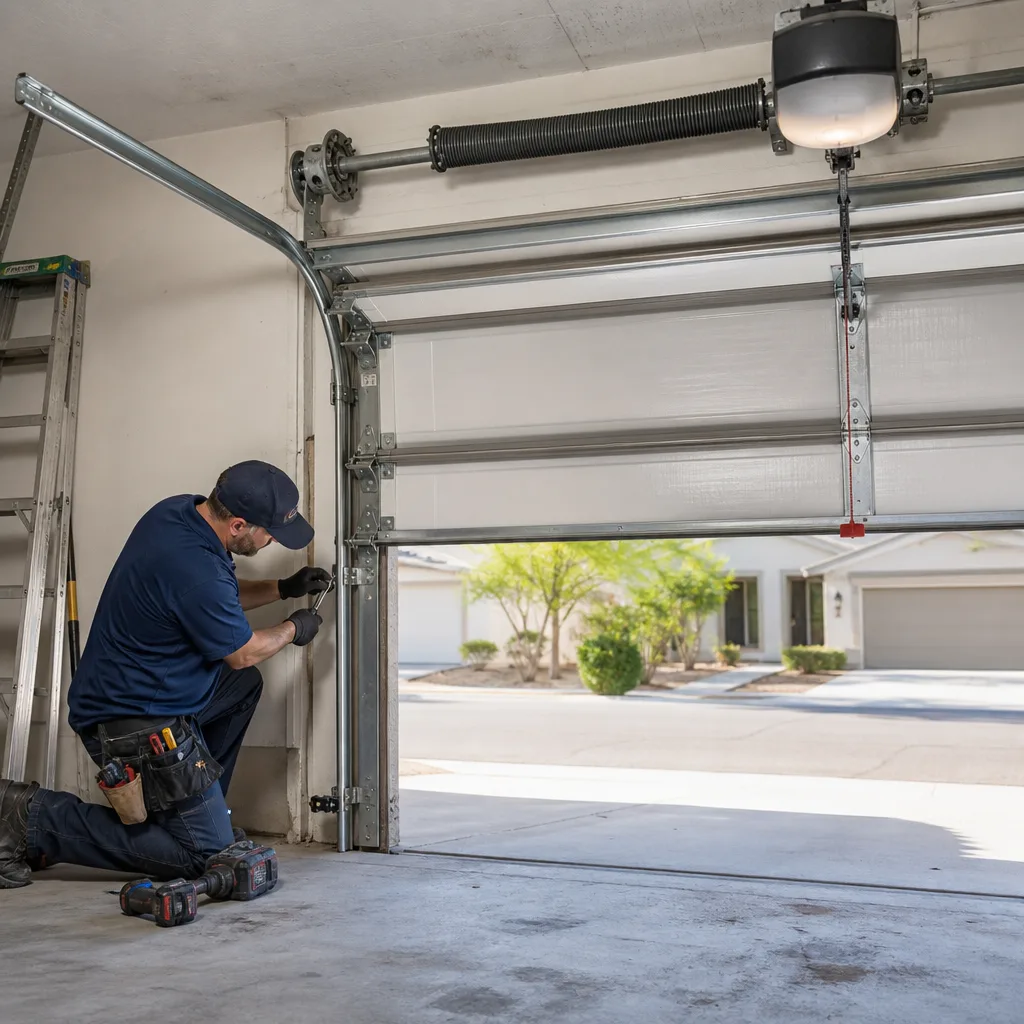 After
After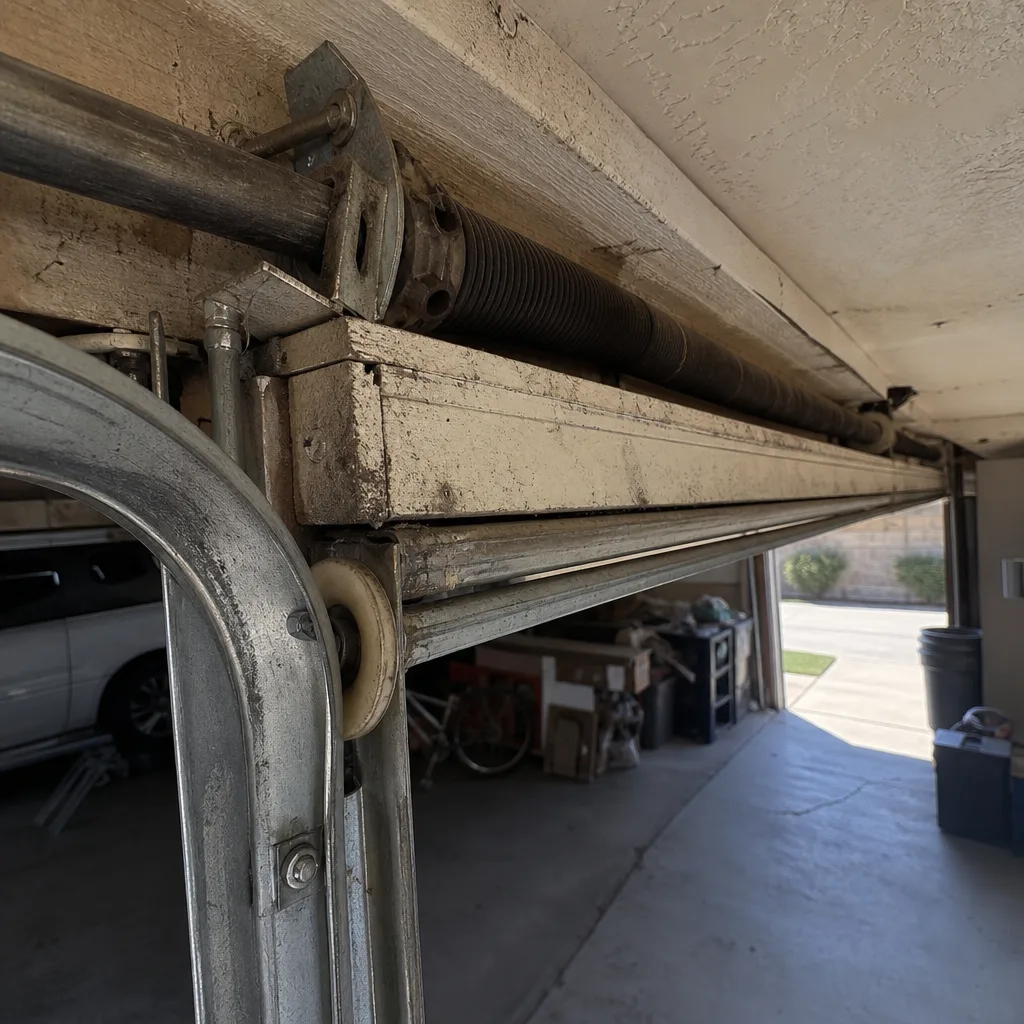 Before
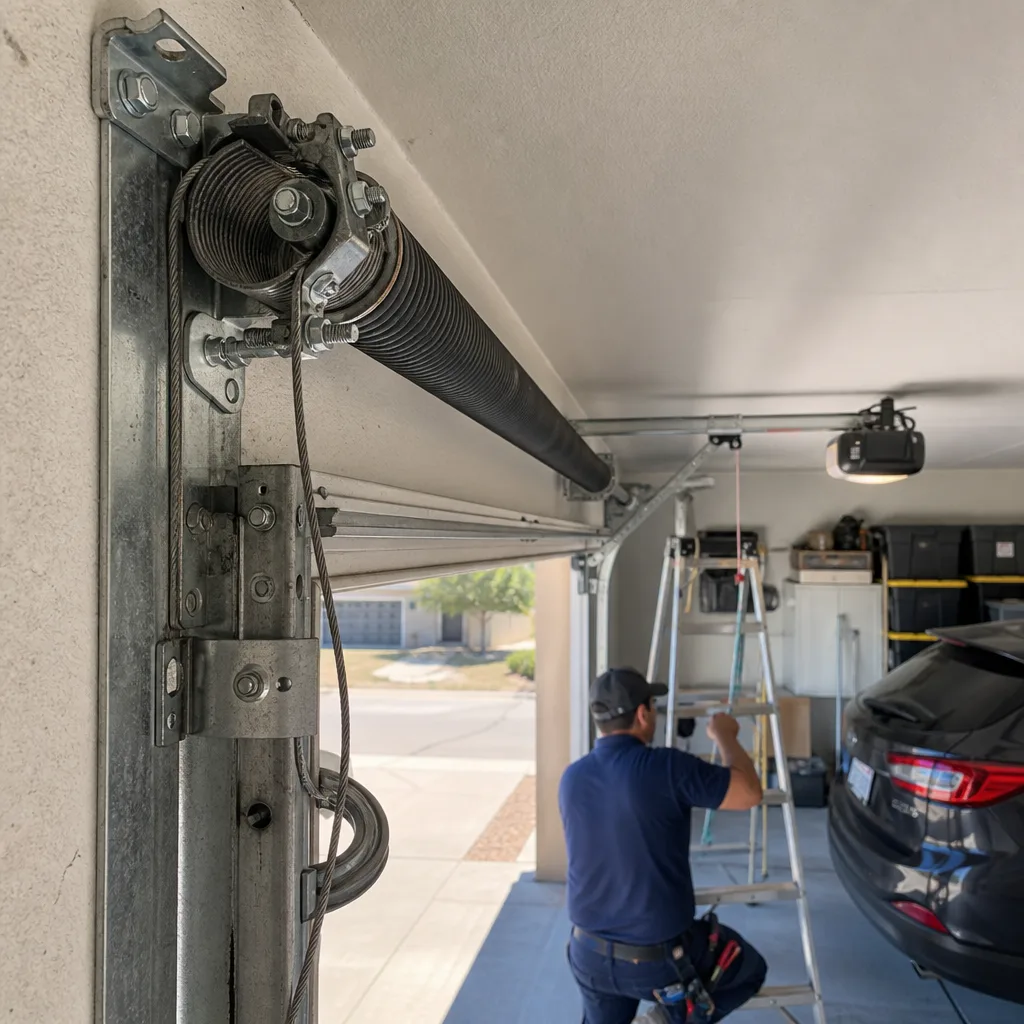 After
AfterGarage Door Permits, Codes & Inspections in AZ: What You Need to Know
A garage door replacement that required a permit but never got one doesn’t disappear from the record. It surfaces in the seller’s disclosure when you list the house, and the buyer’s inspector is trained to look for exactly that: unpermitted structural work. In Gilbert, where homes built between 2015 and 2025 dominate a large share of the resale market, we’ve watched transactions stall over a garage door header that was modified without a signed inspection record. This guide explains precisely where Arizona’s building code draws the line between a simple panel swap and a permitted structural alteration, what the Gilbert permit process costs in time and money, and which mistakes create title problems you won’t discover until closing day.
Quick Answer
Most garage door replacements in Arizona do not require a building permit, but you do need one when the work changes the rough opening size, modifies the header above the door, adds a new electrical circuit for an opener, or replaces a fire-rated door between the garage and living space. In Gilbert, a residential garage door permit runs through the Community Development Department, typically costs between $80 and $250 depending on scope, and takes 5 to 10 business days for review. A like-for-like panel and track replacement on an existing opening with no structural or electrical changes is exempt.
Table of Contents
- When a Permit Is Required: The Four Trigger Conditions
- When No Permit Is Needed: The Like-for-Like Exemption
- The Gilbert Permit Process: Application, Timeline, and Fees
- HOA Approval vs. Building Permit: Two Separate Documents
- What a Final Inspection Covers and How to Get the Record
- How Unpermitted Work Affects Homeowner’s Insurance
- Common Mistakes to Avoid
- When to Call a Professional
- Frequently Asked Questions
- The Bottom Line
 Before
 After
AfterWhen a Permit Is Required: The Four Trigger Conditions
Arizona adopts the International Building Code (IBC) with state-specific amendments, and most municipalities, including Gilbert, enforce it locally. Under the 2018 IBC as adopted by Arizona, a garage door permit is triggered by four specific conditions. If none of these apply to your project, you’re working in exempt territory. If any one of them does, the permit is not optional.
1. Header Modification
The header is the load-bearing beam that spans the top of the garage door opening. It carries the weight of the wall above, and in many Gilbert homes, part of the second story or roof structure. Cutting into, replacing, or reinforcing a header changes the structural load path. The code requires an engineer’s letter or approved prescriptive design before that beam is touched, and the work must be inspected before it’s covered. We’ve seen contractors propose trimming a header to fit a taller door without mentioning the permit. That modification alters how weight transfers to the foundation. If it’s done wrong, the wall sags, the door binds, and the fix costs more than the original door replacement.
2. Rough Opening Size Change
The rough opening is the framed hole in the wall where the garage door sits. If you’re widening the opening to fit a two-car door where a single door was, or raising the opening for a taller vehicle, you’re altering the framing. That means new king studs, jack studs, a new header, and likely new shear wall requirements in a high-wind zone. Gilbert sits in a region where monsoon microbursts deliver sudden lateral wind loads, so shear resistance isn’t a paper exercise. The permit process here requires a framing plan and an inspection before insulation or drywall hides the work.
3. New Electrical Circuit for an Opener
Adding a garage door opener where no ceiling outlet exists requires a new branch circuit. That work falls under the National Electrical Code as adopted by Arizona, and it needs an electrical permit, even if the door itself is exempt. The circuit needs to be sized correctly, properly grounded, and protected by a GFCI where the code requires it. In a Gilbert garage, that outlet typically feeds a LiftMaster or Chamberlain opener, both of which run on a dedicated 120-volt circuit. If an installer offers to tap an existing garage circuit instead of pulling a new home run, ask whether the existing circuit already carries the laundry, the freezer, or a workbench. Overloading a shared circuit trips the breaker and, more importantly, fails inspection if the work is caught later.
4. Fire-Rated Door Replacement Between Garage and Living Space
This is the one most homeowners miss. The door between an attached garage and the house is a fire separation. Under the IBC, that wall assembly carries a fire rating, and the door must match it, typically 20-minute fire-rated with a self-closing device. If you’re replacing that pedestrian door, not the vehicle door, as part of a garage renovation, you need a permit and the replacement must meet the fire-rating requirement. A standard interior door from the home center doesn’t meet the standard, and swapping it without documentation is exactly the kind of unpermitted structural alteration a buyer’s inspector flags during resale. We’ve worked on Garage Door Installation in Gilbert projects where the vehicle door was exempt but the man-door replacement triggered a permit the homeowner never saw coming.
When No Permit Is Needed: The Like-for-Like Exemption
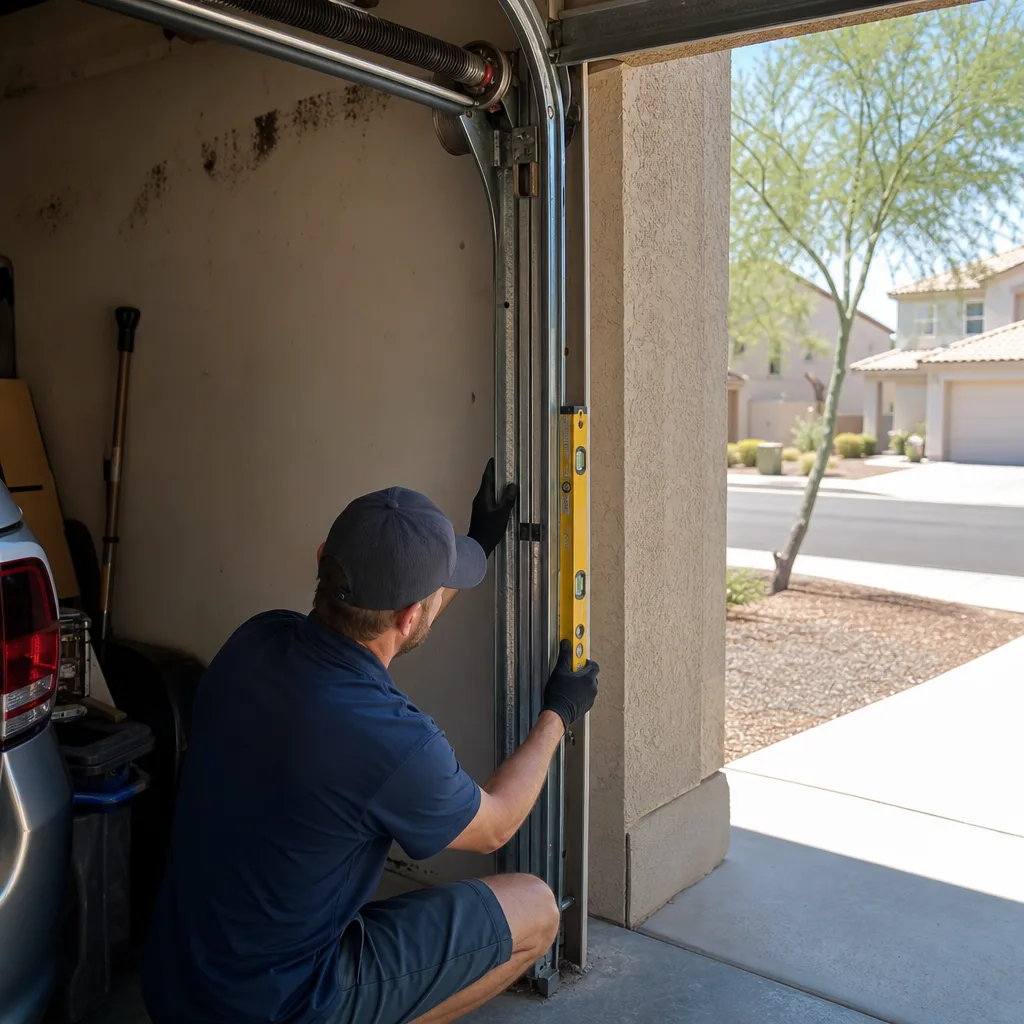
Here’s the practical reality for most Gilbert homeowners. Replacing a garage door panel set, tracks, springs, and opener on an existing opening, with no change to the rough opening dimensions, no header work, no new electrical circuit, and no fire-rated door involved, is a like-for-like replacement. Arizona’s code treats this as maintenance, not construction. No permit is required, though you can find more guides & resources on keeping your door in top shape.
This covers the most common scenarios we handle. A torsion spring breaks on a Raynor door, we replace it. A wood panel rots on the bottom section of a Clopay door, we replace the section. A LiftMaster opener’s logic board fails, we replace the opener on the existing outlet. None of these projects requires a trip to the Gilbert Community Development Department. What they do require is a written scope of work, because the documentation matters even when the permit office isn’t involved. The photo record we deliver on every visit serves as your evidence that the work was a replacement, not an alteration, should a buyer’s inspector ever ask the question.
The line between exempt maintenance and permitted alteration often comes down to what’s behind the drywall. If the exterior dimensions of the opening don’t change and no structural member is cut, you’re on the maintenance side. If a saw touches a stud, a header, or a shear panel, you’re on the permit side. When in doubt, the Gilbert permit counter will tell you for free, and they’d rather answer the question before the work than sort out the correction afterward.
The Gilbert Permit Process: Application, Timeline, and Fees
Gilbert’s Community Development Department handles residential garage door permits through an online portal and over-the-counter service at the municipal center. The process for a standard residential garage door permit in Gilbert follows a predictable sequence.
- Determine permit type. Structural alterations to the opening are a building permit. New electrical for an opener is an electrical permit. Some projects need both.
- Prepare the submittal package. For structural work, include a site plan showing the garage location, a framing plan for the rough opening, and a manufacturer’s specification sheet for the new door. For electrical work, include the circuit details and the opener’s electrical requirements from a brand like Genie or LiftMaster.
- Submit through the portal or in person. Gilbert’s online permitting system accepts digital submittals, which is faster than paper. The system assigns a permit number immediately.
- Pay the fee. A standard garage door permit in Gilbert runs $80 to $250 depending on valuation and scope. Plan review fees are often separate from inspection fees.
- Wait for review. Residential mechanical and simple structural permits in Gilbert typically review in 5 to 10 business days. Complex structural changes may require a second review cycle.
- Schedule the inspection. Once the permit is issued and the work is complete, call for inspection. Gilbert inspections are usually scheduled within 2 to 3 business days.
- Pass the final and get the signed record. The inspector signs off and the record is available through the portal. Print it and keep it with your home file.
The fees for a door replacement that requires a permit are modest compared to the cost of the door itself, which in Gilbert typically runs $1,200 to $4,500 installed for a standard two-car sectional door depending on insulation, window, and material. The permit is the cheap part. Skipping it is the expensive part, because the correction process after the fact involves tearing out work to expose what the inspector needs to verify.
HOA Approval vs. Building Permit: Two Separate Documents
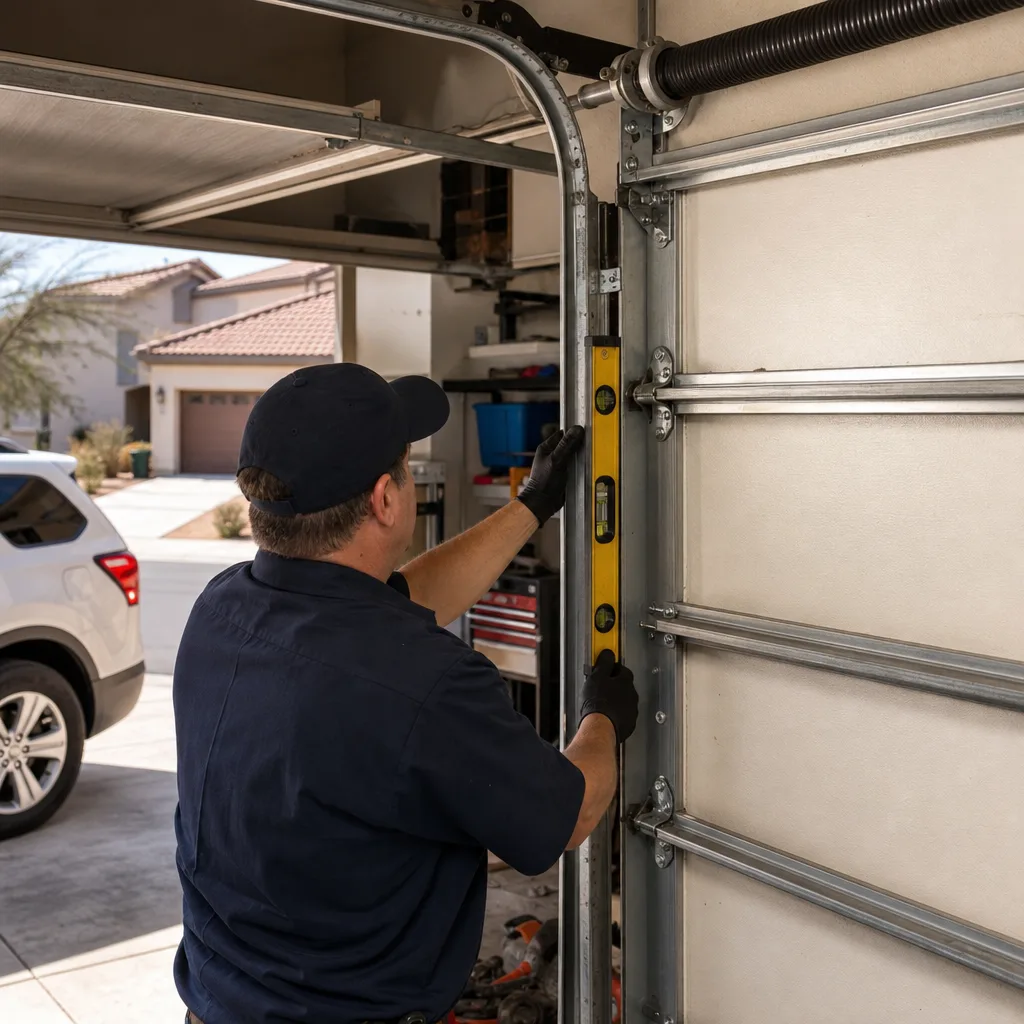
A lot of Gilbert homeowners assume the HOA approval letter covers the building permit. It doesn’t. They are two entirely separate processes, run by two entirely separate authorities, and neither substitutes for the other. The HOA controls aesthetics: door color, panel style, window placement. The building department controls safety: structural integrity, electrical compliance, fire separation. You need both, and the sequencing matters.
In Gilbert neighborhoods with design review committees, the correct sequence is HOA approval first, then building permit. Here’s why. The HOA may reject your chosen door style, which means you’d be submitting a permit application for a door you can’t install. Get the HOA sign-off, then file the permit with the final design specs. The building department doesn’t care what color the door is. The HOA doesn’t care whether the header is sized correctly. Each is looking at a different layer of the project.
We’ve worked with homeowners in Val Vista Lakes and Seville who got the HOA approval, assumed that was the end of the paperwork, and only later discovered the rough opening change needed a building permit. The buyer’s inspector found the unpermitted structural work during resale, and the seller paid double to correct it retroactively: once for the tear-out to expose the framing, and once for the rework to pass inspection. The sequence is simple. HOA first, permit second, work third, inspection fourth. Missing step two creates the problem. If your contractor says the HOA letter is all you need, get that in writing and then verify it with the Gilbert permit counter, because the building department has the final word on structural work, not the design review committee. For help choosing the right pro, see our guide on How to Hire a Garage Door Contractor in Gilbert: A Step-by-Step Guide.
Servo Garage Doors recommends getting the scope documented before either process starts, which is why our Garage Door Repair in Gilbert and installation work begins with a written scope that identifies whether the project crosses the permit threshold. If it does, the scope tells you exactly which of the two approvals applies, so neither process gets skipped.
What a Final Inspection Covers and How to Get the Record
When a garage door project in Gilbert does require a permit, the final inspection is not a formality. The inspector checks specific things, and the signed record is the document that proves the work was done legally. Here’s what a Gilbert residential garage door final inspection typically covers:
- Header and framing. The inspector verifies the header size matches the approved plan, the jack studs are doubled or tripled per the design, and the connections at the top plate and king studs are correct. If the rough opening was changed, this is the core of the inspection.
- Shear wall attachment. In Gilbert’s wind zone, the inspector checks that the shear panel, straps, and hold-downs are in place on the sides of the opening before they’re covered.
- Electrical for the opener. If an electrical permit was required, the inspector checks the circuit, the GFCI protection where required, the outlet location, and the opener’s disconnect means.
- Fire separation. If a fire-rated door between garage and house was replaced, the inspector verifies the rating, the self-closing hinge, and the weather stripping.
- Door operation. The inspector confirms the door opens and closes correctly, the safety sensors reverse the door on obstruction, and the emergency release functions.
After the inspection passes, the record is signed and posted to the Gilbert permit portal. Request a printed copy. That signed document is your proof of compliance, and it belongs in the same file as your closing documents, your home warranty, and your insurance policy. When we complete a permitted installation, we deliver that inspection record along with the photo documentation. Clause 4 of The Haven Standard requires the photo record, and the inspection record from the town is the public counterpart to that private documentation. Together, they create a paper trail that answers every question a buyer, an insurer, or an assessor might ask.
How Unpermitted Work Affects Homeowner’s Insurance
The insurance conversation around unpermitted garage door work is uncomfortable because the denial language is buried in the policy, not in the quote. Most standard homeowner’s policies in Arizona contain a clause that excludes coverage for losses caused by or contributed to by work that required a permit but didn’t get one. The exact language varies by carrier, but the pattern is consistent: the insurer doesn’t need to prove the unpermitted work caused the loss. It needs to show the work contributed to it, and contribution is a low bar when the claim involves the garage.
Here’s a scenario we’ve seen play out. A homeowner modifies the garage door opening to fit a larger door, doesn’t pull a permit, and five years later a monsoon microburst tears the door off and damages the garage interior. The claim is filed. The adjuster notes the door size doesn’t match the original home plans, pulls the permit history, finds the structural alteration was never permitted, and the claim is denied. The homeowner fights it. The insurer points to the exclusion clause. The homeowner loses.
The same pattern applies to electrical work. An opener installed on an unpermitted circuit that later causes a fire gives the insurer a reason to deny the fire claim. The math is brutal. A $180 permit protects a claim that could run into the tens of thousands of dollars. No competent contractor would let you take that risk, and no homeowner should accept it silently. When we quote a job that crosses the permit threshold in Gilbert, the permit line item appears in the written scope, and that’s exactly where it belongs: visible, priced, and agreed before the work starts, per Clause 1 of The Haven Standard.
Common Mistakes to Avoid
- Assuming every door replacement is exempt. Like-for-like panel replacement is exempt. Changing the rough opening, the header, or the fire-rated man-door is not. The difference is structural, and it matters.
- Treating HOA approval as a building permit. The HOA reviews aesthetics. The building department reviews safety. Neither approves on behalf of the other, and skipping the building permit creates a title problem later.
- Letting the contractor handle the permit without verifying it exists. A contractor who says the permit was pulled should produce the permit number. That number is public in Gilbert’s portal. You can check it in two minutes.
- Not keeping the inspection record. The signed final inspection is the document that proves the work was legal. Without it, you have an unpermitted alteration and no way to prove otherwise.
- Tapping an existing garage circuit for a new opener without checking the load. A shared circuit that trips when the freezer kicks on is a code violation waiting to be found.
- Replacing the garage-to-house door with a standard interior door. That door carries a fire rating. A standard door fails the rating, and the buyer’s inspector will flag it.
- Assuming the permit process is too slow or too expensive to bother with. A Gilbert garage door permit costs under $250 and reviews within ten business days. The retroactive correction costs thousands and stalls a sale.
When to Call a Professional
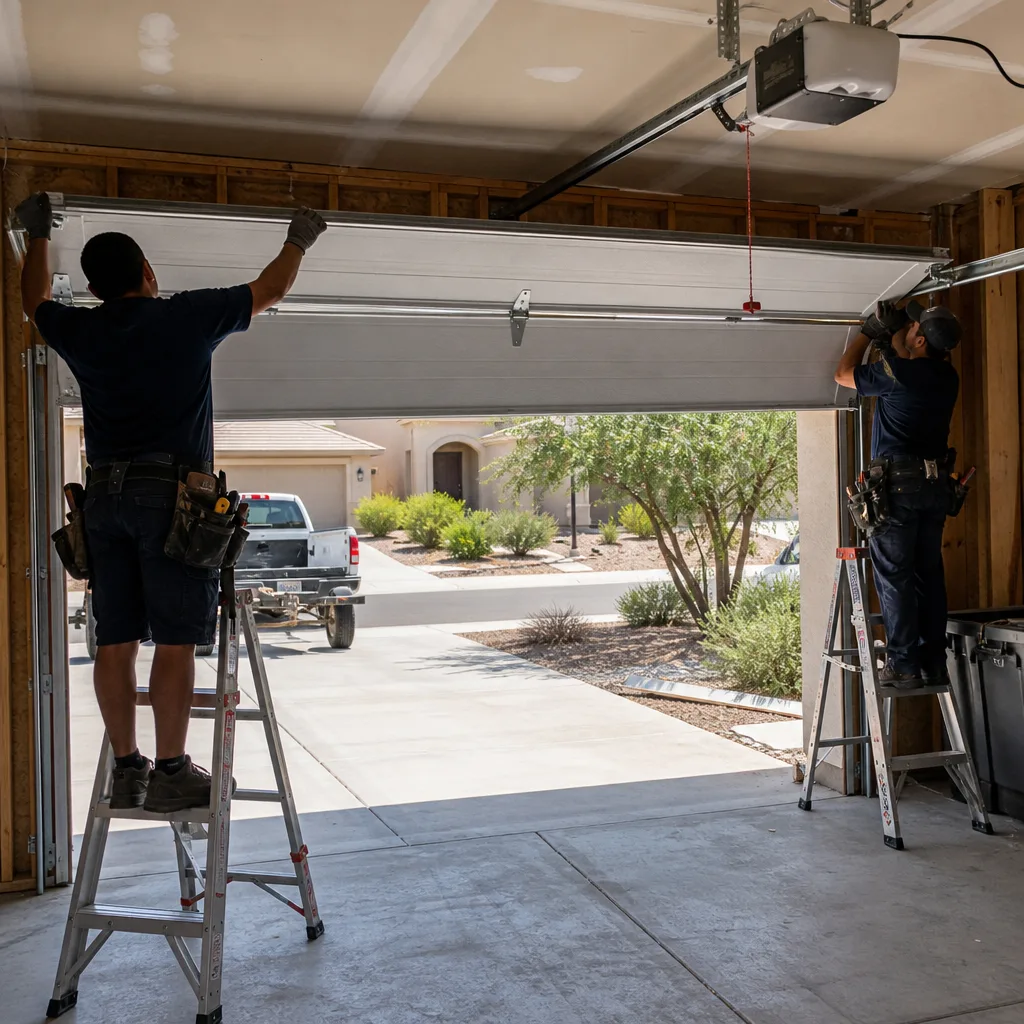
Call a professional when the scope crosses the permit threshold: header modification, rough opening change, new electrical work, or fire-rated door replacement. Call one when the HOA wants documentation you don’t have or the buyer’s inspector flagged something on your current door. Call one when the torsion spring has broken and the door won’t open, because that spring is under enough tension to cause serious injury, and it’s not a DIY repair. In Gilbert, where monsoon wind loads put real stress on garage door hardware, the combination of structural and safety expertise on the same job matters. Servo Garage Doors Gilbert offers free estimates in Gilbert, with a written price and written scope before any work starts. Call (520) 482-3838 and you’ll get a named technician and an on-the-way text, not a callback window.
Frequently Asked Questions
A residential garage door permit in Gilbert typically costs between $80 and $250 depending on the scope of work, the project valuation, and whether electrical work is included. Structural alterations to the rough opening or header usually fall at the higher end of that range. The exact fee is calculated at the permit counter, and you’ll see it as a line item on your written scope before any work begins.
No permit is required to replace a garage door opener on an existing, code-compliant outlet with no new electrical work. If the replacement requires a new circuit, a relocated outlet, or new wiring from the panel, you need an electrical permit. The test is whether the electrical work changes what’s already in the wall.
You can install a like-for-like replacement without a permit, but the work must not change the rough opening, modify the header, add electrical circuits, or replace a fire-rated door. If any of those conditions apply, the work requires a permit regardless of who does it, homeowner or contractor. Torsion springs are under extreme tension and should be handled by a trained professional with the right tools.
Most residential garage door permits in Gilbert review in 5 to 10 business days. Simple mechanical permits sometimes clear faster. Structural changes that require plan review may take longer if the reviewer requests additional documentation. The inspection itself is usually scheduled within 2 to 3 business days after the work is complete.
The unpermitted work becomes a disclosure item. Arizona law requires sellers to disclose known unpermitted alterations, and the buyer’s inspector is trained to identify them by comparing the current opening against original plans and permit history. The typical outcome is a renegotiation: the seller pays to correct the work retroactively or reduces the price to cover the buyer’s cost. Either way, the seller pays more than the original permit would have cost.
No. Most home warranty contracts exclude damage caused by unpermitted modifications, and most homeowner’s insurance policies contain similar exclusion language. The warranty company and the insurer both have the right to deny claims on work that wasn’t permitted when the code required it. That’s why the signed inspection record matters as much as the door itself.
Yes. The HOA reviews the design, and the building department reviews the structure. Getting HOA approval first ensures the door style and color are settled before you pay for permit fees on a design that might change. The building permit then covers the final, approved design. Reversing the order can mean paying for two permit revisions.
The Bottom Line
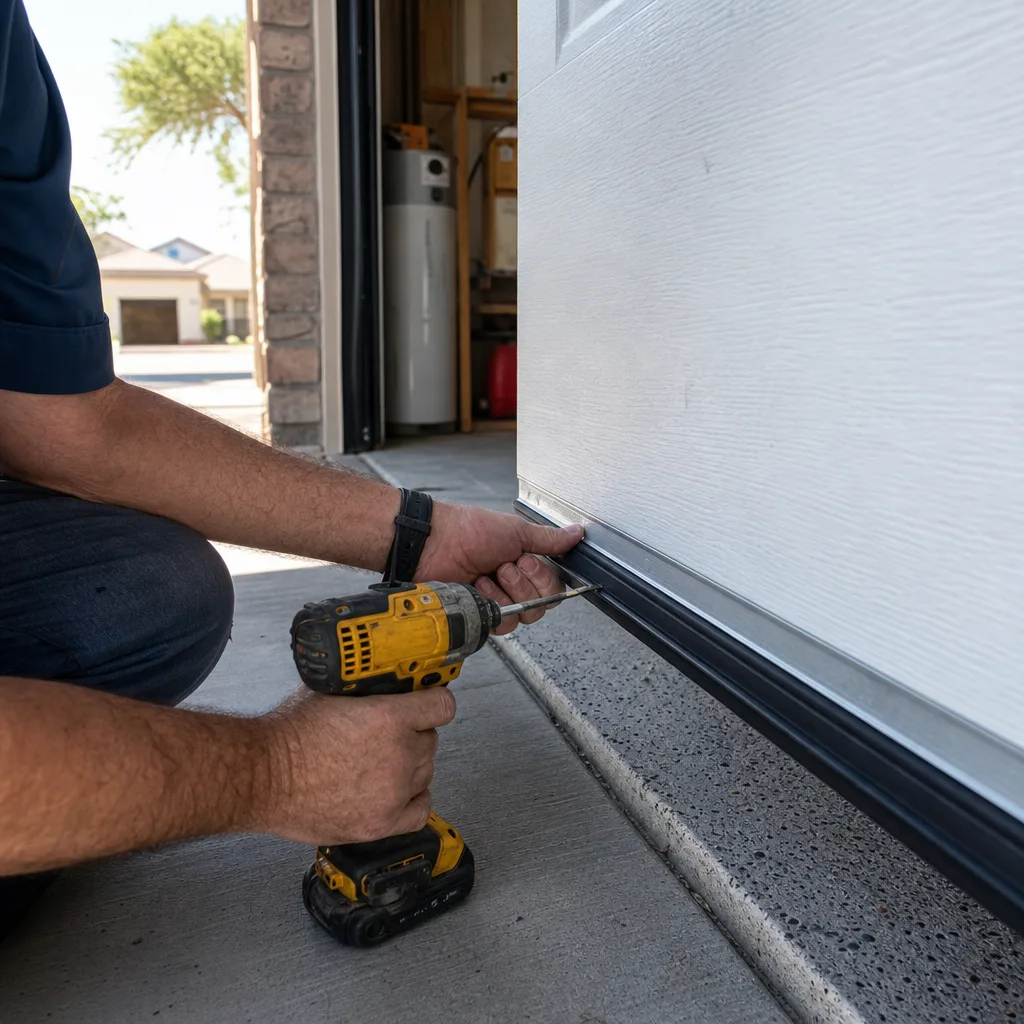
The permit question on a Gilbert garage door replacement hinges on one distinction: are you replacing what’s there, or are you changing it? Like-for-like replacement is exempt. Structural alteration, electrical addition, and fire-rated door replacement are not. The permit is cheap, the review is fast, and the inspection record is the document that protects your home’s value and your insurance coverage. Skip it and the problem surfaces at resale, in the disclosure, on the buyer’s inspector’s report, and in the claim denial letter. Get the paperwork right the first time and the documentation does the persuading for you. We’ve worked this way since 2015, with a written price before any work starts and a photo record when the technician leaves. For more guides & resources on garage doors in Gilbert, explore our blog. That paper trail matters more than any sales pitch.
Need a second opinion on an estimate you already received? Bring the paperwork. We’ll review it against the code requirements for your Gilbert home and give you a straight answer. Call (520) 482-3838 or visit our Servo Garage Doors Gilbert home page to learn more about how we work. For opener-specific questions, see our Garage Door Opener Repair & Installation in Gilbert guide.
Written by Marcus Deller, Owner at Servo Garage Doors Gilbert, serving Gilbert since 2015.