
Last updated September 20, 2026
Full 25-point door and opener safety check with every visit - springs, cables, rollers, tracks, and your LiftMaster or Chamberlain opener included
You get a price before we start. It does not change when the truck arrives.
 Before
 After
After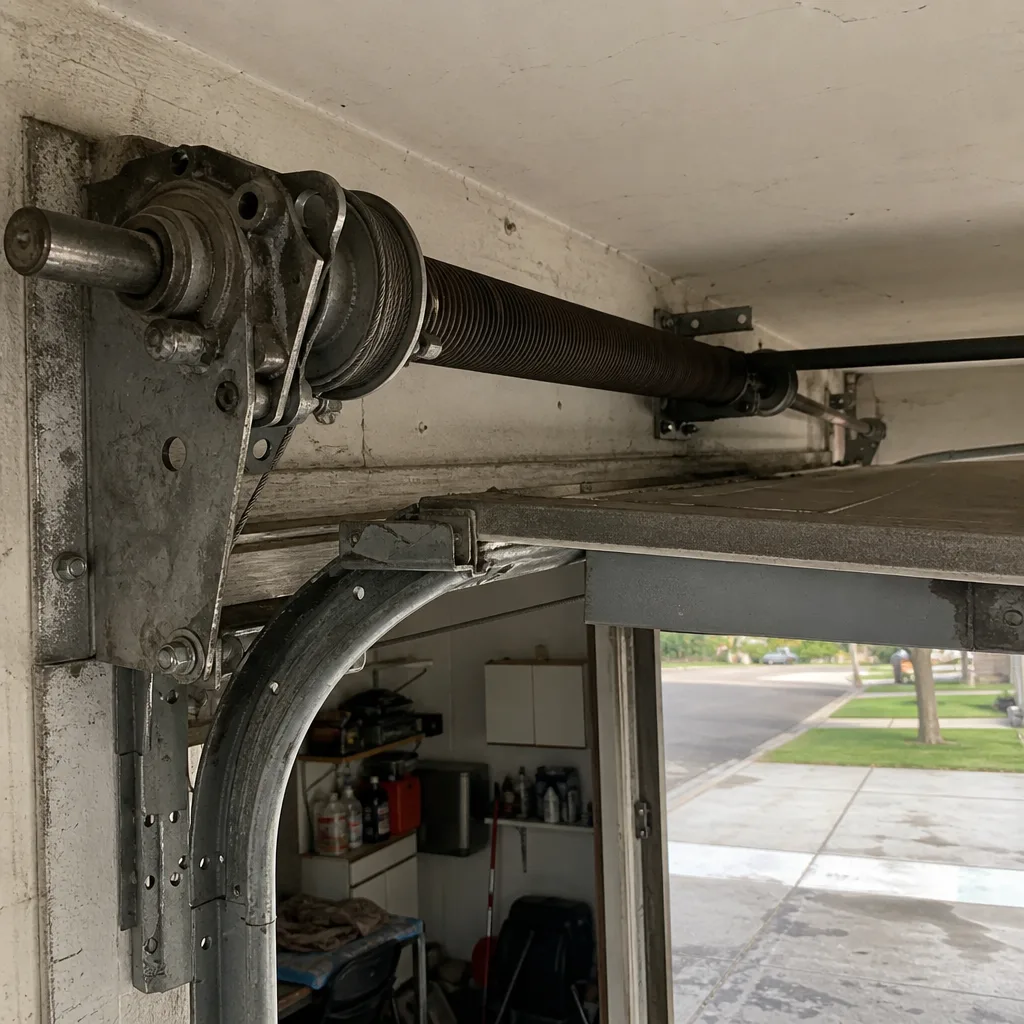 Before
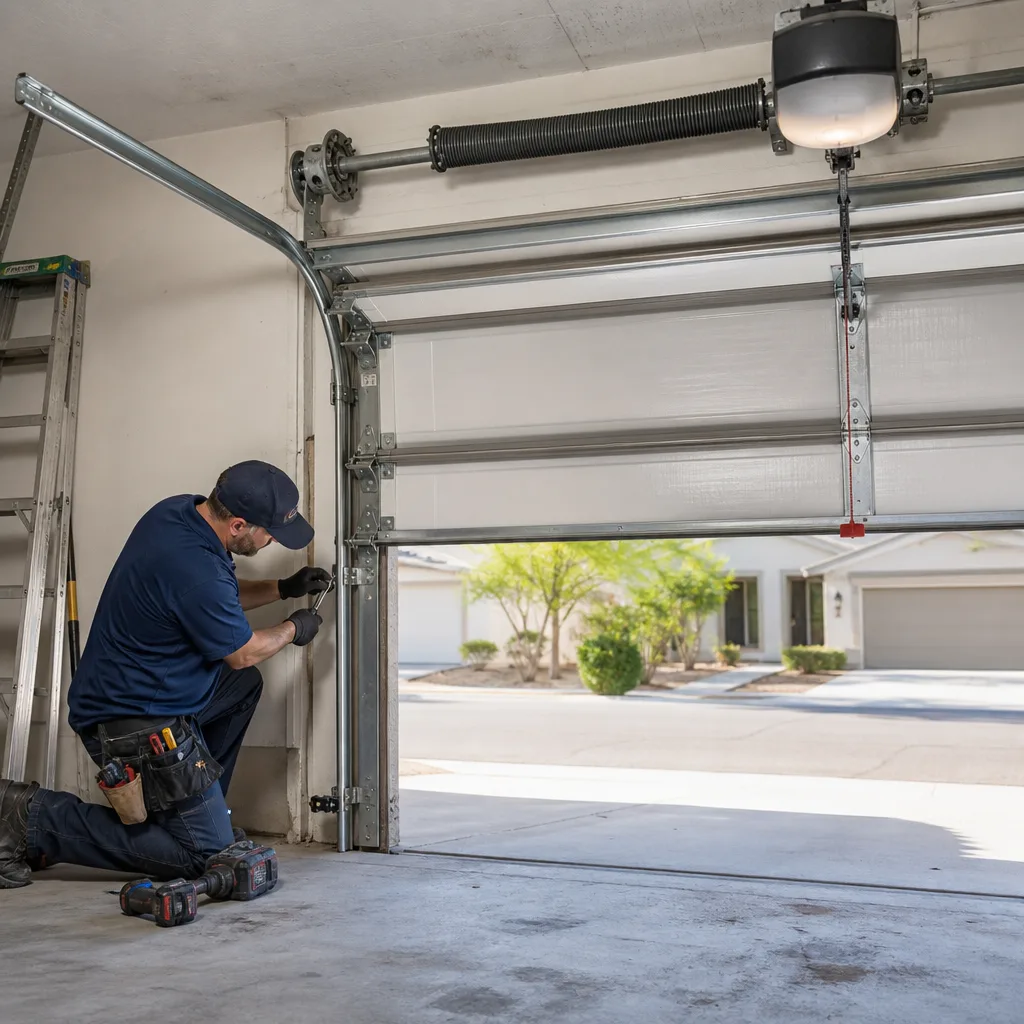 After
After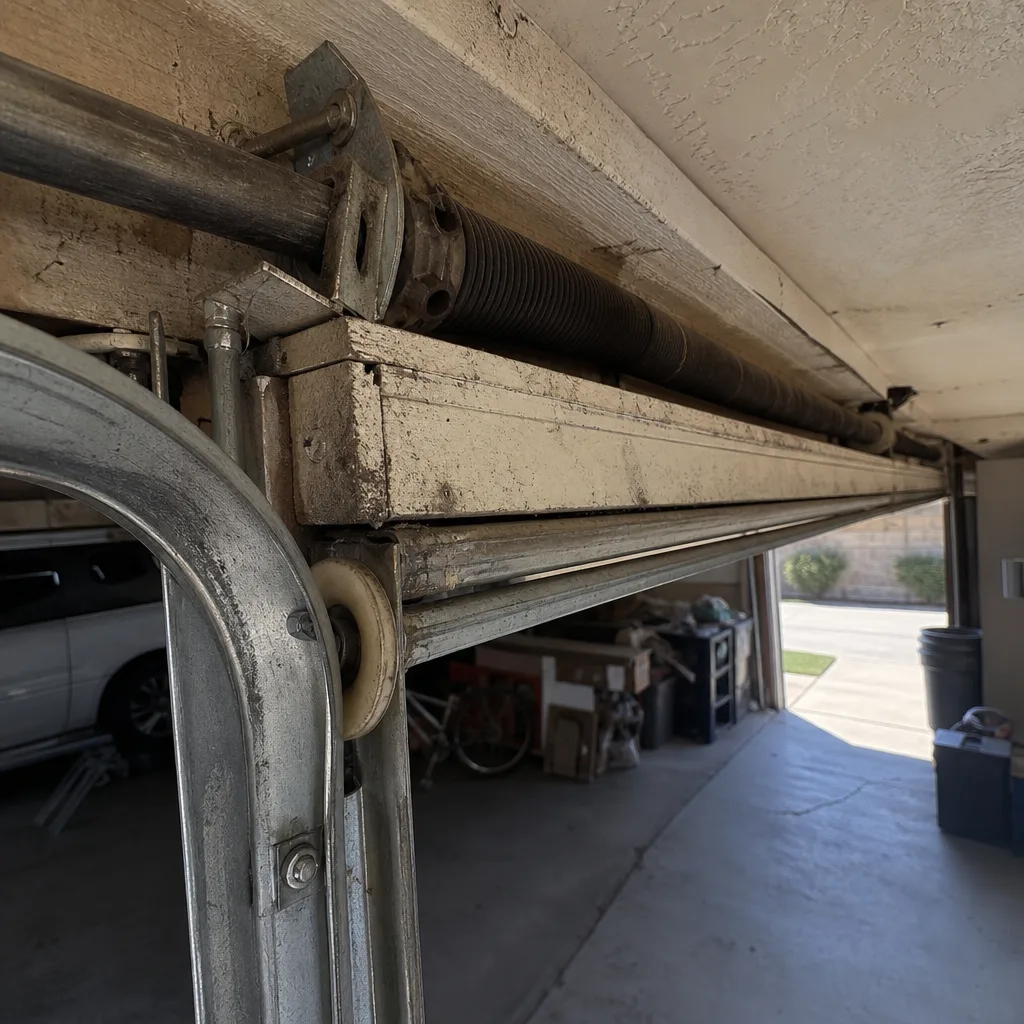 Before
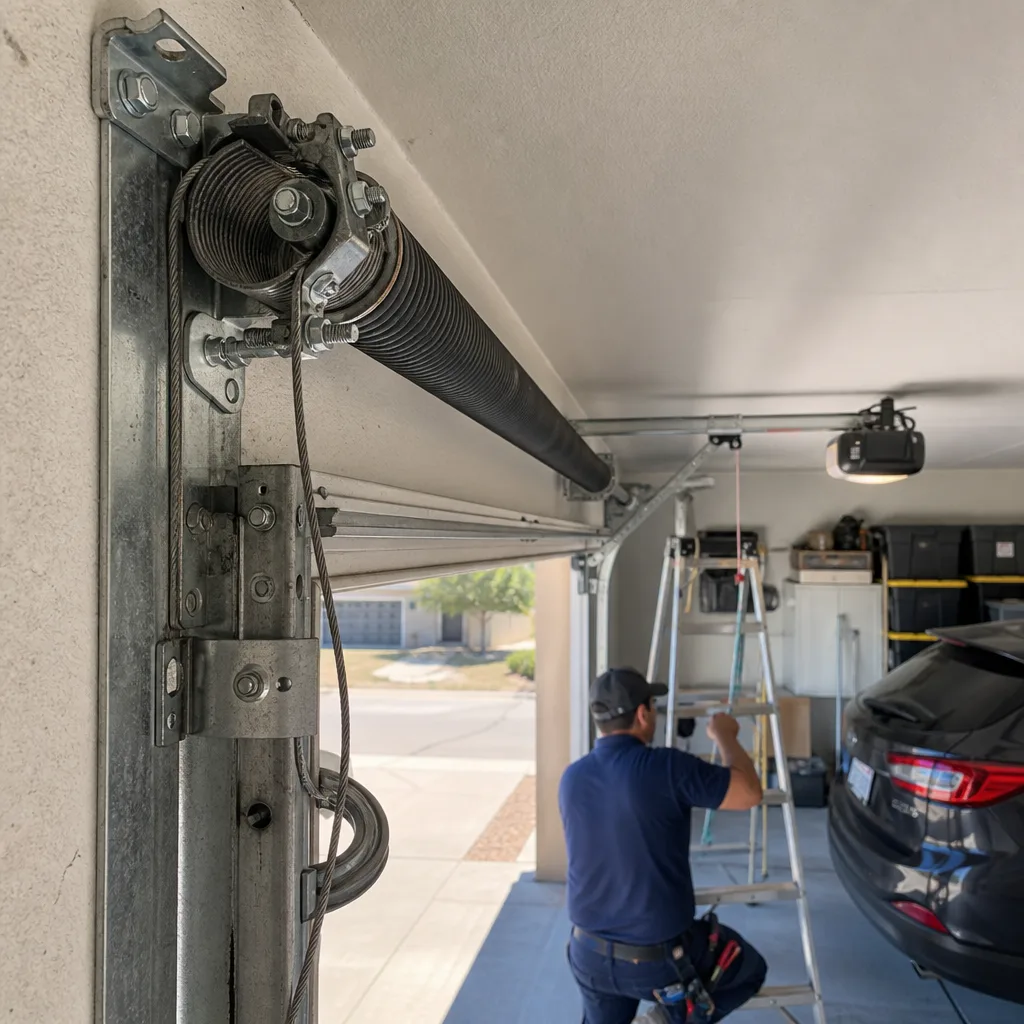 After
AfterGarage Door Cost Breakdown: The Gilbert Homeowner’s Reference for 2026
Most garage door cost guides give you a range like “$200 to $1,500 for a spring repair,” which is about as useful as a weather forecast that says “it might rain sometime this year.” A Gilbert homeowner staring at a broken door doesn’t need a range; she needs to know whether the quote in her hand is honest. This guide works backward from the actual components on your door, names the current Gilbert-area labor and material rates line by line, and explains why the same visible symptom can legitimately cost three different amounts depending on what the technician finds when the panel comes off. By the time you finish reading, you’ll know exactly what questions to ask and what a written quote in Gilbert should contain before you sign it, and you can explore more guides & resources for homeowners.
Quick Answer
In Gilbert, AZ, most garage door repairs cost between $150 and $650 in 2026, with torsion spring replacement running $180 to $420 depending on whether your door uses one spring or two. A full panel replacement on a standard 16-foot door typically lands between $500 and $1,400, and opener drive replacement runs $200 to $450. Every reputable Gilbert garage door company should give you a line-item written price before any work starts, not a verbal estimate.
Table of Contents
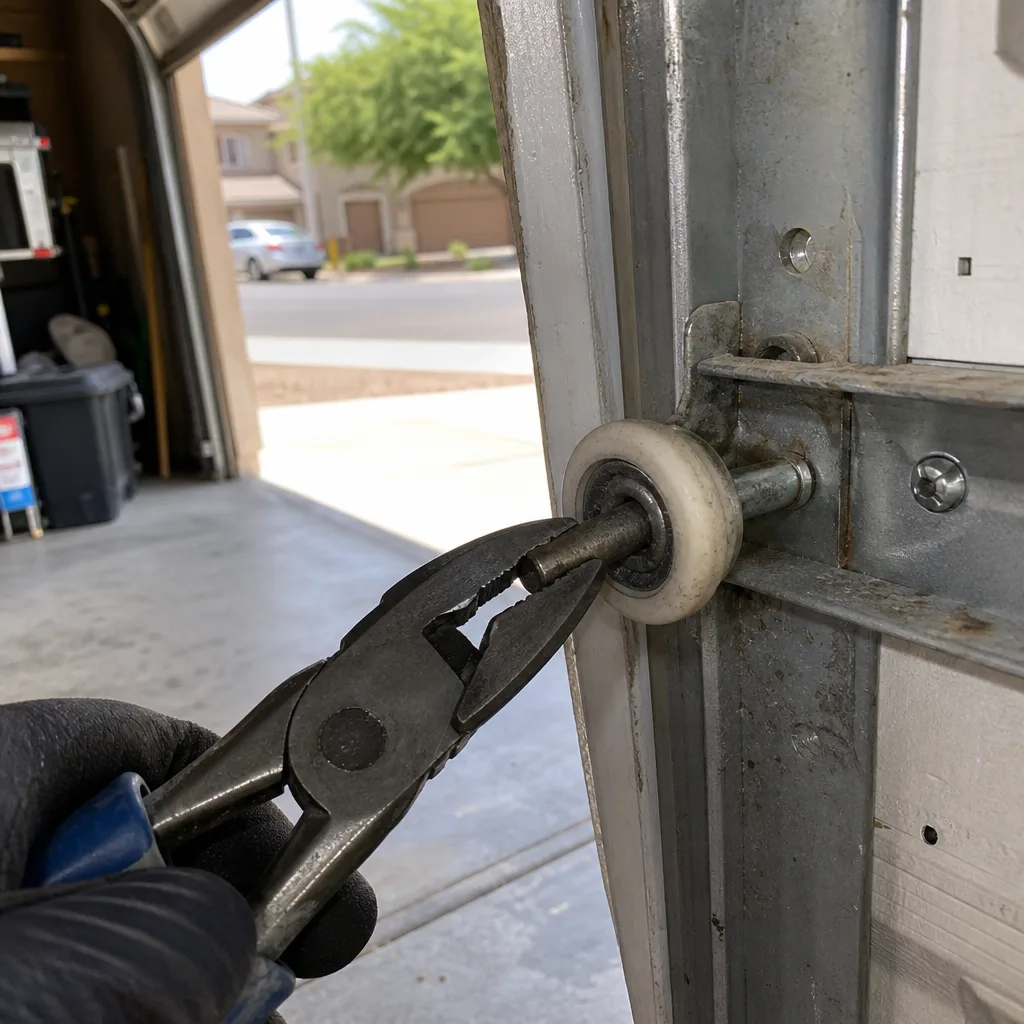
- Torsion Spring Replacement: Single vs. Double, and Why It Matters
- Cable and Roller Replacement: The Per-Item vs. Pair Pricing Trap
- Opener Drive Replacement: Chain, Belt, and Smart-Home Costs
- Panel Replacement: What Gilbert HOA Standards Mean for Your Price
- The Legitimate Cost Multipliers: Door Weight, Spring Rating, and Track Type
- How to Read a Competitor’s Quote for Missing Line Items
- The Written-Quote Standard: What a Complete Gilbert Repair Quote Must Contain
- Common Mistakes to Avoid
 Before
 After
AfterTorsion Spring Replacement: Single vs. Double, and Why It Matters
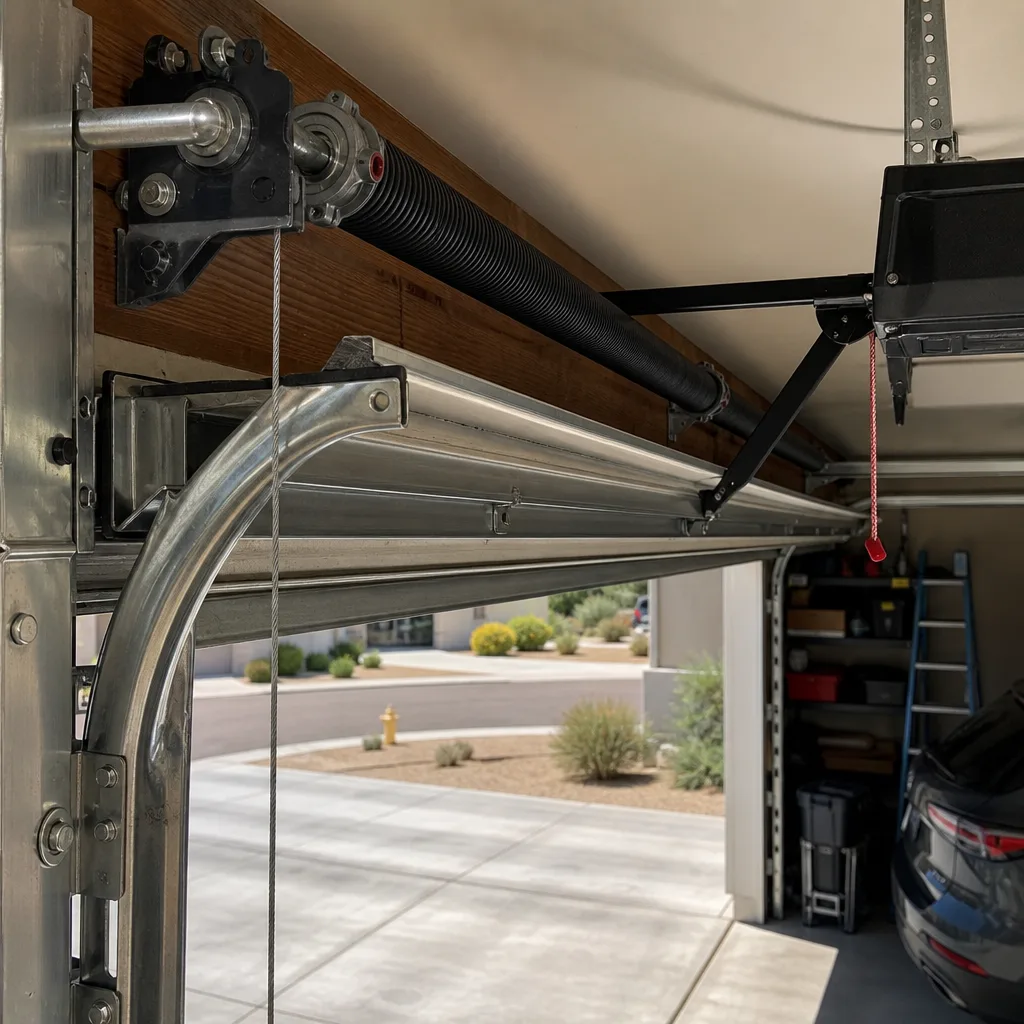
A two-spring torsion system costs more to replace than a single-spring system on the same door. Not because the labor is harder. Because you are buying two springs. This is the single most common source of sticker shock in Gilbert garage door repair, and it’s also the first thing we look for when a homeowner shows us a quote they can’t make sense of.
Here’s the line-item breakdown as of early 2026 in the Gilbert market:
- Single torsion spring (0.218-0.250 wire diameter, standard residential): $180 to $260 installed
- Double torsion spring system (both springs replaced as a matched pair): $320 to $420 installed
- High-cycle upgrade (25,000+ cycles vs. standard 10,000): Add $40 to $80 per spring
- Labor component: $85 to $120 flat, regardless of spring count
The labor line doesn’t change much between one spring and two. The technician still winds and unwinds the same torsion tube, still balances the door, still checks the limit settings. What changes is the parts line: a second spring is a second piece of tempered steel with its own cone, its own set screws, its own cost from the supplier. If a quote lists “spring replacement” without specifying spring count, you cannot compare it to the next quote. That omission is doing work for the quoting company, not for you.
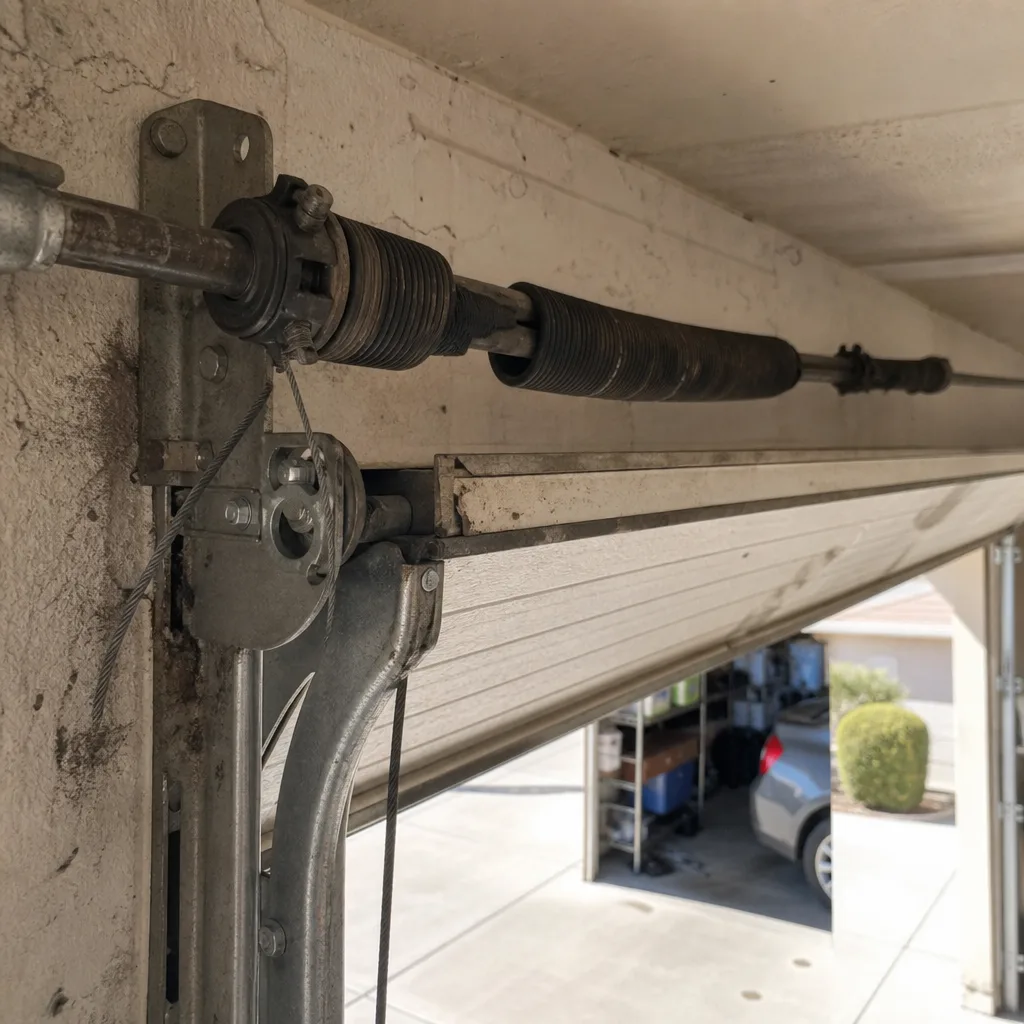
Gilbert heat shortens spring life. We replace torsion springs in Morrison Ranch and Power Ranch that were installed in 2019 or 2020 and have already snapped because the Arizona sun cooks the oil out of the coil. A standard 10,000-cycle spring is rated for about seven years of normal use in a temperate climate; in Gilbert, the same spring often fails at four to five, which is why our Garage Door Warning Signs: A Gilbert Homeowner’s Reference Guide recommends checking springs before they snap. That’s not a defect. It’s metallurgy and ambient temperature. When you’re looking at a quote, ask whether the spring being offered is standard-cycle or high-cycle. The high-cycle option costs more upfront and can last two to three times longer in this heat.
One more line item that should appear on any spring quote: the center bearing and end bearing plates. A technician who replaces springs on a Gilbert door without checking the bearing condition is doing half the job. A worn center bearing will chew through a new spring’s set screws within a season. If the quote includes bearing inspection and replacement (about $30 to $60 in parts), the company is thinking about what happens after the truck leaves. If it doesn’t mention bearings at all, call someone else.
Cable and Roller Replacement: The Per-Item vs. Pair Pricing Trap
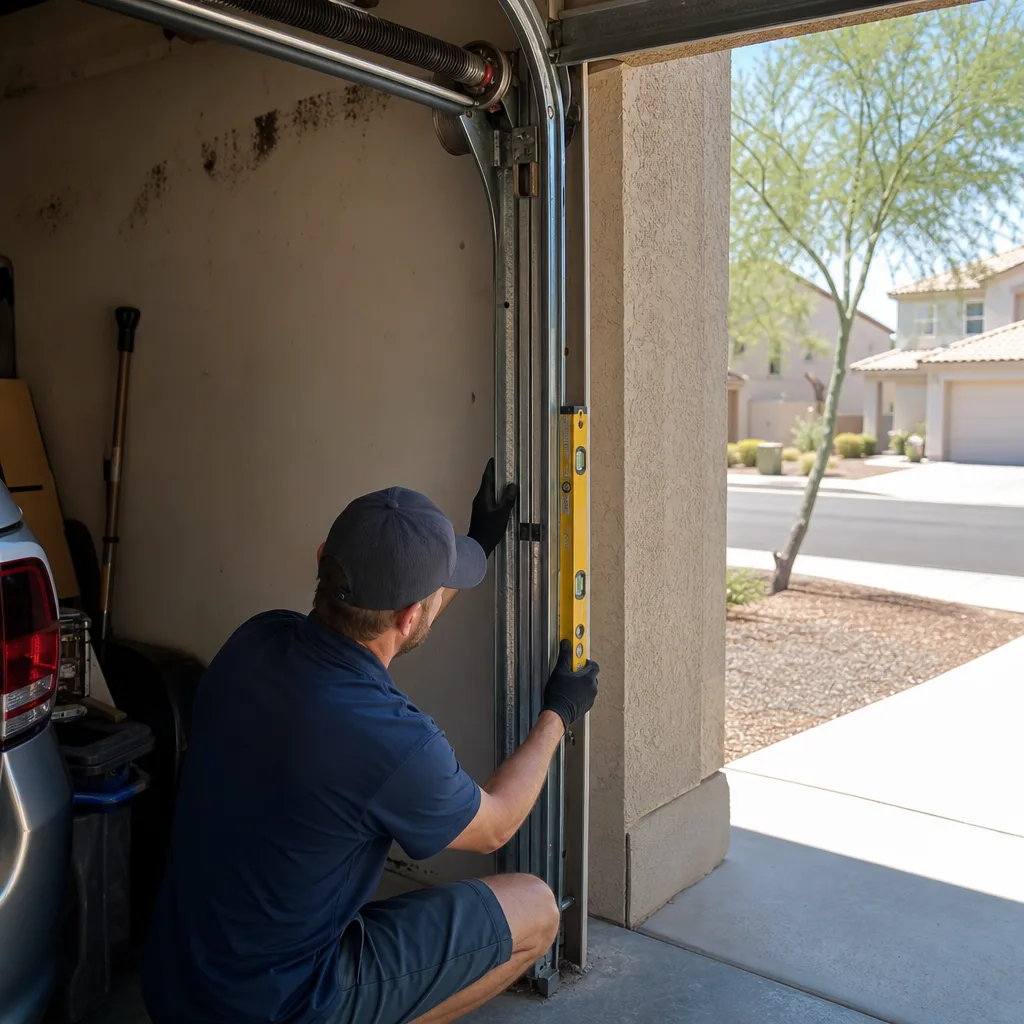
Cable replacement is second only to springs in the frequency of Gilbert garage door repairs, and it’s also where per-item pricing gets used against homeowners most often. Here are the 2026 Gilbert numbers:
Cable Replacement
- Single cable (7-foot door, standard-lift track): $90 to $140 installed
- Pair of cables (recommended replacement): $150 to $220 installed
- High-lift or vertical-lift cable set: Add $50 to $100 depending on drum size
- Labor component: $70 to $100 flat, typically includes re-tensioning
Here’s the trap: a frayed cable on the left side of the door means the right-side cable has been carrying uneven weight since the fray began. That right cable is fatigued. It hasn’t snapped yet, but the damage is accumulating in the wire strands. Replacing only the visible failure is a $120 repair today that becomes a second $120 repair in three months when the other cable goes. We quote cable replacement as a pair by default, and we tell the homeowner why before they ask. If a competitor’s quote lists one cable, ask why. The answer is usually “that’s all you asked for” or “we can do the other one later.” Neither answer is wrong. Both cost you a second service call.
Roller Replacement
- Standard nylon rollers (10-ball bearing): $12 to $18 per roller installed
- Steel sealed-bearing rollers (upgrade): $20 to $30 per roller installed
- Full 12-roller replacement on a 16-foot door: $140 to $340 depending on roller type
Most Gilbert doors use 10 to 12 rollers depending on height and track configuration. Standard nylon rollers come from the factory on builder-grade doors and wear out in about three to five years in this climate; the nylon shell cracks in the heat, then the ball bearings seize, then the door starts to shudder going up. Steel sealed-bearing rollers cost more but run quieter and last longer on doors that get cycled twice a day by a homeowner leaving for work in Mesa or Tempe. If your door is loud, your rollers are probably done.
Opener Drive Replacement: Chain, Belt, and Smart-Home Costs
When a Gilbert homeowner says their opener is “broken,” what they usually mean is the drive mechanism has failed: the chain stretched beyond the tensioner’s reach, the belt cracked, or the gear-and-sprocket assembly inside the motor housing stripped out. Replacing the drive is a $200 to $450 job in 2026, depending on what you’re replacing it with:
- Chain drive replacement (builder-grade, existing rail reused): $180 to $260 installed
- Belt drive replacement (quieter, recommended for attached garages): $260 to $380 installed
- Full opener replacement with new rail and logic board: $400 to $650 installed
- Smart-home capable unit (Wi-Fi, app control, camera-ready): Add $80 to $150 over base opener cost
The chipset cost question is real. Post-2023 supply chain normalization brought opener logic board prices back down, but smart-home capable units carry an extra $80 to $150 because the control module is a different part with firmware that the manufacturer has to support with app updates. That’s an ongoing cost the manufacturer passes to you at purchase. If you don’t connect your opener to Wi-Fi and never will, you don’t need to pay that premium. A basic chain-drive Genie or Chamberlain unit will open and close your door as reliably as a smart unit for $150 less. If you do want app control, pay for it once and make sure the opener brand is one of the majors: LiftMaster, Chamberlain, Genie, Craftsman, or Raynor. House-brand openers from big-box stores are harder to get parts for in Gilbert when the logic board goes down three years later.
One note on rail reuse: the rail is the long metal track that the carriage rides on. Some companies replace the drive gear and reuse the old rail. That’s fine if the rail is straight and undamaged, but it’s not a place to save $50 on a 10-year-old rail with sag. A sagging rail causes carriage slip, which causes chain jump, which causes the exact same failure you just paid to fix. When the quote includes a new rail, ask whether the old rail is being reused and whether it’s straight. The answer is either “yes, we checked it with a straightedge” or a hedged shrug. You know which one to hire.
Panel Replacement: What Gilbert HOA Standards Mean for Your Price
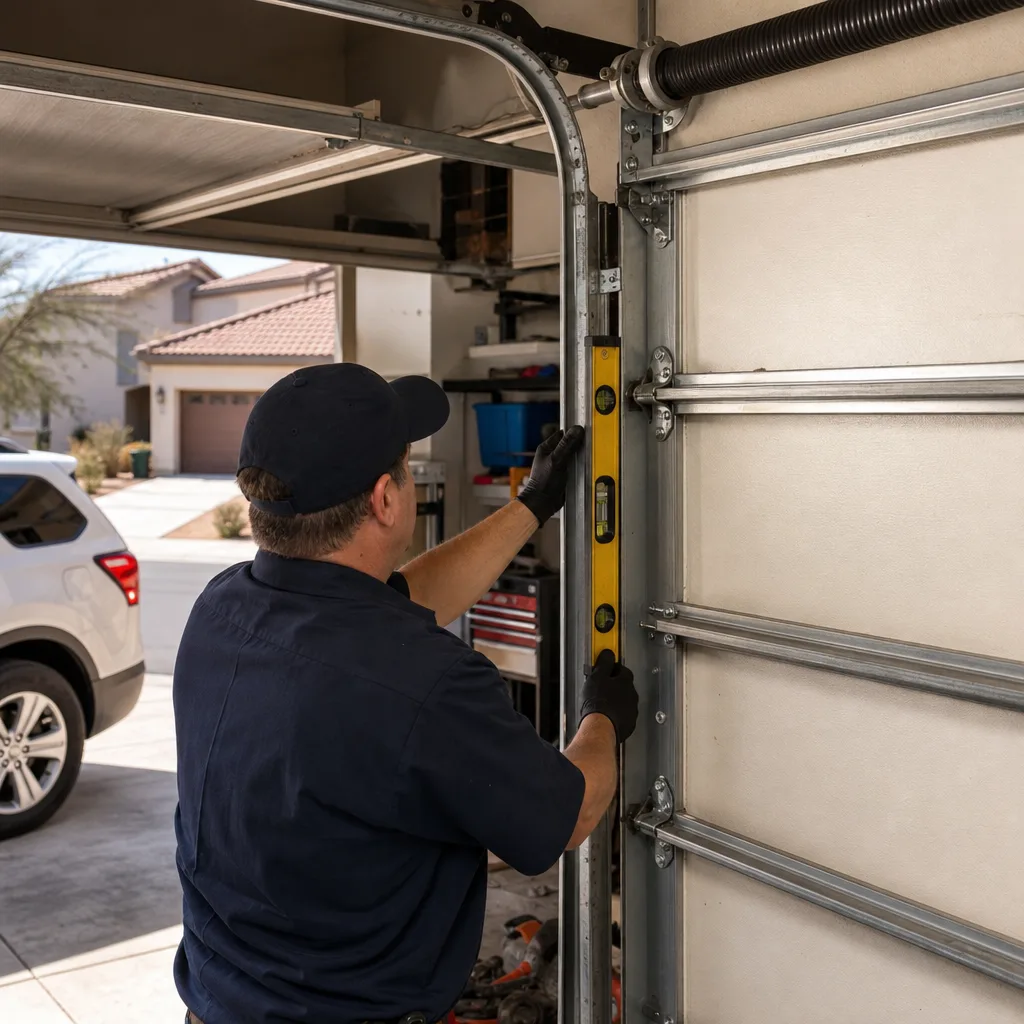
A dented bottom panel from a bicycle handlebar, a cracked top panel from a bad spring snap, a sun-faded row of panels that doesn’t match the rest of the house: panel replacement is where Gilbert homeowners hit the widest price spread, and most of that spread is about finish matching, not the panel itself.
- Single bottom panel (standard 16×7 door, builder-grade steel, no insulation): $250 to $450 installed
- Single bottom panel with color match to existing door: Add $100 to $200 for custom paint or factory color-match ordering
- Full door replacement (all panels, new hardware, new springs matched to weight): $1,200 to $2,800 depending on insulation, finish, and brand
The finish-matching caveat matters more in Gilbert than in most cities because so many of our HOAs, from Seville to Agritopia, have architectural review standards that govern garage door color and finish. A stock white panel from a distributor in Phoenix will not match the custom taupe on your Clopay or Amarr door exactly. The factory color has faded in the sun, and the new panel’s finish is a 2026 paint code, not a 2018 one. Even when the manufacturer’s color code matches, the sheen won’t. A homeowner who cares about curb appeal, or whose HOA cares on their behalf, should budget for panel painting or full-door color matching. A straight panel swap without finish matching is a bargain today and a visible patch job tomorrow.
The brand-name vs. house-brand panel difference is also real: a Wayne Dalton or Clopay panel is easier to source, easier to warranty, and holds its color better than the generic panels sold at home-center stores. The house-brand panel costs $80 to $120 less and shows its age about three years sooner. On a door you’ll look at every day for ten years, that’s not the place to save.
The Legitimate Cost Multipliers: Door Weight, Spring Rating, and Track Type
If you’ve ever gotten two quotes for the same visible problem and wondered how two companies can both be legitimate with $300 between them, this section explains it. There are three multipliers that change a repair price without either company lying to you.
Multiplier 1: Door Weight Class and Spring IPPT Rating
IPPT stands for inches per pound per turn. It’s the spring’s torque rating, and it has to match the door’s weight. A 16×7 insulated steel door weighs 250 to 300 pounds. A 16×8 solid wood carriage door weighs 500. The spring for the wood door is a heavier gauge wire, a larger inside diameter, and costs $40 to $80 more per spring. When a quote doesn’t list the spring’s wire diameter or IPPT rating, it’s quoting a guess. A spring rated for a 250-pound door installed on a 400-pound door fails in months, and then the company that “saved” you $40 is the same company you’re calling again for another replacement.
We’ve measured spring wire diameters on Gilbert doors that differ by 0.050 inch between quotes for the same repair. The quoted prices differed by $120. The smaller spring was the wrong spring. The company quoting it either didn’t know the door’s true weight or planned to install an undersized spring and collect the replacement call in a year. The fix for the homeowner is simple: ask for the door weight class and spring IPPT rating in writing. Every legitimate door company weighs the door or checks the original manufacturer specs before quoting springs. If they can’t tell you the door’s weight, the quote is a placeholder.
Multiplier 2: Track Type
Gilbert’s newer builds changed the garage door landscape. Homes in Cooley Station and the islands around Val Vista and the 202 have garages with 12-foot ceilings and sometimes 14-foot clear heights, designed for RV storage or boat bays. Those garages use either high-lift track (door follows the ceiling higher before curving back) or vertical-lift track (no curve at all, door goes straight up). Both configurations cost more to work on than standard radius track:
- Standard radius track (7-foot door, 12-inch radius): Baseline, no multiplier
- High-lift track (door travels 3 to 5 feet up the wall before curving): Add 25% to 40% to the labor line and $100 to $250 in parts for the larger drums and longer cables
- Vertical-lift track (commercial-style straight-up travel, common on RV bays): Add 40% to 60% and $200 to $400 in parts
The high-lift and vertical-lift doors use different drum geometries and longer cables, which means a cable replacement on an RV-bay door in Gilbert is not a $120 job. That’s not a company padding the invoice; that’s the actual parts cost for a different track configuration. But the quote should say so. If the quote says “cable replacement $150” with no mention of track type, the technician is either going to show up with the wrong cable length or figure out the real price after the door is disassembled and present you with a change order. Either way, the written quote you thought you had is not the written quote you get.
Multiplier 3: Compatibility of Existing Hardware
Sometimes the old part doesn’t want to leave. A torsion spring cone that’s rusted to the shaft adds time because the technician has to cut it off without damaging the tube. A cable drum with stripped set screws needs replacement, not just re-cable. An opener rail from 2007 may not accept a 2026 carriage design without an adapter kit. These are legitimate time and parts additions, and a properly written quote includes them as contingency line items, not surprises. “If the existing drum is frozen, replacement is $45 per drum,” is a line a homeowner can plan around. “We’ll see when we get in there” is how a $250 repair becomes a $500 invoice at the end of the afternoon.
How to Read a Competitor’s Quote for Missing Line Items
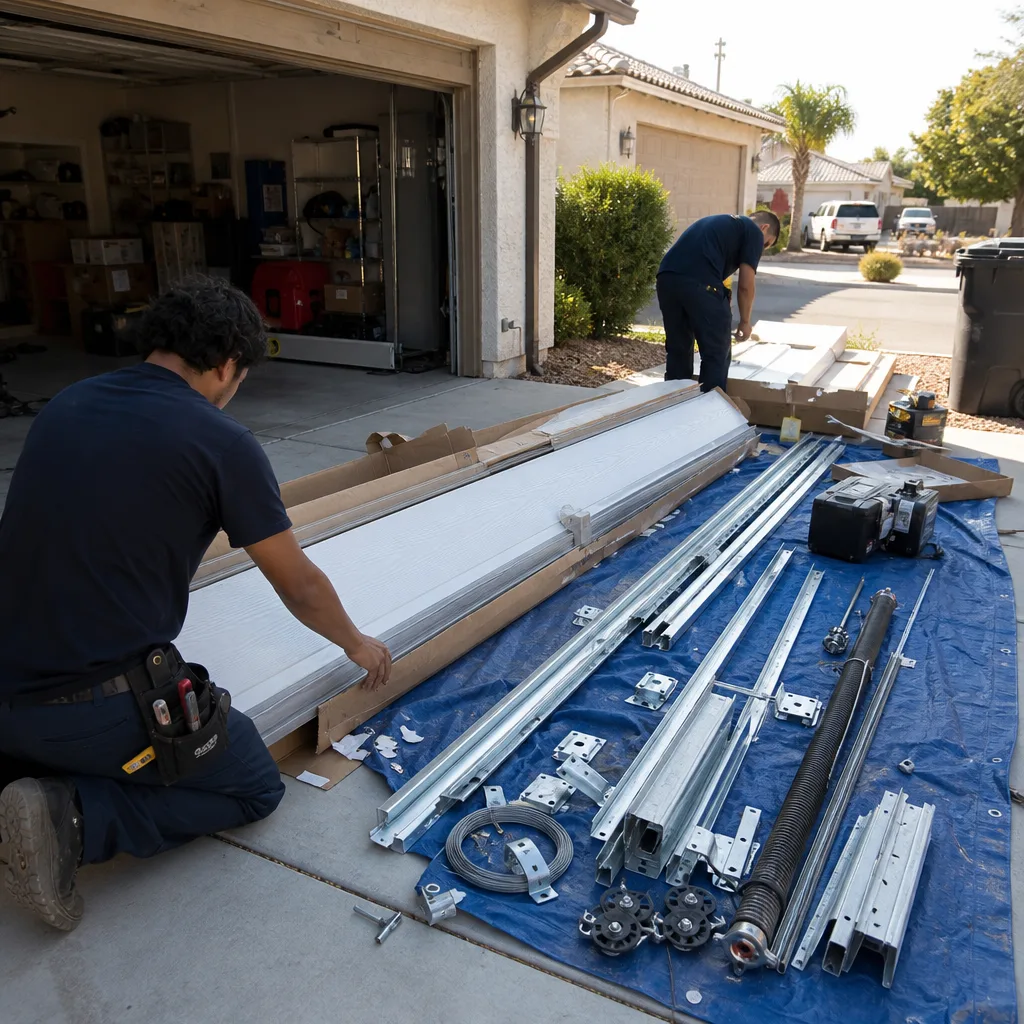
Bring us a quote from another Gilbert garage door company and we’ll point to the empty lines. This is the single most educational thing you can do before hiring anyone, and it’s exactly what we do in our free second opinion offer.
Here’s what’s typically missing from a low quote on Gilbert doors:
- Spring count and spring rating: A quote that says “spring replacement $190” without naming single vs. double and wire diameter is a quote you cannot compare. It’s also a quote with built-in room to go up when the tech “finds” the second spring.
- Bearing inspection and replacement: Absent from most quotes because it’s a small line item that’s easy to skip, but a skipped bearing costs you a spring failure within the year. Ask whether the quote includes center bearing and end bearing inspection.
- Cable replacement as a pair: Per-cable quotes are lower, and the second cable always fails later. Pair quotes are the honest default.
- Track type confirmation: If your home has a high-lift or vertical-lift garage, the quote must say so. “Cable replacement $130” without track information is a quote for a different door than the one you own.
- Disposal of old parts: Companies either include haul-away in the line items or charge a $35 to $75 disposal fee at the end. If it’s not on the quote, it’s coming later.
- Warranty terms in writing: “We’ll warranty it” is not a term. “Springs warrantied for 2 years parts and labor, document provided at completion” is a term.
The common thread: low quotes convert to upsells once the door is disassembled. The truck shows up, the panel comes off, and suddenly the drum is frozen, the bearings are shot, the cables are both frayed, and the quote no longer applies. Gilbert homeowners tell us this story weekly. The fix is not to avoid repair. The fix is to get the contingencies in writing before the work starts.
The Written-Quote Standard: What a Complete Gilbert Repair Quote Must Contain
This is the section to bookmark. Before you sign anything on a Gilbert garage door, the quote in front of you should contain all of the following, in writing, with dollar amounts next to each line:
- Door identification: Width, height, material, brand if known, approximate age.
- Repair scope: The specific components being replaced or repaired, by name. Torsion spring, cable drum, gear-and-sprocket assembly, limit switch. If the quote uses vague language like “door tune-up” instead of naming parts, send it back.
- Part specifications: Spring wire diameter and IPPT rating if springs are involved. Cable length and pair or single. Roller type and count. Opener brand and model.
- Labor line item: Flat labor, stated separately from parts, so you can compare labor across quotes.
- Contingency line items: “If bearing plates require replacement: $45 per plate.” “If drum is seized: $40 per drum.” A quote without contingencies is a quote that will grow.
- Disposal and cleanup: Included or itemized, with a number.
- Warranty: Parts and labor terms, duration, and how to claim.
- Total price, not an estimate range: A flat number. In Arizona, verbal estimates have no legal standing, and even written “estimates” can change. A written quote is a promise. If the company won’t commit to a number in writing before starting work, walk.
This is not a wish list. Every legitimate Gilbert garage door company operates this way. The companies that don’t are counting on you not knowing the difference. Clause 1 of The Haven Standard, which the independently owned and operated Servo Garage Doors Gilbert works to, is exactly this: written price before any work starts. Not a verbal ballpark. Not a “we’ll see.” A flat number, on paper, before the first tool comes off the truck.
Common Mistakes to Avoid
- Accepting a single-cable quote without asking why. A frayed cable means its partner has been overworked. You’re kicking the second failure down the road and paying two service fees instead of one.
- Confusing spring count with spring quality. A single high-cycle spring might outlast a pair of standard springs on a heavy door. Price is not the whole story; wire diameter and IPPT are the story.
- Ignoring the track configuration on newer Gilbert homes. If your garage has a high ceiling and an RV bay, your track is not standard, your cable is not standard, and a quote that assumes standard is wrong before it’s written.
- Paying for smart-home features you’ll never use. The Wi-Fi opener premium is real and recurring through firmware and app dependence. If you don’t need it, buy the dumb one.
- Replacing a panel on an old door without considering the whole door. A 2012 door with a cracked panel is a 14-year-old door with more cracks coming. Sometimes one panel is the right fix; sometimes it’s the first installment on a door that’s done.
- Hiring a company that won’t show a photo of the failed part. In Gilbert in 2026, your phone has a camera, and so does the technician’s. Clause 4 of The Haven Standard requires a photo of the failed component before a replacement is quoted. If the company won’t show you what broke, assume they didn’t look.
When to Call a Professional
Torsion springs are under tension. A garage door spring that lets go while you’re adjusting it can cause serious injury; the force stored in a fully wound spring is measured in hundreds of pounds, and the spring doesn’t care whether it’s a technician or a homeowner standing under it. Garage door work on cables, springs, and high-lift track should be left to a trained professional. If your door is stuck halfway, making a grinding sound, or showing visible spring damage, stop using the door and call a licensed technician. Servo Garage Doors Gilbert offers free estimates in Gilbert; call (520) 482-3838 for a flat written price before any work starts.
Frequently Asked Questions
A single torsion spring replacement in Gilbert runs $180 to $260 installed, and a double-spring system runs $320 to $420. The difference is parts, not labor. High-cycle springs add $40 to $80 per spring. Always ask for the spring count and wire diameter in writing before you accept a quote. For a flat written price on your specific door, call (520) 482-3838.
Most spring and cable repairs can be completed the same day, assuming standard track configuration and available parts. Cable and spring stock is common, and most Gilbert repair trucks carry the common sizes. High-lift and vertical-lift doors may require a part order if the drum is non-standard. Servo Garage Doors Gilbert answers calls with a live person 24/7 and can usually dispatch a named technician with an on-the-way text rather than a callback window.
Not if the quote includes contingency line items. A written quote with listed contingencies, like “if bearing plates require replacement: $45 per plate,” stays valid because the situations are priced in before work starts. If the quote doesn’t include contingencies, the price can grow when the technician finds what the writer didn’t look for. That’s the difference between a quote and a guess. Get the quote in writing with contingencies before you sign.
A full door replacement on a standard 16×7 opening in Gilbert runs $1,200 to $2,800 in 2026, depending on insulation, finish, and brand. Clopay and Wayne Dalton doors trend toward the middle of that range for standard models; custom carriage doors go higher. A garage door installation in Gilbert should include new springs matched to the door’s exact weight, not the old springs re-used.
Yes, and that’s the standard in Gilbert. A technician showing up without common spring sizes, cable lengths, and roller types on the truck means you’re paying for two trips. For garage door repair in Gilbert, the truck should be stocked for the common failures: standard and high-cycle torsion springs, cable pairs in 7-foot and 8-foot lengths, standard and steel-sealed rollers, and bearing kits. If the company can’t confirm parts are on board before dispatch, the repair will not be same-visit.
The logic board is the circuit board inside the opener that reads the safety sensors, processes the remote signal, and controls the motor. It fails from power surges, heat, and age. A replacement logic board runs $120 to $220 in Gilbert for a name-brand opener like LiftMaster or Chamberlain, with labor adding $80 to $120. If the opener is more than 12 years old, the board replacement often costs more than the opener is worth, and a full garage door opener replacement in Gilbert becomes the better spend.
The Bottom Line
Garage door quotes in Gilbert vary because doors vary, and because some companies count on homeowners not knowing the difference. The same visible symptom, a broken spring, is legitimately $180 on one door and $420 on another. What matters is not the range, but the specificity. A quote that names the spring count, wire diameter, track type, cable pair, bearing condition, and contingency line items is a quote you can compare and hold. A quote that names a symptom and a price is a guess dressed as a promise. The documentation is the difference, and in Gilbert, you should expect it in writing before the work starts.
Written by Marcus Deller, Owner at Servo Garage Doors Gilbert, serving Gilbert since 2015.